Tourism in Iraq – Another Country is Possible

When was the last time you heard some positive news about Iraq? It’s been a while, huh? I’m as guilty of charge with my blog posts, but the suffering that often takes place south of Iraqi Kurdistan is hard to ignore, which is a strong reason to happier news from Iraq hardly making headlines.

When I first saw the page “Tourism in Iraq” on Facebook I wondered what was the idea with it. And who was behind it? It didn’t seem to be one of the many ironic sites you can find on the net; there was no “Postcards from hell” feeling over the updates. Beautiful photos showing nature and tourist sites in Iraq with explanations in English and Arabic were being posted on a daily basis. Photos from a game of women’s beach volleyball in Baghdad mixed with photos of new construction sites. Over one reads the conciliatory phrase “God bless Iraq from the north to the south.” I decided I had to find out what or who was behind this page.

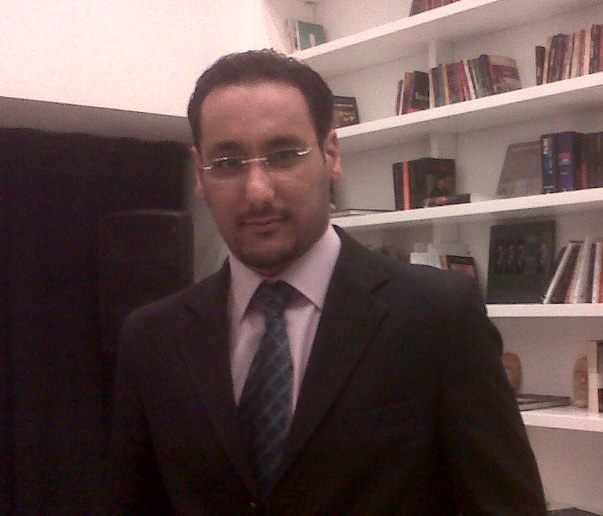
Soon I was in touch with Nawar Al-Saadi from Baghdad, who started the Facebook page “Tourism in Iraq” with the intentions of enlightening people in Europe about his home country. He was more than happy to answer my questions.

“There is a marginalization of the civilization of Iraq. All current generations of young people in Europe believe that Iraq is only a country of terrorism, and that all Iraqis are people like the killers,” Nawar writes to me in one of the many emails that we exchange. “This is not true. Iraqi people love peace, love life, love people, social sciences and they hate retardation and intolerance. But because of the impact of media under the control of US, people only see the negative aspects about Iraq.”

Nawar tells me he is studying a PHD at the University of Bucharest in Romania, specializing in tourism.

“My thesis is about the role of international relations in the development of the tourism sector in Iraq,” he says. “I chose Iraq because I want to serve my country.”

Tigris river

How can tourism be found in a country that has been plagued by violence since the US invasion 11 years ago? Nawar starts his explanation with a small history lecture:

“Iraq is a veritable treasure house of antiquities, and recent archaeological excavations have greatly expanded the knowledge of ancient history. Prior to the Arab conquest in the 7: th century Iraq had been the site of a number of flourishing civilizations, which developed one of the earliest known writing systems; Akkad, Babylonia, and Assyria.

The capital of the Abbasid caliphate was established at Baghdad in the 8: th century and the city became a famous center for learning and arts. For this reason we started this page, with the wish to be the face of tourism in Iraq. Iraq is one of the most important countries in the world of tourism and antiquities, where there is the passage between two oceans and a bridge between three continents.”

Iraq really does have an amazing history, but I wonder how realistic the situation is for tourism in Iraq at the moment. I ask Nawar how he sees the future potential for this. He admits that it might take time, but is optimistic.

“Iraq is now in international openness, but it needs security and stability. After that it will take a great position in the global tourism. The reason is that Iraq has one-third of the effects of the world and the most ancient civilizations in Mesopotamia such as Babylon, Assyria and Sumer. As for religious tourism – Iraq has buried most of the prophets and saints of all religions in the world, such as the Prophet Ibrahim, Prophet Adam, Prophet Noah, Imam Ali and many others.”

He has ideas on how Iraq will be an attractive country for tourists, in an age where sunny beaches in comfortable tourist resorts are reachable for so many:

“People outside want to know a lot about Iraq, especially that Iraq were in international isolation for three decades because of the wars. In addition to this most of the tourists in the world are bored after repeated visits to archeological countries as Egypt, Greece and Italy. Now people are looking for something new, a civilization to visit like the Hanging Gardens of Babylon, the palaces of Baghdad and tales of Shahriar and Chehrzac and A Thousand and One Nights. All of these things are famous in the world and taught in all grades. For this reason people are hungry for a visit.”

Women’s beach volleyball in Baghdad

Nawar has lived in Bucharest since 2011 and is planning to return to Iraq after completing his PHD. He says his family is living in Sweden but he has no plans to prolong his stay outside of his country:

“When I will go back to Iraq I will work in tourism development projects or a professor at the University of Baghdad, I will see next year.”

Nawar attaches many photos in his emails that he allows me to publish. He’s happy to share information and photos about his home country and his efforts have had effect. The page now has over 12.000 followers and he claims around 5.000 of those are foreigners (non-Iraqis), many of them European, and that he receives many emails with questions about how it will be possible to tourist in Iraq once it’s secure for foreigners to travel there.

Until then Nawar continues sharing information about his home country, posting photos such as the one of the sunny Tigris River with the message “Good morning Baghdad” and a thumbs up. Showing Iraq as the place it once was; the place of intellectuals, of culture and a beautiful nature, a place that it hopefully will become again. Far away from the depressing news in international media. Or as one of the messages on the page states:

I never meant to be Iraqi, I’m just a lucky man.

nawar

Nawar Al-Saadi

Photo credit (all photos): Nawar Al-Saadi/Tourism in Iraq

Remembering Halabja

DSCF0183

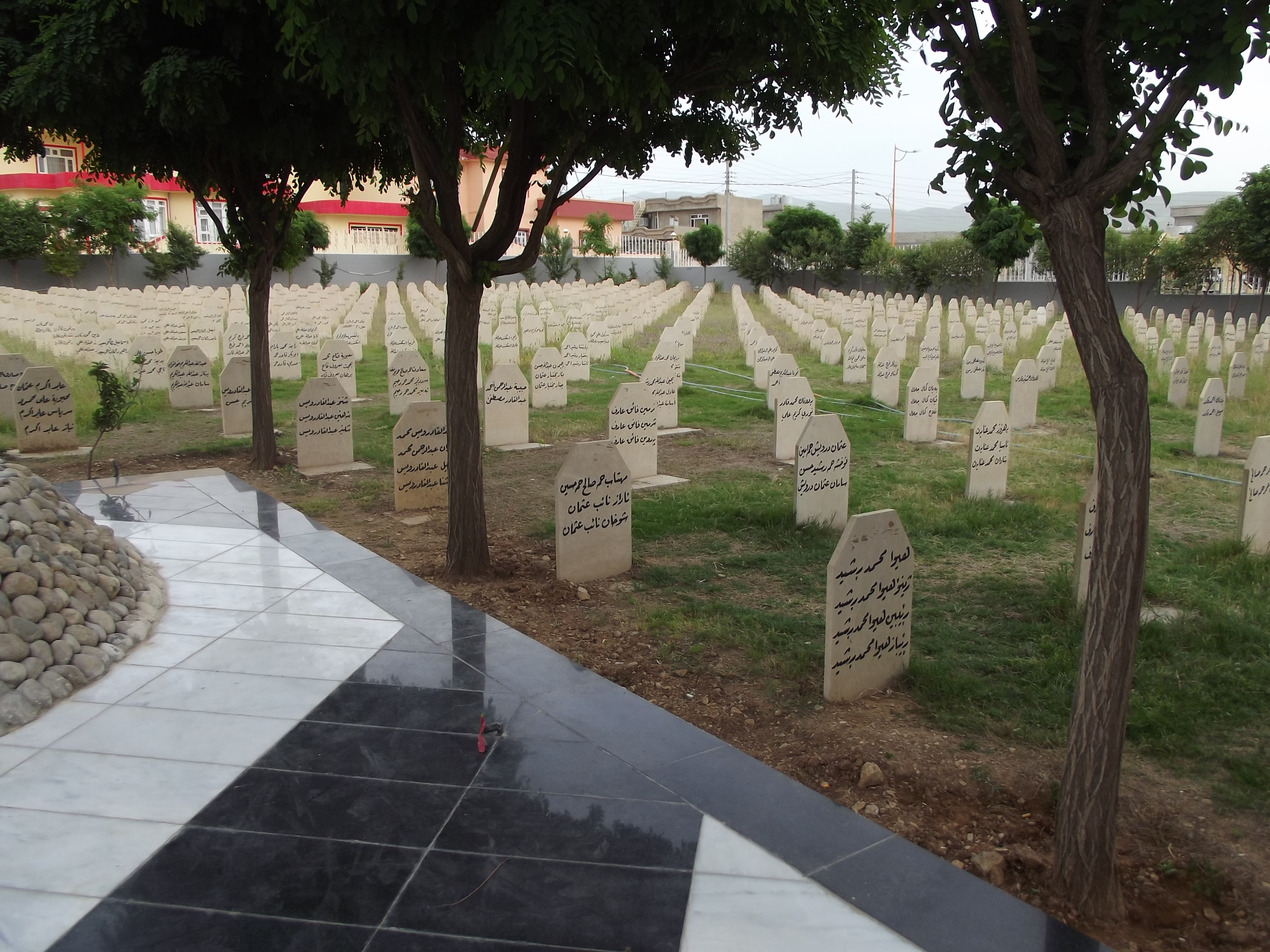
Monument at the Halabja memorial site

On March 16 1988, Saddam Hussein used chemical weapons on his own population, the Kurdish population in Northern Iraq. All of these photos are from the cementary and memorial of the genocide in Halabja, Iraqi Kurdistan, when I visited it two years ago.

DSCF0178

Graves in the cemetary

Between 4.000 to 5.000 people died when the Iraqi airforce indiscriminately bombed the village of Halabja with chemical weapons. What was the reason? The Kurdish people wanted independence, they want to be free from the brutal suppression of the Saddam regime.

Men, women, children and animals all died, some directly, some after a few minutes of vomiting or laughing hysterically. Between 7.000 to 10.000 more people were injured, blinded or paralyzed by the gas that is believed to have included nervgas and mustardgas, injuries that are still today effecting the people that were lucky to survive the attack. Or should we say unlucky? Because what happiness can you experience in life after surviving a genocide?

DSCF0175

Memorial site

The Halabja genocide took place centuries ago but the act of erasing a rebellion by gassing people to death is a method that is still being used by dictators whom are desperately clinging on to power no matter what suffering it brings their own countrymen. Tomorrow is the international day for remembering the victims of Halabja – but let’s also keep in mind the people in another country, where civilians have been subject to the same crime against humanity as recent as last year. Let’s keep in mind our brothers and sisters in Syria.

DSCF0186

Memorial site

Women Owned Restaurant in Saudi Arabia Breaking New Ground

Hi Jenny – this Saudi woman could be interesting for you to write about her” my half-Kuwaiti half-Saudi friend started her email to me the other day.

In the coastal city of Dammam, Saudi Arabia, an occurence has taken place that hasn’t yet reached English international news. The Saudi woman Nora Almoqateeb was able to open a new restaurant-concept in her own name, kitchen-run by all female, despite public pressure not to. When Nora came up with the concept for the restaurant Nooryat, the first official employee receiving the application refused to give her the license to open restaurant. As Nora describes in the video (unfortunately available in Arabic only):

“He threw the file in the drawer and said ‘Are you crazy? You want to mess up the country and the women? It’s forbidden!'”

But she didn’t give up instead went to research in the local laws. She didn’t find any single Saudi law preventing her and in the end she managed to get the license, then employed Saudi women to work with her in the kitchen. She says:

“I felt I was gunpowder wanting to explode. It exploded! I was determined to get the license.”

When Nora opened the restaurant Nooryat she was afraid to go there alone. The restaurant was watched all the time by people who want to try and find small mistakes so that the restaurant could be closed down. Nora’s female worker are all Saudi, and despite being proud of their job some of them are ashamed to admit that they are working as cooks, and are afraid to give their full name. But despite the resistance Nora didn’t cave in and the staff says that they admire Nora and consider her a great female idol for all Saudi women. Nora has been so determined to carry out her business that she sometimes sleeps in the restaurant when she has a big order to deliver. In fact the word Nooryat is associated to the Arabic word for light, such as the light that lights up a house.

Along the way she had big support from her own father, and the owner of the building where to restaurant resides says:

“The main problem is that men don’t except the idea that a woman leaves her home, work in a commercial building, and cook for people”.

Now the restaurant has been nominated to the local Israr Award for 2014 – “Israr” meaning “Determination”. Let’s keep our fingers crossed she will win.

Assyrian Church in the Mountains of Iraqi Kurdistan

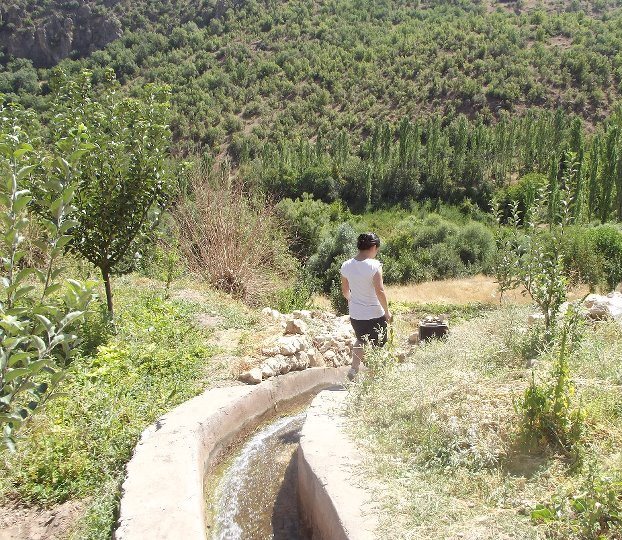
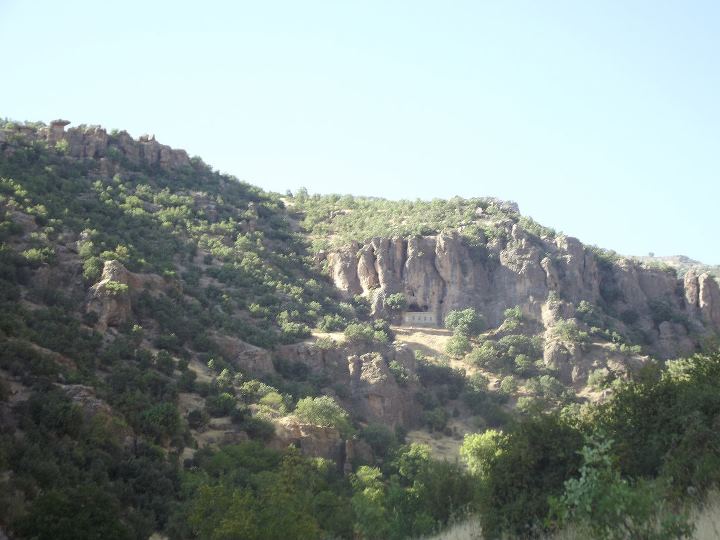
In the area of Barwar in Dohuk governorate, northern Iraqi Kurdistan, the Assyrian minority that is dominating in the villages has made their mark throughout the history.

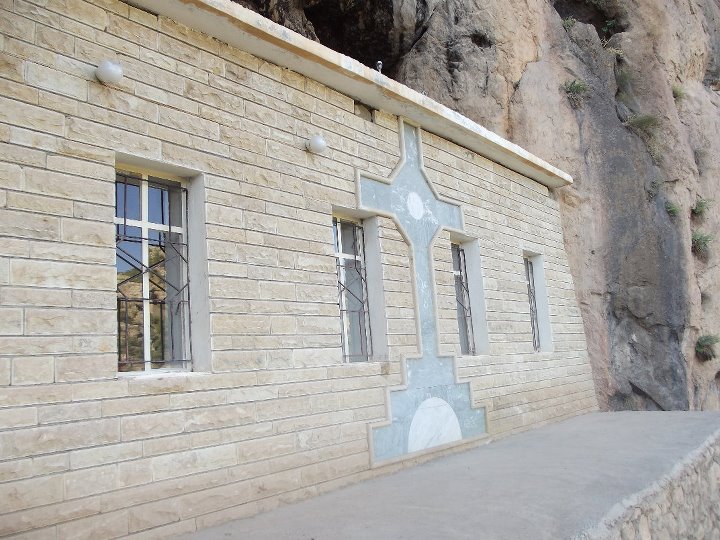
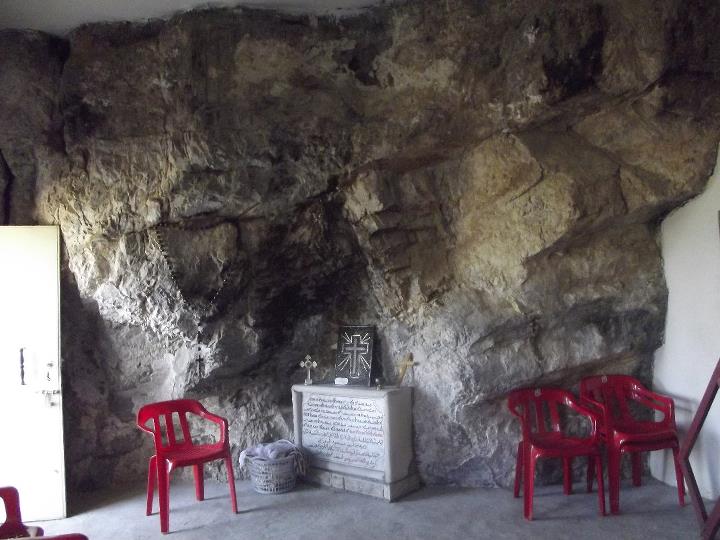
In one of the caves in the mountains a small church has been carved out. There is no way to reach the Marqa Yoma church by car – you have to climb the mountain to get there.

DSCF0687

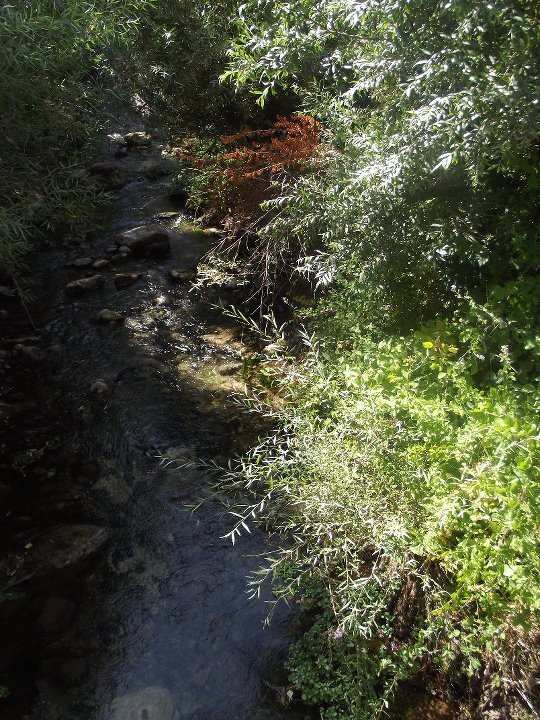
Nature is amazing due to the water wells.

dohuk

dohuk 2

Can you see the small church in the middle of the photo below?

church

It takes time to reach and it’s closed most of the time, one of the women in the village has the key.

church 2

One small room…

church 4

church 3

…and Assyrians from other parts of Iraq that have chosen to be buried next to the church in the mountains. For a minority that has survived several massacres, fleeing from place to place, it can feel good to finally come home.

DSCF0726

DSCF0725

Photos: Copyright Sweden and the Middle East Views Blog

God Save Our House

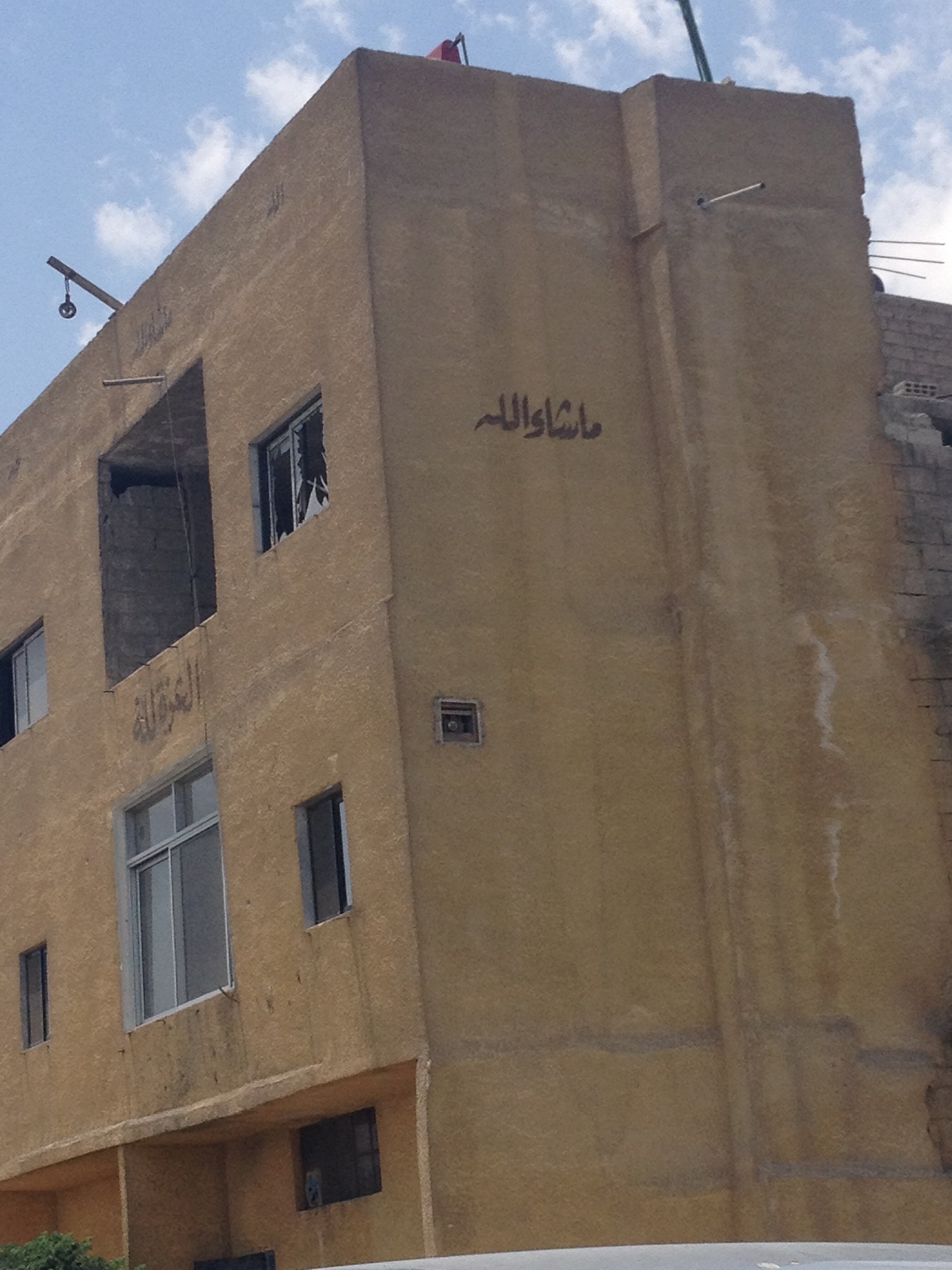
Writing on the wall of a house in one of the wartorn suburbs of Damascus, Syria, in July 2013:

“Mashallah” – God save our house from the evil eye. Whatever there is left to save.

Photo: Copyright Sweden and the Middle East Views Blog

Our Absolutely Amazing Arabic-Swedish Network

I’ve been volunteering for NGOs since my university years but I never thought I would start one myself one day; starting NGOs are for career driven young people, not the former high school dropout whose best day is spent tanning at the beach. But sometimes life takes you crazy places.

Back in 2010 I wanted people to practice my Arabic skills with and I found myself with no close Arab friends in my city of Malmö. Around the world language exchange meetings is a big thing and in Malmö you can for example practice French every other week, but Arabic seemed not to be on the agenda – despite the many Arab inhabitants of Malmö and the huge possibility of exchange. Complaining to a friend, she told me about an Arabic speaking girl she had met.

“I think she would be up for it,” my friend said. “Why don’t you send a message?”

This other girl was up for the idea and slowly me and her started to scrape together people to our language exchange meetings, held in Sunday afternoons in different coffee shops. Sometimes it was just her and I, waiting for people who didn’t show up.  But we stayed put, spread the word among our friends, posted online, and by time more people dropped in. When all the emails and text messages got too much we finally decided to start a Facebook page to coordinate the activities. The Arabic-Swedish Network was born.

We are now more than 240 members in the Facebook group and new people join every week. We have no rules for membership other than that you have to be nice to each other; you don’t need to have speak certain level of Arabic or Swedish to join, if you speak none of the languages you can just join in and start from scratch (hey,  there’s too many rules in the Swedish society anyways). New people who has arrived in Sweden and found the group online, takes the opportunity to introduce themselves on the wall and then shows up on the next meeting. As we are so many members nowadays people set up their own events: poetry and sheesha nights, dinner parties, breakfast meetings. I know of many who think Sweden is a difficult place to make new friends and getting in touch with Swedish people – our network is an exception.

Since November this year the Arabic-Swedish network is a registered NGO, we figured it was a good idea since we spend most of our free time on the network anyways; our homepage you’ll find here. Now where will this unplanned NGO go next? I don’t know, but if you’re around, drop in on any of our events – I guarantee you’ll have a good time.

Photo: Copyright Sweden and the Middle East Views Blog

The Destiny of Being Lebanese – on Today’s Bombings

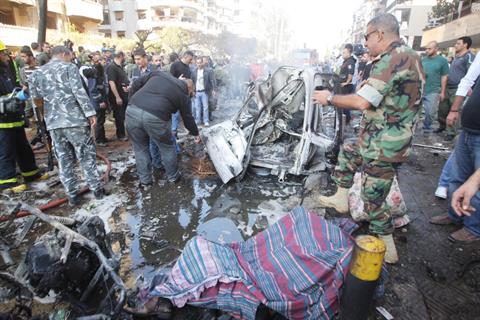
beirut bombingsWhenever I think about Lebanon I think about night life and the beach, sunny memories from long summers. But there are other things too that comes to my mind – the underlying fear of something to happen, because that something regularly does happen, and the intolerance that so easily pops up, young people that many years after the civil war still despise anyone from another group. The wounds from the civil war just doesn’t get a chance to heal when the violence button seems stuck on repeat. Today’s bombings of Iran’s embassy in Beirut is a depressing but recurrent event.

The destiny of being Lebanese if I can have my say is having a country to be proud of – beautiful and dynamic, a place people from more boring countries loves to visit. Who wouldn’t want their home country being the given summer destination instead of wanting to go anywhere else every year?

But the cost of being Lebanese is also often bitter – I dare to say this after all the “where are you from” questions with dreamy eyes I have received from various people at any occassion. For a country with all it’s potential, a vibrant job market and internationally prestigious universities, the young people still just wanna leave. And who can blame them, when your Sunday brunch in the center of Beirut suddenly can be shattered by explosions tearing people’s bodies into pieces?

The bombings and occassional violence in Lebanon has different reasons, from internal Islamic groups targeting the crazy night clubs to people who wanted to get rid of that inconvenient politician. But the very worst reason for being bombed in your own country must be when it has absolutely nothing to do with you. When your country happens to be a playground for dirty international affairs just because it has always been and because your own government can’t or won’t control the violence within their own borders.

We condemn this cowardly terrorist act which is aimed at inciting tensions in Lebanon and using the country as an arena to send political messages”, Prime Minister Najib Mikati said today.

I hope next time the government will back up their wise words with some actions. Giving the Lebanese people the right to being able to stay in their own country that should be no one elses but theirs.

Photo credit: http://www.dailystar.com.lb

First Saudi Policewoman Ever to Graduate!

ayat bakhreeba

Yesterday the world suddenly became a little better place to live – a Saudi woman graduated from the Dubai police academy, and according to the news she is the first Saudi woman ever to become a police officer!

Leaving few traces of herself online and unknown to international media before her graduation, Ayat Bakhreeba did not only become the first Saudi police officer ever. According to Riyadhconnect.com and other Gulf media, Ayat Bakhreeba is graduating in public law with a thesis research on children’s rights in the Saudi regime – a brave subject in a totalitarian regime. For a country that systematically discriminates women and children, this woman is taking a small step on the moon; which is a big step for humanity. Not that I’m surprised with the Saudi women, not at all. Things are shaking up in the kingdom.

Photo credit: Emirates247.com

The Americanization of a Middle Eastern City

Iraqi Kurdistan has an amazing nature and beautiful parks. But the capital Erbil was long a city with little infrastructure because of the many wars, and has only started to build up the last decade. Where other cities in Kurdistan had roads, sidewalks and restaurants, Erbil is still in many of it’s neighborhoods a city someone called “The wild west”.

So what happens when a region starts to rise up, especially if it’s full of oil? The international companies enters big-time, most of them American – and the urban planning of tags along. Kuwait saw the same development after the Gulf War.

erbil 3

So in a city that copies the big cities overseas, before you plant trees you build villas guarded by fence.

erbil 1

Or high-rise buildings before you finish the roads.

erbil 2

…and no supermarkets to add some life to the suburban blocks. Internationalization has its benefits, but also its doubts.erbil 4

Dina – Women’s Rights Activist in Iraq

fist gallary(1)

Dina Najem became an activist after finishing her degree in French at the university in Baghdad, when she started blogging and became active in social media and realized how invisible the women were in Iraqi media.

“Iraq has always been a closed society,” she says. “Even before the US invasion the society was controlling towards women, and after 2003 there was no security at all. Women couldn’t even walk outside alone.”

Dina, now 24, decided she wanted to work for women to be able to participate more in the society.

“I have myself no support from the society” she says. “It’s my husband and my family that supports me. The government has the ability to improve the lives for Iraq’s women, they have the financial resources, but they are not doing anything.”

After a few years as an activist within local NGOs and social media Dina applied in 2012 to the Swedish Institute’s academic program for human rights activists from the Middle East and North Africa, “Social Innovation in a digital context”. She was accepted as one of 15 participants, and so was her husband Hayder, who is also an activist.

“I wanted to focus on women” she says. “Men are already dominating trainings, the political life, everything.”

She believes many women have not been fighting for their own rights.

“The war made so many stay at home, they were prevented from educating themselves. Women don´t have the knowledge to demand their rights.The one that does are not a big number.”

Lack of technical skills is another reason for the absence of women in Iraqi media according to Dina.This makes them unable to compete with men who are in the same business. With the knowledge gained on digital media from the Swedish Institutes program Dina was able to start training others.

After the six months long course she returned in April this year to Baghdad and started the photography project “Rights Without Words” for young women in the ages of 20 to 30. She went herself to look for a sponsor and got International Media Support to fund the project. By publishing information about the course online she received an overwhelming number of applications. There are obviously many young Iraqi women that want to make their spot on the media scene.

Finally Dina chose to include 22 participants instead of 15 as originally planned. The training was divided into three courses: human rights, photography and social media.

“I want to promote human rights in a creative way in my project. The participants have learned how to express themselves by photography, and how to illustrate the declaration of human rights without using any words.”

Dina has already been able to show the photos in the Iraq National Theatre, when the Iraqi musician Nasser Shamma was hosting a concert, a previously rare but nowadays more frequent happening in the capital.

Dina hopes that the world is interested of the positive development that is taking place in Iraq. She and her husband are not planning to move abroad – they want to continue with their activism despite the insecurity in Iraq. Even though she criticizes the domestic politics she thinks that there is hope in the expanding civil society. The many applicants to her project are a sign of willingness to change.

“I’m hopeful” she says. “I see so many girls that want to study and participate in everything.”

Next up in her work is to focus on women bloggers, and she also wants to work with mixed groups of young women and men. In a country where the sexes often are separated she thinks it’s crucial for women and men to work together and get to know each other.

The struggle for women’s rights is the core of her activism and she openly calls herself a feminist despite the resistance she often encounters. At the same time she is a Muslim and proud of that.

To the ones who question Dina’s commitment to human rights in a country where civilians are killed every day, she usually says:

“Well, but you can’t just sit on your chair. You have to defend your own rights.”

Rights without words

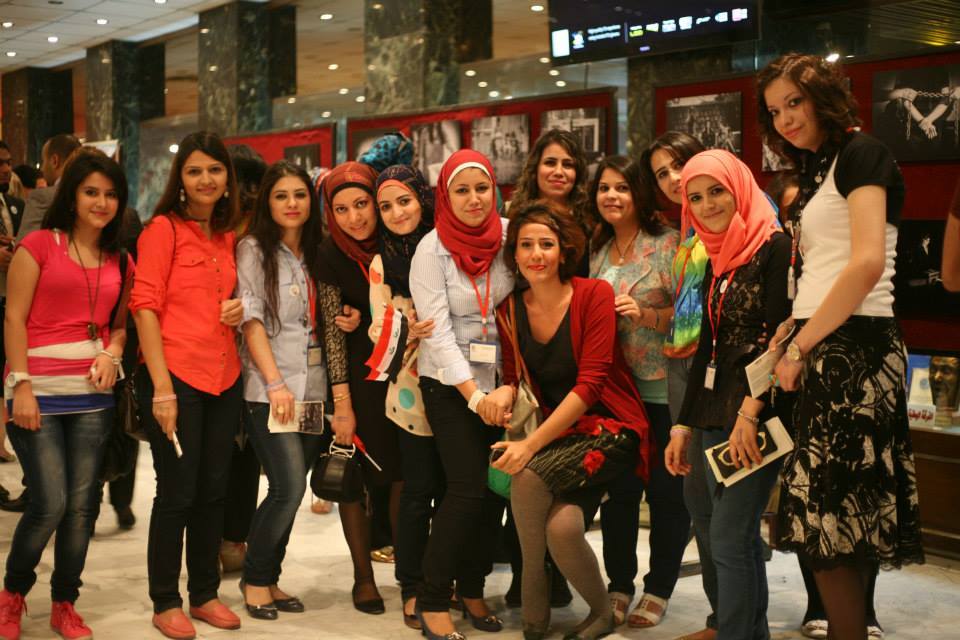
Participants in “Rights Without Words”

Photos: Copyright Dina Najem