The Dying Girl

I’m a seasoned humanitarian aid worker and it takes quite a lot to upset me. Even though I moved back to Sweden I work with refugees, most of them are from Syria, so I comfort people a lot in my daily work and I hear the most horrifying stories. I keep tissues in my bag for these reasons, because women have a tendency to collapse in my arms, crying over everything lost and the horrifying things they’ve been through.

Then recently a new friend showed me a clip on his cellphone, from the underground hospital in Homs where he had worked – without formal medical training – as a nurse. Underground hospitals in Syria are run by ICRC and other organisations that treat patients impartially; in Syria it means without reporting opposition members to the Syrian regime. They operate without proper equipment, and often with staff who have little medical training. My friend had recorded quite a lot of the work in the unit and brought the movies with him to Sweden.

The footage was of good quality. Could it be useful for Swedish media? Everyone knows that there’s a civil war in Syria but few knows what it actually looks like when you’re in the middle of it. And these kinds of footages rarely make it to the international media.

I watched the clip in a coffee shop where we met during Christmas in Sweden. It was rainy and damp outside and people around us rested from their shopping sprees. I used the headphones not to disturb the other guests. I’m used to misery but I do respect people who are not.

The sounds of airplanes and bombs outside were suddenly drenched in the voice of a medical doctor. He came running with a small girl, 3 or 4 years old, in his hands, that he placed on a small bunk. But the girl wasn’t bleeding, she had no bruises, her skin was smooth and perfect. She looked like my niece that I had spent the previous day with; chubby and with her curly hair framing rosy cheeks. She seemed to be half-asleep. The girl wasn’t crying, only wailing softly. Why was the doctor in such a hurry?

“Internal injuries”, my friend said.

Then I realized: she was dying from the inside and out. The girl was in such pain that she was beyond hurting. As the doctors inserted a hose through her mouth she half-heartedly raised her hand to try and prevent it, she looked like a child who don’t want to take their medicine, nothing else. The doctor put her hand back to her side. The small natural efforts of a child to escape discomfort slowly faded. I knew what was coming before the movie was finished. I unplugged the headphones so I didn’t have to listen to it all. Life was slipping out of her by the second, under the panicky ways of the staff with sometimes little medical training in a make-shift hospital in the basement of a shabby, abandoned building in the previously so beautiful city of Homs.

Only then it struck me that there was no other people in the hospital that were worrying about the little girl than the staff. No crying mother or a father.

“She was the only survivor of that attack,” my friend confirmed. “Her mother and father, her sister, they were all gone.”

Someone was crying at the table that day, despite me not being at work. It wasn’t my friend, despite all the traumatizing things he has been through. It wasn’t anyone of the women that usually collapse in my arms when I visit one of the refugee camps. To my surprise I realized it was myself.

Christmas in Baghdad

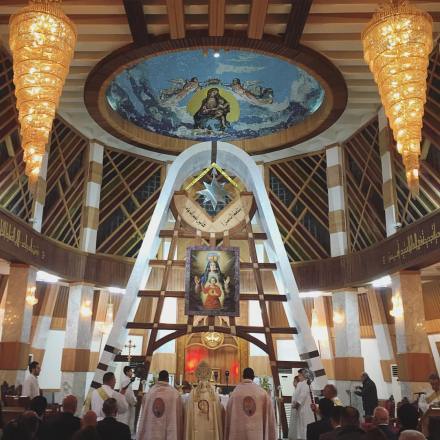
Christmas Eve yesterday in Baghdad, Iraq. The photos are from the Iraqi photographer Ahmad Mousa, founder of the @everydayiraq project. The captions are the original ones from Ahmad Mousa’s Facebookpage.

10295015_10203869910308405_4750105813454503804_o

Iraqi Christian girls light candles on Christmas Eve at a church in Baghdad

1980466_10203868350109401_4576801807836803229_o

Christmas mass in Baghdad, at Our Lady of Salvation church

10386997_10203868315308531_5199901384359251384_o

Christmas mass in Baghdad, Iraq

American Jewish Women in Support of Middle Eastern Refugees

After Donald Trump’s horrifying statements regarding Muslim refugees, tensions have been high in social media, and therefore I was happily surprised to see a different kind of action.

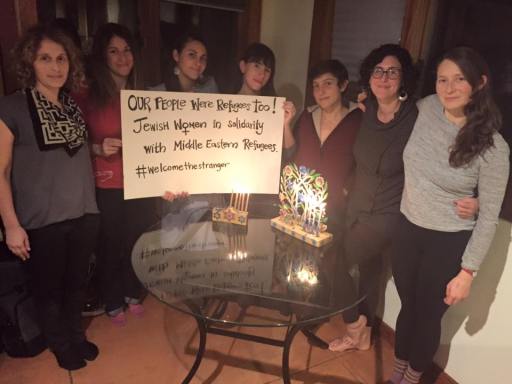
A Jewish women’s group in US decided to start a movement under the hashtag #welcomethestranger, with this aim in mind:

“…to counter the rise in anti-Muslim rhetoric and corresponding legislative action recently taken by Congress (HR 4038) that would keep refugees in limbo until they are “certified” as not being a security threat. People who are fleeing for their lives. We must not let this come to pass in the Senate. please join us in this action of writing your representatives, and share additional actions you are taking. Now is the time.” 

12376013_1021312397889103_829198249871583650_n

12346458_1021312377889105_1815293464324691171_n

It will be interesting to see how far this campaign can reach. In this polarised and intolerant times, I decided to share this small, but for humanity so necessary action, with you.

Photo copyrights: Leah Katz Ahmadi

“Iraqis and Iraqis Only Will Own This Land”

Iraq doesn’t belong to IS, Iraq never did. Don’t get fooled by the news.

If you follow anti-IS activists online you see plenty of resistance everyday, resistance that rarely make headlines in the Western news. The lack of international recognition for these activists is a reason I share these news on this web page.

This is Tourism in Iraq‘s, the page I have written about on previous occasions, latest, subtle, response to the so-called Islamic State, in form of a Facebook status update:

Iraq is the cradle of civilization with great history and magical beauty. lraqis and Iraqis only own this land.

12294908_1058223907531119_1346037794364198499_n

Photo credit: Tourism in Iraq

I Still Don’t Share Photos of Murdered IS Terrorists. At Some Point This Still Needs to End.

After the Paris massacre a photo popped up in my Facebook news feed, signed the Kurdish security forces, Peshmerga, that I follow. A photo of a murdered young man, clearly shot dead while on the move, probably fleeing for his life. His face is frozen in a frightened expression, his hands curled up in spasms, his face covered in blood.

In front of him another young man is peeking in to the camera and cheekily sticking out his tongue. The photo caption reads “Gift of the Peshmerga heroes to French people“.

The comments are almost exclusively overwhelmingly joyous and sarcastic:

“Nice shot”

“Stay Frosty”

“He’s throwing ISIS gang signs LOL”

I didn’t hit the like button for this photo. I didn’t share it. I did consider potentially stop liking Peshmerga forces, despite the information the page provides me.

It might be obvious to you why I reacted like this, but to sum it up, here’s the comment from the one follower of the page, a young man too and I believe he is Kurdish, who did not agree:

By posting this you bring shame on the Kurdish people.
We should not be driven by hate, but by humanity and our love to freedom.

If only more young men were thinking like him.

I have never and will never share photos of murdered or injured or caged IS terrorists. We might be approaching the third world war, we might be in the middle of it, but at one point, this still needs to end. And peace will not come faster by seeking revenge and mocking the dead ones.

I will not be the person to prolong the wait.

The Fighting

744px-Lebanese_French_flag.svg

The fighting over flags is ridiculous.

The fighting over who suffers the most is ridiculous.

The fighting over where people come from is ridiculous.

The fighting over refugees is ridiculous.

We are all tired, afraid.

We all want to live.

Photo credit: Wikipedia.org

Iraqi Schoolgirls, Crossing a River To Go To School

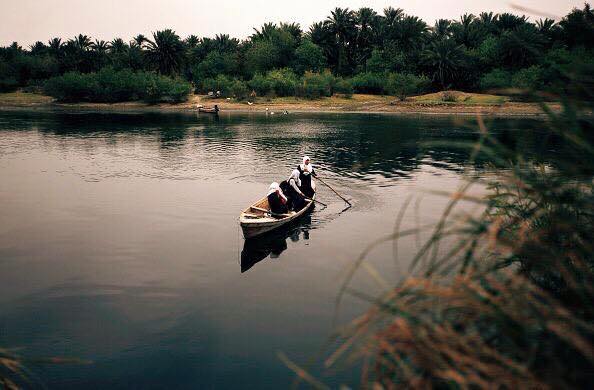
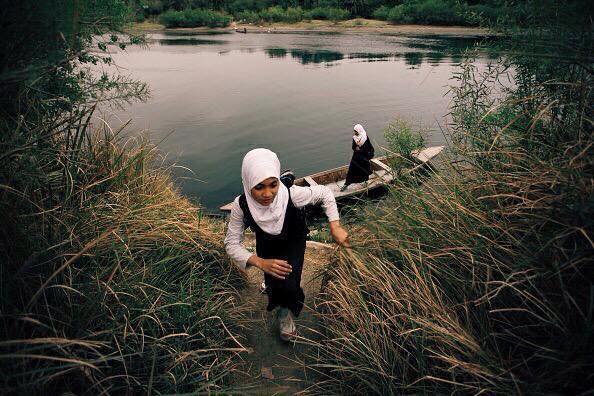
Iraqi school girls paddle a small wooden boat across a river, as they head to school.

Najaf, Iraq

12088348_1040835819269928_8886031001314180471_n

12074551_1040835799269930_3607543124984798897_n

12079527_1040835789269931_1120048001275868244_n

Photo credits: Tourism in Iraq

“When Politicians Failed to Agree on Conducting the Country’s Affairs, the Quartet Helped Them.”

151009102440-tunisia-nobel-prize-winners-2015-large-169

The Tunisian National Dialogue Quartet

Congratulations Tunisia! We were many who were overwhelmed by joy when the Tunisian National Dialogue Quartet scored the – Swedish! – Nobel Peace Prize of 2015 a few days ago. Finally, a light at the end of the tunnel!

Now, what does a Tunisian person think of this? My friend Firas, who usually is happy to share his ideas about politics, especially the Tunisian ones, gave me his ideas, in a typical Tunisian style of mixing English with French vocabulary. He was, for once, very optimistic. A trait that is not very common among Middle Eastern and North African people nowadays.

He is happy to say that the quartet deserves it:

“They negotiated for a year in order to take country to the end of the tunnel. 2012 and 2013 were tough years. Radicals were in the government, economy was down and terrorism and unemployment up. The Nobel Peace lauréates managed to make a deal, through dialogue that allowed peaceful power shift.

They lobbied and conducted a dialogue that almowed power shift from mainly islamist government to a next one made of technocrats. This lowered social tensions… Each part of this quartet represented a part of the society. When politicians failed to agree on conducting country’s affairs, the quartet helped them.”

Firas says that the quartet helped in avoiding dictatorship and power vacuum, and points out that they negotiated around nine months to facilitate the power shift to a technocrat government and to prepare for the first democratic election:

“They negotiated around nine months the power shift to technocrat government, a non-politicised one whose mission is to keep the government afloat, and prepare for the first democratic election that will bring first democratically elected government.”

I share Firas’ hopefulness too. This quartet helped Tunisia in avoiding the fate of Egypt and Libya: where sectarian tensions has taken over and terrorism replaces politics. These days I think we should celebrate the victory over terrorism, or as the player would put it: Dialogue vs Conflict: 1-0.

Photo credit: cnn.com

Beiruti Graffiti in a Time of Turbulence

10402964_10153188059712903_4009785402964153413_n

Beiruti graffiti, captured with someone’s smartphone and posted online.

Is it maybe a comment to the ongoing protests against the uncollected garbage in the city, the so called Garbage Crisis? Or is it a comment to the terrorist groups in the region, pretending to commit crimes in the name of God? Or maybe it’s just the people being fed up with not being listened to by anyone in power?

The graffiti reads, in translation:

“There is no God but the people.”

Did you get the reference?

“There is no God but God.”

Photo credit: Charbel Maydaa’s Facebook page

Alfarra Ft. Sami Bakheet: Refugee, Official Video with Lyrics

From the artist Alfa in Gaza, together with the rapper Sami Bakheet, who usually plays in Darg Team, here is the song “Refugee”.

The lyrics are on how the journey begins in Gaza, and where it ends. The reasons you have for leaving Gaza in the first place, until you meet reality.

Even if you don’t understand Arabic, I still hope you find the song nice to listen to.

Update August 5:

You can now read the subtitles in English if you click “settings” -> “subtitles” on the Youtube clip.