Saudi Women – Gender Apartheid: 1-0

General court in RiyadhFinally a change that’s not an April fool’s joke!

Today on October 6 Saudi Arabia’s Ministry of Justice is supposed to issue licenses for four female lawyers, that would make them eligible to work as lawyers in the country. Previously, Saudi women have only been able to work as legal consultants, meaning they could not open law firms or represent clients in court. With the change in practice, not only could the Saudi female lawyers now practice the profession they spent years educating themselves to exercise, it would also mean that women who are trials now have the right to have a woman representing them for the first time ever. Women who are meeting their ex-husbands in court over custody battles and in the very few cases of domestic violence brought to court, women often found themselves being the losing one, no matter how strong her case was. With professional women in the legal system women will at least have a voice in the court room.

On social websites the news was flooded with comments from all sides. Not everyone was positive to the potential impact it will have on the society. “Baby steps” a comment on the link that the Facebooksite Saudi Women to Drive shared with the news; “Where will they work?” asked another. It’s impossible for me not to agree on the criticism, but baby steps with Western standards for gender equality is in Saudi Arabia a game where Saudi Women today scored 1-0 against the gender apartheid system.

I’d prefer to say: What’s next?

Photo credit: rt.com/AFP Photo
Who Cares About a Dead Iraqi Anyways?

On a week like this, when 55 persons in Baghdad has been killed by bombs in a vegetable market; outside a mosque and in residential areas, I feel with the Iraqis, and I feel with the families of the assassinated civilian people that happened to be in the wrong place at the wrong time. The 55 persons of yesterday were not the only ones: last month almost 1.000 people were killed all over Iraq.

And I’m relieved that I’m not working for an Iraq mission as I have in the past, even though safely tucked away in the comfort of Kuwait or Iraqi Kurdistan. Relieved because I don’t have to work Skype and the phone to make sure none of my Iraqi colleagues are among the murdered. Because what would happen if they were?

No one would be hunted down by the local police and tried in front of the justice system, where they would get their rightful punishment, that in turn would discourage others from committing the same crime. No office or NGO would close for the day or a minute of silence be demanded in order to respect the dead. No debriefing would be given to the other staff to help them cope with the loss. Work would carry on as normal and the organization would send their condolences to the family while starting the recruitment process for someone new. Years back in an Iraq mission, my expat colleague whose team member was taken from his own house under gunpoint by one of the many militias, and tortured for hours before being killed, was left on her own to choke back tears in front of her laptop after the murder. Because who cares about a dead Iraqi anyways?

The colleague of ours was actually a person, a real human being. He happened to be friendly and everyone in the office liked him. He had a family that loved him, a mother and a father, sisters and brothers that missed him deeply when he was gone. But in the eyes of many he was a nobody, just another dead Iraqi. I rest quite assured things remain the same for the Iraqis whose lives are lost today.

Two Voices from Aleppo University

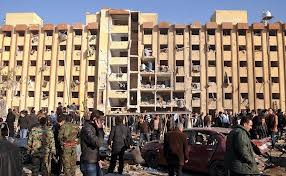
Aleppo University after the bombings January 2013

I was able to talk with two persons from Aleppo University in Syria, that shared what they had been going through.

Here are their stories:

I was offered a job at Aleppo university after my studies. When the revolution started we as employees in a governmental institution were made to cooperate with shabiha (a feared subgroup within the Syrian intelligence/military, some claim they are criminals that the government recruits to terrorize civilians, a strategy to stop the revolution). We had to assist them in their fights against the protests. I tried to act as if I assisted them, then I was able to escape the country.

My home in Syria is all destroyed, my street is in ruins. No food is available and when going to search for food to buy people are being killed by snipers. Why are the government and the Free Syrian Army taking it out on us? We are only citizens.I  didn’t think the revolution would go this bad, and I blame both sides now. They have both helped in destroying my city.”

I was a student in Aleppo university. In January 2012 students were gathering in front of the cafeteria, holding a protest. They were protesting peacefully, shouting for freedom, protesting against the war and demanding the release of political prisoners. Security guards inside the university called shabiha without the students knowing. They came directly and started arresting students on spot and hit them with electrical batons. Another time they gassed the university with teargas.

Then on January 15 2013, it was first day of the examinations, the government bombed the university, many people saw the attack and that it was carried out by a warplane. Still when I see a plane or helicopter in the sky I get an awful feeling. One missile hit the entrance of the faculty of architecture; the other one hit the student dorm that had been evacuated to host refugees from other areas of Aleppo, people that had have to flee their homes. Dead people were littering the streets all around.

I can’t forget the barbarity of Shabiha and the security forces, the way I saw them attack the students or the sounds of clashes and missiles around us. I still have nightmares and then I wake up sometimes and I have to say to myself: ‘It’s ok, I’m out of Syria,I’m safe now’. But now a year after my departure, the situation is more much worse. There are inner borders and snipers in everywhere and there isn’t any safe place left in Aleppo.

Photo credit: New York Times

Aleppo Screams S.O.S.

Aleppo Screams SoS pic

So now the world is discussing whether the international community should intervene in Syria after the latest chemical attacks that the regime brought on its people. I can’t launch a clear opinion in this issue, because I’m not sure an international military intervention would bring less suffering to the Syrian people – but assistance of some kind seems to be needed since the revolt has escalated into civil war, with human rights abuses reported from both sides. But what the world show know is, many of the Syrian people have been asking for help for a long time, before the conflict steered towards total chaos.

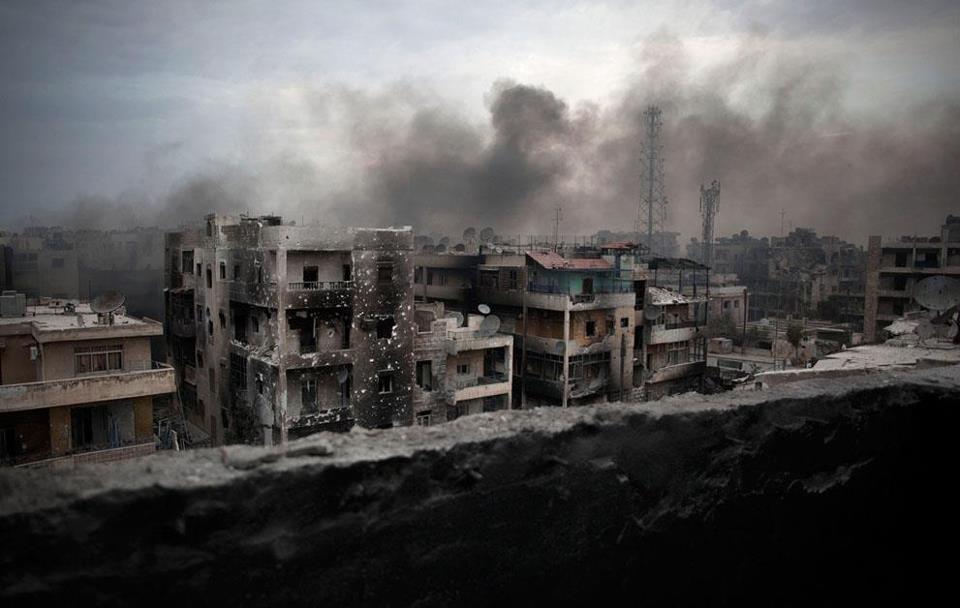
The ancient city of Aleppo, once a beautiful green city in the northern part of the country, is now one of the most destroyed cities in the world. Eager to crack down on the uprising, the Syrian government has bombed the city to pieces, wiping out the infrastructure. Electricity and water is cut off, hospitals are functioning without the most basic needs, earlier this year 90% of all children of Aleppo were reported to be out of school – and the number can hardly have decreased. Below is  picture of Saif Aldowleh Avenue in Aleppo before the war started in 2011, shared with me by someone that wants to show the world what happened to his city.

And here is the same avenue, from a slightly different angle, today:

Do you think this might be expected when it’s a war somewhere? Then remember that the inner city of Damascus is still untouched, with schools and supermarkets open and a vivid nightlife still available for young people to party and attend karaoke nights, like nothing is happening in other parts of the country.

Desperate to make the world realize what is going on, a Facebookpage was started by some of the inhabitants of Aleppo in June 2012; Aleppo Screams SoS. Click on the link and have a look to see how the citizens of Aleppo were asking for help long before the most recent events, publishing photos on the ongoing destruction, photos of killed children, asking people to share. I hope the world will listen soon.

Photos: anonymous source, copyright Sweden and the Middle East Blog; Photo credit: https://www.facebook.com/AleppoScreamsSos

“If someone asks you about what is happening in Syria tell him the humanity is died”

Today media has been flooded with the news that Syria has used chemical weapons in another one of their massacres of the citizens in Damascus suburbs, Eastern Ghouta. Some say victims counts in hundreds, others claim it’s over one thousand. Children suffocated to death after the and hospitals did not have enough resources to treat the overwhelming amount of victims rushed to the emergency rooms, where many more lives were lost, because what hospital can be prepared for a massacre?

I’m not posting the photos here but you can imagine what victims that has suffocated to death look like: frozen faces where panic and fear is still visible, mouth and eyes wide open.

It’s not the first time Syria has used chemical weapons on it’s citizens though. In March and April this year the Syrian government was accused of using chemical weapons in order to strike out the population. And in the 1980s the regime used the same kind of weapons to – effectively – crack down on the erstwhole uprising.

Today many of my friends Facebookpages were filled with sad and angry updates, and not of the regular kind. On one friends status, someone commented: “If someone asks you about what is happening in Syria tell him the humanity is died”

Egyptian Streets, شوارع مصر

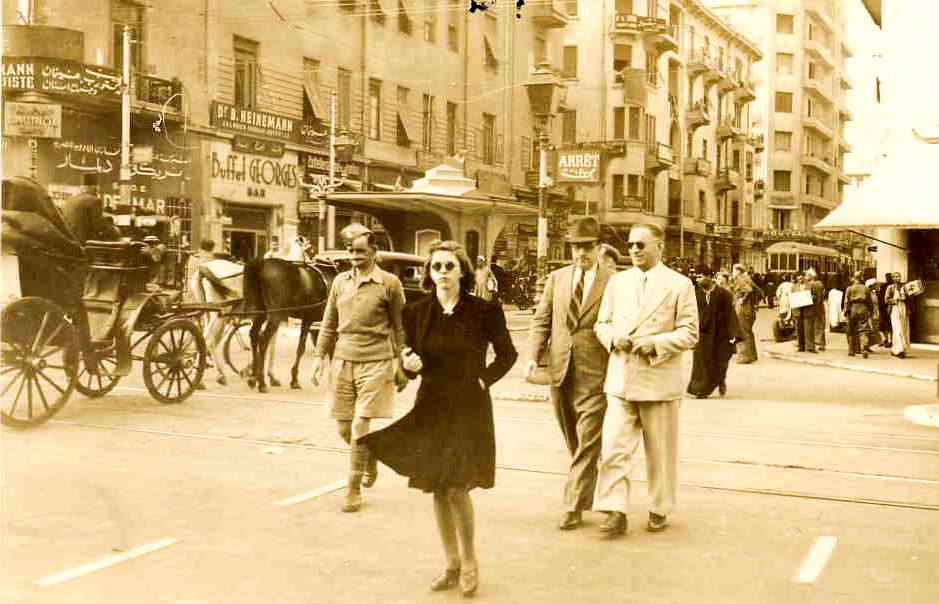
A great insight in what’s going on in Egypt is to be found on the website Egyptian Streets. From their Facebookpage today I have borrowed this photo and statement:

These are not the streets of Paris, London, or New York. This is an image from 1941 at Emad El Dine street in Cairo.

During this bygone era, women were not afraid to walk in the streets. Garbage did not form mountains on every corner. Grey, uniformed apartment blocks and thick smog did not obscure the sun’s light.

A bygone era indeed.”

egyptian streets

Photo credit: http://egyptianstreets.com/

I Survived the Banyas Massacre (warning: gruesome story)

Who told me this story? It doesn’t matter. When did I here this? In June this year, one month after the Banyas massacre had taken place on May 3 2013, conducted by governmental troops on civilians. In Damascus noone mentioned the massacre by name, instead we called it “unrest” or “outbreak of violence”. The result of the systematic killing of everyone in the village is easily found online, but in the heart of the government controlled capital that is nothing you can talk about.

Why did the person tell me this story, despite the danger of talking about the ongoing crimes against humanity in Syria? I guess some things are just too unbearable to keep to yourself. I couldn’t share this story while I was still in Syria, but I can now. And why am I sharing it? I want the world to know. I hope all of you readers do, too.

“Do you know what happened in Banyas? They did something horrible there. They did something that no God allows, no religion allows. What they did is forbidden in all religions!What does the persons want, who are controlling our country? What do they want from God?

There was a couple here some weeks ago. They left me their number, look, here’s the note… When I heard about what happened in Banyas I tried to call them, I was worried. But the line was shut down, I didn’t even get a signal. I heard that they had shut down the lines to all the telephones in Banyas. I called and called.

First after a couple of days the man answered. He said:

They came in the night, they killed my wife and my two children‘.

His wife was pregnant when she was here, I saw it myself, she was seven or eight months pregnant. Do you know what they did to her? They cut her in the chest, like this. Then they cut open her stomach, her whole stomach, and took out the baby. Her husband cried when he said:

They killed her, they killed my unborn baby, they killed our two little children. I’m the only one left. They are all gone.

Another Side of Damascus

Everything is not all horror in Damascus today. There are beautiful people there, and beautiful places.

Photos: Copyright Sweden and the Middle East Blog

Whatever You Do, Don’t Get Raped in Dubai

In the Gulf and especially Dubai, prostitution is available everywhere. Online, at clubs and bars, in private parties. Young girls locked up or seemingly free; Asian, African, Eastern European. My experience is that prostitution is so common and accepted it’s hardly attached to any stigma for the buyers (“Why should I visit a whore?” a man once told me. “I get lots of women, I don’t have to pay!”). For being an Islamic country, this exception seems to exist within any moral remorses with the leadership.

So what’s the deal if you are forced to have sex against your will, if you get raped? The same legal system that overlooks the brutal sex trafficking will most likely confine you for having sex outside the institution of marriage and punish you as the victim instead. This goes for men and women, underage as well as adults.

This week the news broke that the Norwegian woman in Dubai, Marte Deborah Dalelv, who had been accused of premarital sex after reporting a rape to the authorities, was being “pardoned” and did not have to do her previously sentenced punishment in jail. Throughout the process she had been hiding in a Norwegian church in Dubai and international media had monitored the case over the past year. Now would a woman who was not white, westerner and with huge international support have been “pardoned” from the sentence? Probably not. And what else is, Marte’s rapist was pardoned at the same time.

Now many other countries have increased their legal support for victims of violence and sexual violence; in 2011 Iraqi Kurdistan passed a law that forbade domestic violence and in for example Lebanon there is a big network of women’s shelters with legal and social support for victims. Despite their financial lead, Dubai is still many years behind.

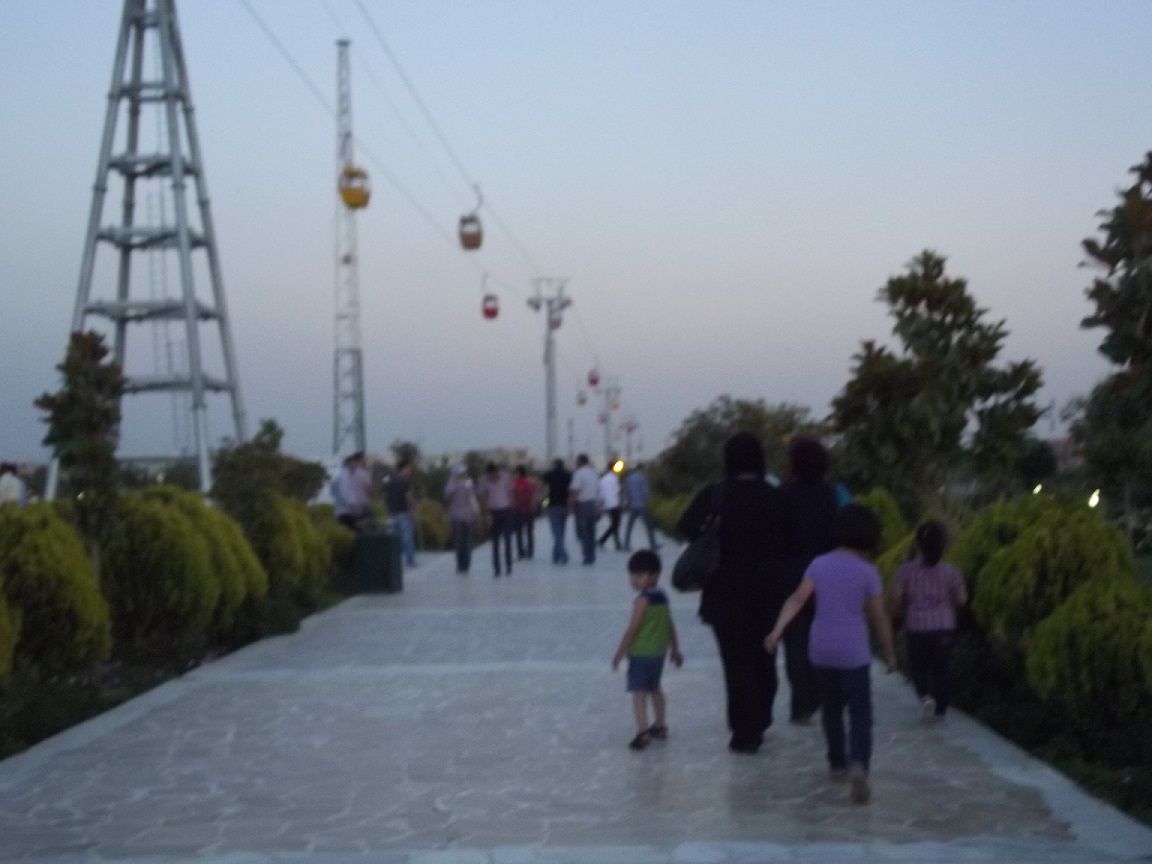
Shanadar Park, Erbil

park 1 ny

park 4

Photos: Copyright Sweden and the Middle East Blog