How I Accidently Got Involved with the Syrian Opposition

During the chilly spring of 2013 I was a humanitarian aid worker waiting for my next mission. Didn’t yet know where I was going but I was busy preparing to lease my flat for the upcoming departure. As I spent my days carrying books to the basement and cleaning out wardrobes – I did this regularly, then carrying everything back up a few months or a year later – I was suddenly accompanied by a newly made friend of mine. A young Syrian woman who decided to drop out of the human rights program she had been brought to Sweden to attend, and apply for asylum. 

“I’m leaving this place tonight,” she said on the phone in a hushed voice. We hung out quite a lot, and had known each other since the year before.

“Where are you going to stay?”

“I don’t know.”

“Come here.”

My friend was a beautiful young woman, intelligent and charismatic. But that evening when she showed up with a hastily packed suitcase, other adjectives would have to be used to describe her appearance. 

I did what I usually do when someone moves in with me with short notice; made tea, brought out blankets and a towel. My living room couch was used to hosting people, it actually never complained once, but it had never served someone with so many raw emotions, energy and anxiety at the same time. 

“You’re safe here”, I tried to comfort my friend that very first night, not knowing if I meant safe at my place or in Sweden. 

Fear was nothing new to her. She had after all one of the most dangerous jobs a person can possibly have – the one of being a journalist in Syria. But neither she nor I had thought that the threat of the regime could exist in the form of individuals in Sweden. 

I too was uncomfortable being around this individual, and we agreed not to let anyone know that she was staying with me. Now 11 years have passed, and it’s safe to tell the story.

As we spent most of our time together in my small flat during that chilly month in spring, we started to get to know each other better, and quickly resumed some kind of schedule.

“What are we watching tonight?” she would ask, as she was preparing plates of fruits, biscuits, cheese – much needed plates since we always stayed up late. Sometimes the snacks were accompanied by a bottle of wine if we could afford it; her monthly grant as an asylum seeker had yet to be started.

As we worked our way through seasons of Girls, she started to share more about herself. Her stories were incredible, but she had no idea:

She had been on a journalistic assignment covering the war, when she and the cameraman had to flee by car from people sent out to arrest them. In a hospital they had been able to take cover. She remembered her mouth being so dry that she couldn’t speak. 

When her blog where she wrote about the war crimes committed by the regime became famous, she was arrested with her baby, and it was someone close to her who had snitched, letting the regime know where she was staying. 

During her arrest protests had been organized to demand her release. She showed the online posters with her name and photo – this later became useful evidence in her asylum case.

Listening to her stories of amazing courage became a crash course in the Syrian uprising and taught me how to recognize common patterns – phrasing, reasoning – of Syrian activists trying to bring down the regime. These skills would turn out to be useful later on. I could be accused of many things but not that one of being a bad listener. Or writer.

I had been to Syria before the war and I could relate to her description of her beloved country. Have you ever smelled the jasmine flowers of Damascus in summer? Have you watched the water pass by in the water wheels of Hama? Those are beautiful sights. I would say it’s impossible to visit Damascus and not fall in love with the city and the people. The beauty infiltrated, though, by the underlying threats of violence – a violence not only directed towards political opponents. 

One story I was told by a pro-regime friend said how the ruling family had a part in organizing kidnappings of young, Syrian girls for wealthy men; their mutilated bodies dumped afterwards in lakes, attached to weights. 

“I want to go home”, my friend often said. 

I thought that she would if only she was patient. Much like the people that I got to know in those early years of the revolution, I believed that the Syrian opposition had the strength to overturn a sadistic regime. 

Sure, the opposition was fragmented, without a clear hierarchy, and there was worrying news about extremist groups funded from the outside. But the Arab spring was hopeful. Areas in Northern Syria were taken over by the opposition; the Kurds had support from the other Kurdish regions. The activists I knew were intellectual, reflecting, with a deep longing for freedom and the right to live a life without fear. They must be able to do the change, right?

It wasn’t always easy to host my friend, but I dealt with enough traumatized people to have some tools and boundaries. To help her cope we went out, went to my friends’ parties, cooked dinners. 

Did I mention that she was beautiful? Her looks were actually amazing. Going with her somewhere, people stopped and stared; men kept calling and asking her out. One man was stupid enough to message me on Facebook, asking to wire me money so I could buy her flowers. I agreed, cashed out, we spent the money on ourselves. 

We also loved watching silly movies. One favorite was Crash – when the main character in a rehab center wrote a letter of apology, admitting he was alcoholist and didn’t want to be anymore, we changed the lines to the certain individual she had fled from:

“I’m sorry I pretended to be your friend so I could spy on you for the mukhabarat!” she exclaimed.

“I don’t wanna be an undercover agent for the Assad regime no more!” I latched on, and we laughed hysterically.

So why did I do what I did a few months later? Why did I write the articles that I did? Syria is not my country. I lost friends, pro-regime Syrians, because of it. They saw me as a traitor, someone interfering in an issue that wasn’t mine. 

It was not planned in advance. My friend was, of course, an influence. But also because of her many compatriots that I connected with, my love for them and the country. Syria did not deserve the terror that was brought onto them because they demanded what some take for granted: a system not deflated by corruption; wages enough to live and not only survive on; the right to live a life free of fear. 

And we believed in change, I believed in change. If enough stories came out about the war and the crimes against humanity being committed there would be little chance for the Assad family to stay in power. They would sooner or later leave the country on a private jet heading to Riyadh and never come back, finally giving up a power that was never given to them by the public.  

The day came when I got the call about my assignment. In the evening, my friend asked where I was going. 

“Can you have a seat?” I told her. 

Confused, she sat down on one of the kitchen chairs, it was one of the few items in my now empty flat that hadn’t been moved to the basement.

“Why? Where are you going?” 

I hesitated slightly. Then replied.  

“Damascus.”
The Country of Kuwait Before the Americans Moved In

There was a Kuwait even before the American troops went in 1991 to kick out the Iraqi occupiers. Kuwait is a source to a rich culture and heritage: it contained different tribes with different traditions, music and tales, beduoins living off the sea where they were fishing for food and pearls that they traded in one of their many travels around the Gulf region. But much of it has gotten lost to the outside world. What many foreigners see in Kuwait is the many fastfood restaurants and the malls that popped up en masse after the Americans came in and stayed on.

A Kuwaiti friend of mine is dedicated to show the Kuwaiti culture and it’s from him that I have received these photos. He doesn’t have the copyright he has himself received them through social websites, so I decided to share them on. The descriptions of the photos are from my friend.

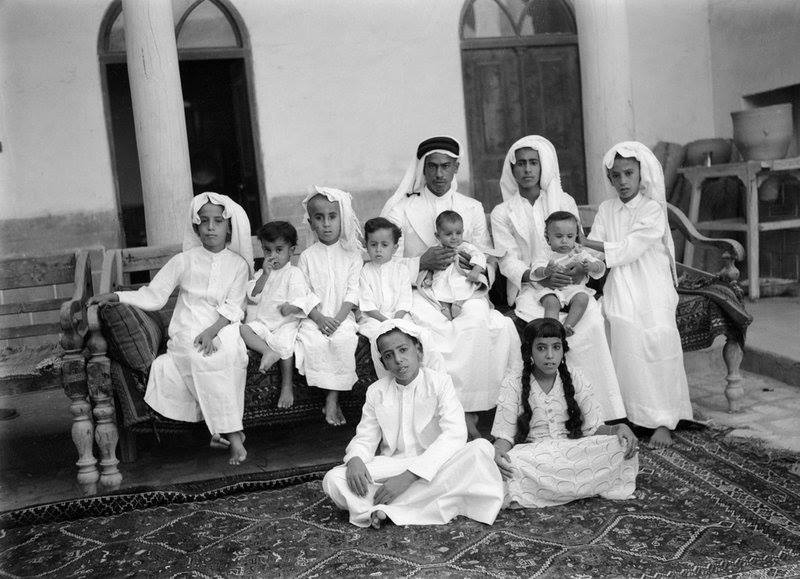
A Kuwaiti trader with dependents to another 1930s

Kuwaiti traider with dependents, 1930s

Bedouin weaving Kuwait

Bedouin weaving, year unknown

kuwait year unknown

Year unknown

Kuwait 2 1961

Kuwait 1961

Kuwait 1961

Kuwait 1961

unknown 5

Year unkown

unknown 7

Year unknown

Photo copyrights: unknown

Diving Sisters from Saudi Arabia

saudi gazette

Noor Al-Dubais (left) and Taammul Al-Dubais (right)

Photo credit: saudigazette.com.sa

Two sisters from Sanabis town on Tarout Island on the Eastern coast of Saudi Arabia made headlines this week as some of the few professional women divers in the country.

The local newspaper Saudi Gazette reports that Noor and Taammul Al-Dubais were raised in a seafaring family and that they have been surrounded by water all their lives. Noor was 5 when her father taught her how to breath under water and the sisters held their international diving licenses as 10 year olds. Now they wish to pass on their passion for diving to other girls. They are diving as a professional duo and have been diving on many different occasions.

They started to dive in the city of Jubail on the east coast, around Jana Island. Noor says to the newspaper Alsharq daily, regarding her diving experiences in the Red Sea off the coast of Jeddah:

I swam among the beautiful coral reefs as if I was a bird flying in a garden. I enjoy diving because my soul separates from my body when I am at great depths.

She says she finds guidance in her parents and that her friends from school encouraged her. The sisters’ father has been a great supporter and he himself is also a diver and a fisherman. He is also Noor’s and Taammul’s professional trainer and has designed a special diving suit for women that he said respects Saudi customs and traditions. Sports for Saudi women are not accepted by everyone and professional sports women in the Kingdom are an exception. But the sisters’ father says:

Noor and Taammul are part of a diving family that loves to look for coral reefs and explore the magical waters of the Gulf. All of my sons and daughters are divers.

Hopefully Noor and Taammul will set an example for many other brave young women around the world.

Tourism in Iraq – Another Country is Possible

When was the last time you heard some positive news about Iraq? It’s been a while, huh? I’m as guilty of charge with my blog posts, but the suffering that often takes place south of Iraqi Kurdistan is hard to ignore, which is a strong reason to happier news from Iraq hardly making headlines.

When I first saw the page “Tourism in Iraq” on Facebook I wondered what was the idea with it. And who was behind it? It didn’t seem to be one of the many ironic sites you can find on the net; there was no “Postcards from hell” feeling over the updates. Beautiful photos showing nature and tourist sites in Iraq with explanations in English and Arabic were being posted on a daily basis. Photos from a game of women’s beach volleyball in Baghdad mixed with photos of new construction sites. Over one reads the conciliatory phrase “God bless Iraq from the north to the south.” I decided I had to find out what or who was behind this page.

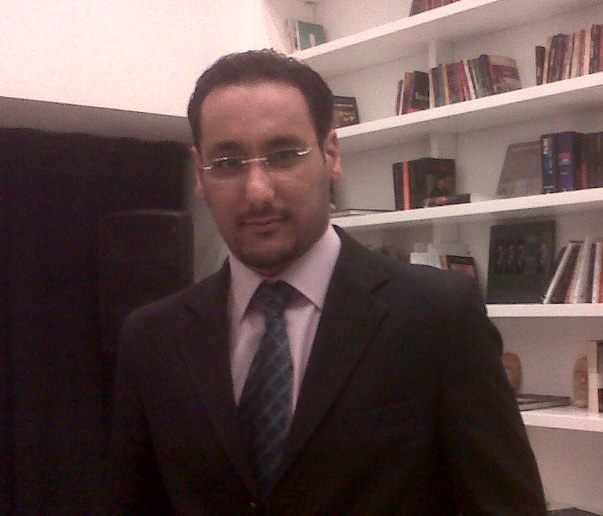
Soon I was in touch with Nawar Al-Saadi from Baghdad, who started the Facebook page “Tourism in Iraq” with the intentions of enlightening people in Europe about his home country. He was more than happy to answer my questions.

“There is a marginalization of the civilization of Iraq. All current generations of young people in Europe believe that Iraq is only a country of terrorism, and that all Iraqis are people like the killers,” Nawar writes to me in one of the many emails that we exchange. “This is not true. Iraqi people love peace, love life, love people, social sciences and they hate retardation and intolerance. But because of the impact of media under the control of US, people only see the negative aspects about Iraq.”

Nawar tells me he is studying a PHD at the University of Bucharest in Romania, specializing in tourism.

“My thesis is about the role of international relations in the development of the tourism sector in Iraq,” he says. “I chose Iraq because I want to serve my country.”

Tigris river

How can tourism be found in a country that has been plagued by violence since the US invasion 11 years ago? Nawar starts his explanation with a small history lecture:

“Iraq is a veritable treasure house of antiquities, and recent archaeological excavations have greatly expanded the knowledge of ancient history. Prior to the Arab conquest in the 7: th century Iraq had been the site of a number of flourishing civilizations, which developed one of the earliest known writing systems; Akkad, Babylonia, and Assyria.

The capital of the Abbasid caliphate was established at Baghdad in the 8: th century and the city became a famous center for learning and arts. For this reason we started this page, with the wish to be the face of tourism in Iraq. Iraq is one of the most important countries in the world of tourism and antiquities, where there is the passage between two oceans and a bridge between three continents.”

Iraq really does have an amazing history, but I wonder how realistic the situation is for tourism in Iraq at the moment. I ask Nawar how he sees the future potential for this. He admits that it might take time, but is optimistic.

“Iraq is now in international openness, but it needs security and stability. After that it will take a great position in the global tourism. The reason is that Iraq has one-third of the effects of the world and the most ancient civilizations in Mesopotamia such as Babylon, Assyria and Sumer. As for religious tourism – Iraq has buried most of the prophets and saints of all religions in the world, such as the Prophet Ibrahim, Prophet Adam, Prophet Noah, Imam Ali and many others.”

He has ideas on how Iraq will be an attractive country for tourists, in an age where sunny beaches in comfortable tourist resorts are reachable for so many:

“People outside want to know a lot about Iraq, especially that Iraq were in international isolation for three decades because of the wars. In addition to this most of the tourists in the world are bored after repeated visits to archeological countries as Egypt, Greece and Italy. Now people are looking for something new, a civilization to visit like the Hanging Gardens of Babylon, the palaces of Baghdad and tales of Shahriar and Chehrzac and A Thousand and One Nights. All of these things are famous in the world and taught in all grades. For this reason people are hungry for a visit.”

Women’s beach volleyball in Baghdad

Nawar has lived in Bucharest since 2011 and is planning to return to Iraq after completing his PHD. He says his family is living in Sweden but he has no plans to prolong his stay outside of his country:

“When I will go back to Iraq I will work in tourism development projects or a professor at the University of Baghdad, I will see next year.”

Nawar attaches many photos in his emails that he allows me to publish. He’s happy to share information and photos about his home country and his efforts have had effect. The page now has over 12.000 followers and he claims around 5.000 of those are foreigners (non-Iraqis), many of them European, and that he receives many emails with questions about how it will be possible to tourist in Iraq once it’s secure for foreigners to travel there.

Until then Nawar continues sharing information about his home country, posting photos such as the one of the sunny Tigris River with the message “Good morning Baghdad” and a thumbs up. Showing Iraq as the place it once was; the place of intellectuals, of culture and a beautiful nature, a place that it hopefully will become again. Far away from the depressing news in international media. Or as one of the messages on the page states:

I never meant to be Iraqi, I’m just a lucky man.

nawar

Nawar Al-Saadi

Photo credit (all photos): Nawar Al-Saadi/Tourism in Iraq

Our Absolutely Amazing Arabic-Swedish Network

I’ve been volunteering for NGOs since my university years but I never thought I would start one myself one day; starting NGOs are for career driven young people, not the former high school dropout whose best day is spent tanning at the beach. But sometimes life takes you crazy places.

Back in 2010 I wanted people to practice my Arabic skills with and I found myself with no close Arab friends in my city of Malmö. Around the world language exchange meetings is a big thing and in Malmö you can for example practice French every other week, but Arabic seemed not to be on the agenda – despite the many Arab inhabitants of Malmö and the huge possibility of exchange. Complaining to a friend, she told me about an Arabic speaking girl she had met.

“I think she would be up for it,” my friend said. “Why don’t you send a message?”

This other girl was up for the idea and slowly me and her started to scrape together people to our language exchange meetings, held in Sunday afternoons in different coffee shops. Sometimes it was just her and I, waiting for people who didn’t show up.  But we stayed put, spread the word among our friends, posted online, and by time more people dropped in. When all the emails and text messages got too much we finally decided to start a Facebook page to coordinate the activities. The Arabic-Swedish Network was born.

We are now more than 240 members in the Facebook group and new people join every week. We have no rules for membership other than that you have to be nice to each other; you don’t need to have speak certain level of Arabic or Swedish to join, if you speak none of the languages you can just join in and start from scratch (hey,  there’s too many rules in the Swedish society anyways). New people who has arrived in Sweden and found the group online, takes the opportunity to introduce themselves on the wall and then shows up on the next meeting. As we are so many members nowadays people set up their own events: poetry and sheesha nights, dinner parties, breakfast meetings. I know of many who think Sweden is a difficult place to make new friends and getting in touch with Swedish people – our network is an exception.

Since November this year the Arabic-Swedish network is a registered NGO, we figured it was a good idea since we spend most of our free time on the network anyways; our homepage you’ll find here. Now where will this unplanned NGO go next? I don’t know, but if you’re around, drop in on any of our events – I guarantee you’ll have a good time.

Photo: Copyright Sweden and the Middle East Views Blog

Dina – Women’s Rights Activist in Iraq

fist gallary(1)

Dina Najem became an activist after finishing her degree in French at the university in Baghdad, when she started blogging and became active in social media and realized how invisible the women were in Iraqi media.

“Iraq has always been a closed society,” she says. “Even before the US invasion the society was controlling towards women, and after 2003 there was no security at all. Women couldn’t even walk outside alone.”

Dina, now 24, decided she wanted to work for women to be able to participate more in the society.

“I have myself no support from the society” she says. “It’s my husband and my family that supports me. The government has the ability to improve the lives for Iraq’s women, they have the financial resources, but they are not doing anything.”

After a few years as an activist within local NGOs and social media Dina applied in 2012 to the Swedish Institute’s academic program for human rights activists from the Middle East and North Africa, “Social Innovation in a digital context”. She was accepted as one of 15 participants, and so was her husband Hayder, who is also an activist.

“I wanted to focus on women” she says. “Men are already dominating trainings, the political life, everything.”

She believes many women have not been fighting for their own rights.

“The war made so many stay at home, they were prevented from educating themselves. Women don´t have the knowledge to demand their rights.The one that does are not a big number.”

Lack of technical skills is another reason for the absence of women in Iraqi media according to Dina.This makes them unable to compete with men who are in the same business. With the knowledge gained on digital media from the Swedish Institutes program Dina was able to start training others.

After the six months long course she returned in April this year to Baghdad and started the photography project “Rights Without Words” for young women in the ages of 20 to 30. She went herself to look for a sponsor and got International Media Support to fund the project. By publishing information about the course online she received an overwhelming number of applications. There are obviously many young Iraqi women that want to make their spot on the media scene.

Finally Dina chose to include 22 participants instead of 15 as originally planned. The training was divided into three courses: human rights, photography and social media.

“I want to promote human rights in a creative way in my project. The participants have learned how to express themselves by photography, and how to illustrate the declaration of human rights without using any words.”

Dina has already been able to show the photos in the Iraq National Theatre, when the Iraqi musician Nasser Shamma was hosting a concert, a previously rare but nowadays more frequent happening in the capital.

Dina hopes that the world is interested of the positive development that is taking place in Iraq. She and her husband are not planning to move abroad – they want to continue with their activism despite the insecurity in Iraq. Even though she criticizes the domestic politics she thinks that there is hope in the expanding civil society. The many applicants to her project are a sign of willingness to change.

“I’m hopeful” she says. “I see so many girls that want to study and participate in everything.”

Next up in her work is to focus on women bloggers, and she also wants to work with mixed groups of young women and men. In a country where the sexes often are separated she thinks it’s crucial for women and men to work together and get to know each other.

The struggle for women’s rights is the core of her activism and she openly calls herself a feminist despite the resistance she often encounters. At the same time she is a Muslim and proud of that.

To the ones who question Dina’s commitment to human rights in a country where civilians are killed every day, she usually says:

“Well, but you can’t just sit on your chair. You have to defend your own rights.”

Rights without words

Participants in “Rights Without Words”

Photos: Copyright Dina Najem

Ruth Benyamin – The Real Miss Iraq 2013

Getting hold of Ruth Benyamin, the 67th Miss Iraq and winner of this year’s Miss Iraq competition, is not easy. The competition is no longer accepted by everyone, why in recent years Iraq’s beauty queens has stepped down one after another after death threats from hardcore religious groups, the competition had to move abroad – and Talat model agency that are handling the contest are careful. Over the course of a few months I exchange e-mails with the agency and upon request e-mail the questions that I want to ask in advance. Then all of a sudden I am in touch with the current Miss Iraq of 2013, or, as she boldly calls herself on Twitter and other social media: The Real Miss Iraq.

Ruth Benyamin was chosen in June this year after the first winner stepped down, but not due to death threats this time, according to Ruth it is because she wanted to get married – there seem to be many reasons for the Iraqi beauty queens not being able to hold on to their title. Ruth tells me that she in general is discouraged from giving interviews for security reasons, but she takes her time and writes me several e-mails with long replies to the questions. Born to an Iraqi father and a Hungarian mother, Ruth is actually one of the few Iraqis winning the last years’ competition.

“Miss Iraq is an old competition, being a titleholder is a great honor” she says. “I am the 67th titleholder, 66 previous amazing women have worn the crown, and they have represented different Iraqi ethnic backgrounds and have done well in their lives.”

This year’s competition was held in private and not advertised, why Ruth was officially crowned in a private cocktail party in Heidelberg, Germany. She explains that not many people know about the contest since the organizers keep a low profile due to the threats, and because of this, holding the crown doesn’t give her as much media attention as it could:

“The pageant itself is not a televised competition so it doesn’t get much exposure. There were attempts by organizers to sell air rights to various Iraqi TV satellite stations, but the deal were rejected as TV stations had their own reservations, plus they didn’t want to be attacked by Iraq’s hard line Shiite government.”

Her guess is that this will remain the conditions for the competition, citing the dependency on the country’s security but also the fact the modelling industry in Iraq is very limited and that there is no Iraqi fashion magazines.

Although born and raised in UK, Ruth has visited Iraq several times and have ideas about the potential development of the country. She points out that she believes the situation in Iraq will remain the same unless a three state solution is adopted; this means that apart from the already existing autonomous region of Iraqi Kurdistan, Southern/Central Iraq should be divided into two states, in order to curb the ethnic violence. She seems well acquainted with this political idea:

“Part of my work as Miss Iraq is promoting such a plan, a peaceful three-state solution. There is already a Miss Kurdistan which is treated as a contest that represents an independent country, and it’s not called Iraqi Kurdistan, for example.” Later on, when explaining why she would recommend another young Iraqi woman to participate in the competition, she adds: “You become nationalistic once you compete. We were 16 girls who competed in the 2013 edition in Mombasa-Kenya, each representing a city state. I represented Lagash (state in South-Eastern Iraq, author’s comment), we did not win local pageants, because there are no local pageants, but each candidate wears a banner of a city state and it was an amazing experience to learn about our heritage, culture and history.”

Ruth was modelling part time before being crowned Miss Iraq and is all positive about the sudden change in her life that the title has brought her:

“Talat Models has kept me busy travelling from one place to another. I have been to Dubai (where I am based, I am provided a luxury furnished apartment which I share with Miss Teen Iraq, Lina Ovadia), I have been invited by the Iraqi community in Brazil, Germany, I visited Frankfurt, Brasilia, Sao Paulo, Budapest, Rome, and I will visit Sydney and Auckland later in December… The advantages are that I get public relations training, etiquette classes, a model portfolio, public speaking.”

She hopes for a career in hotel management and believes that the work experiences she gets as Miss Iraq is beneficial for the future. As for her personal experience, she says:

“The title has shaped my personality and my perspective on life, it definitely boosted my confidence as young lady.”

Entering the contest was not only a daring decision for a young Iraqi woman, living outside Iraq is not necessarily a guarantee for safety; Ruth is also Jewish, an Iraqi minority that left the country en masse due to suppression, especially during the 1940s and 50s but also after. So what was the response from the Iraqi community on her participation?

“I guess some people like me, some don’t, so far the twitter feedbacks have been positive. Some feel because I’m Jewish that I don’t represent Iraq” she says, then adding, diplomatically: “But those are a minority.”

And diplomacy is definitely a much needed skill, when being in the sometimes dangerous position of the Iraqi beauty queen, that many of her predecessors have left in advance. The Real Miss Iraq seems to hold it up very well so far.

Photocredit: http://iraqibeauties.blogspot.com/

Two Voices from Aleppo University

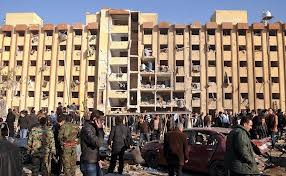
Aleppo University after the bombings January 2013

I was able to talk with two persons from Aleppo University in Syria, that shared what they had been going through.

Here are their stories:

I was offered a job at Aleppo university after my studies. When the revolution started we as employees in a governmental institution were made to cooperate with shabiha (a feared subgroup within the Syrian intelligence/military, some claim they are criminals that the government recruits to terrorize civilians, a strategy to stop the revolution). We had to assist them in their fights against the protests. I tried to act as if I assisted them, then I was able to escape the country.

My home in Syria is all destroyed, my street is in ruins. No food is available and when going to search for food to buy people are being killed by snipers. Why are the government and the Free Syrian Army taking it out on us? We are only citizens.I  didn’t think the revolution would go this bad, and I blame both sides now. They have both helped in destroying my city.”

I was a student in Aleppo university. In January 2012 students were gathering in front of the cafeteria, holding a protest. They were protesting peacefully, shouting for freedom, protesting against the war and demanding the release of political prisoners. Security guards inside the university called shabiha without the students knowing. They came directly and started arresting students on spot and hit them with electrical batons. Another time they gassed the university with teargas.

Then on January 15 2013, it was first day of the examinations, the government bombed the university, many people saw the attack and that it was carried out by a warplane. Still when I see a plane or helicopter in the sky I get an awful feeling. One missile hit the entrance of the faculty of architecture; the other one hit the student dorm that had been evacuated to host refugees from other areas of Aleppo, people that had have to flee their homes. Dead people were littering the streets all around.

I can’t forget the barbarity of Shabiha and the security forces, the way I saw them attack the students or the sounds of clashes and missiles around us. I still have nightmares and then I wake up sometimes and I have to say to myself: ‘It’s ok, I’m out of Syria,I’m safe now’. But now a year after my departure, the situation is more much worse. There are inner borders and snipers in everywhere and there isn’t any safe place left in Aleppo.

Photo credit: New York Times

Egyptian Streets, شوارع مصر

A great insight in what’s going on in Egypt is to be found on the website Egyptian Streets. From their Facebookpage today I have borrowed this photo and statement:

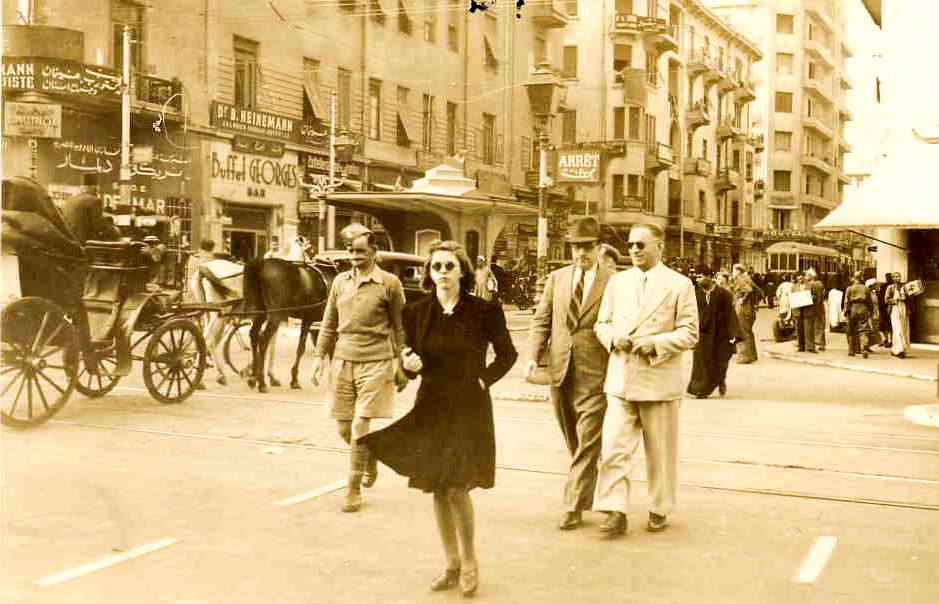
These are not the streets of Paris, London, or New York. This is an image from 1941 at Emad El Dine street in Cairo.

During this bygone era, women were not afraid to walk in the streets. Garbage did not form mountains on every corner. Grey, uniformed apartment blocks and thick smog did not obscure the sun’s light.

A bygone era indeed.”

egyptian streets

Photo credit: http://egyptianstreets.com/

I Survived the Banyas Massacre (warning: gruesome story)

Who told me this story? It doesn’t matter. When did I here this? In June this year, one month after the Banyas massacre had taken place on May 3 2013, conducted by governmental troops on civilians. In Damascus noone mentioned the massacre by name, instead we called it “unrest” or “outbreak of violence”. The result of the systematic killing of everyone in the village is easily found online, but in the heart of the government controlled capital that is nothing you can talk about.

Why did the person tell me this story, despite the danger of talking about the ongoing crimes against humanity in Syria? I guess some things are just too unbearable to keep to yourself. I couldn’t share this story while I was still in Syria, but I can now. And why am I sharing it? I want the world to know. I hope all of you readers do, too.

“Do you know what happened in Banyas? They did something horrible there. They did something that no God allows, no religion allows. What they did is forbidden in all religions!What does the persons want, who are controlling our country? What do they want from God?

There was a couple here some weeks ago. They left me their number, look, here’s the note… When I heard about what happened in Banyas I tried to call them, I was worried. But the line was shut down, I didn’t even get a signal. I heard that they had shut down the lines to all the telephones in Banyas. I called and called.

First after a couple of days the man answered. He said:

They came in the night, they killed my wife and my two children‘.

His wife was pregnant when she was here, I saw it myself, she was seven or eight months pregnant. Do you know what they did to her? They cut her in the chest, like this. Then they cut open her stomach, her whole stomach, and took out the baby. Her husband cried when he said:

They killed her, they killed my unborn baby, they killed our two little children. I’m the only one left. They are all gone.