Photo: First Women’s Rights Demonstration in Egypt

921_800098586758111_6583151182963857305_n

This photo is from the Facebook site King Farouk of Egypt, a site that’s dedicated to showing photos and stories from ancient Egypt. This photo is allegedly portraying the first demonstration for women’s rights in Egypt, on March 9, 1919.

The site is reminding us of hopeful times, when the Middle East and North Africa region wasn’t bleeding. I believe we all need it right now.

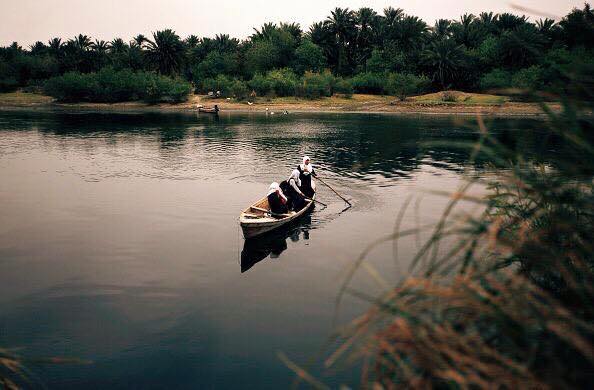
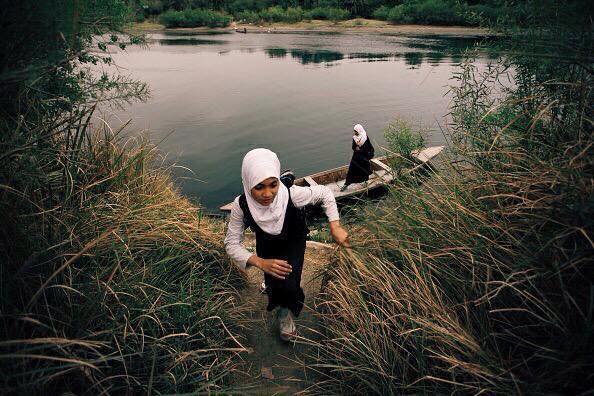
Iraqi Schoolgirls, Crossing a River To Go To School

Iraqi school girls paddle a small wooden boat across a river, as they head to school.

Najaf, Iraq

12088348_1040835819269928_8886031001314180471_n

12074551_1040835799269930_3607543124984798897_n

12079527_1040835789269931_1120048001275868244_n

Photo credits: Tourism in Iraq

Painting: Girls under Islamic State

The Kurdish artist Rostam Aghala, whose art I have shared before, has pictured women’s suffering in the hands of the terrorists in Islamic State. He wanted to share it with me for me to share it on my site, for the world to see. Rostam uses the Arabic acronym “Daesh” to name Islamic State.

“Girls under Esideat (Daesh)” by Rostam Aghala

Photo copyright: Rostam Aghala

Inauguration of Iraq’s First Female Mayor in Baghdad

11000349_10153189222442668_1956345657821254005_n

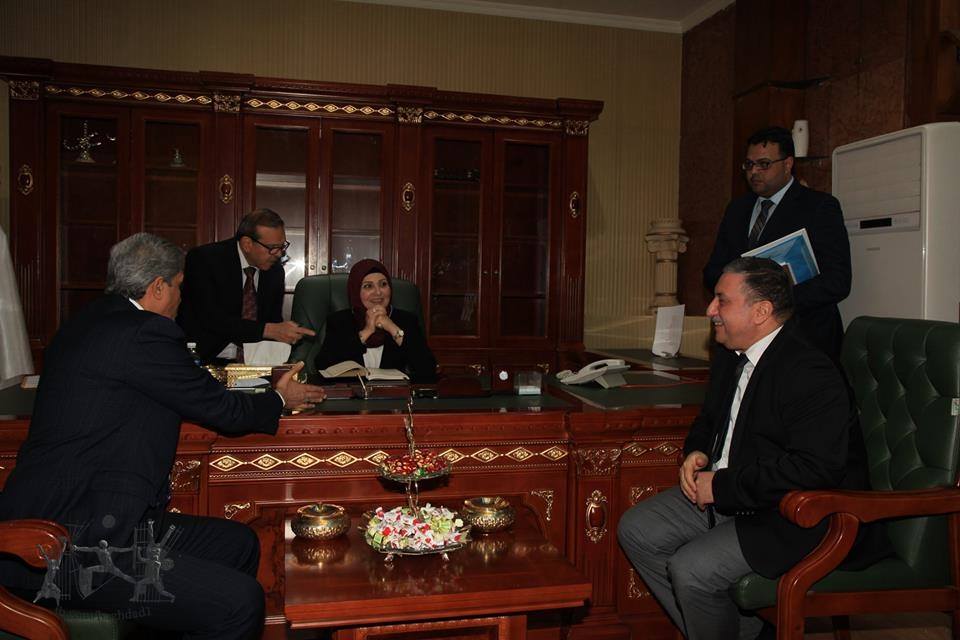
Iraq’s first female mayor Ms Thikra Awash was assigned her duties today on February 26, according to the Facebook page بغداد (“Baghdad”). Her position is so far only temporary, according to the news update, since she took over quite swiftly after the former mayor Naim Aboub who was made to leave due to dissatisfaction with his performance. The inauguration is still groundbreaking: it’s Iraq’s first female mayor, to be appointed in the capital, in a time when the IS terrorists are forcing their terrifying misogynist agenda on the regions that they have conquered.

In the ceremony the previous mayor participated, and Ms Awash was welcomed to her new office by the director of the Prime Minster’s office, Mr Mehdi Alallaq, who wished everyone in Baghdad a good cooperation in order to overcome all obstacles and reach the desired goal; which is to him, a service valued by Baghdad and its people.

Ms Awash said in her speech during the ceremony that she will be loyal and honest in handling the public funds, that she opposes any sort of partisanship and that she will not be biased to any clan, party or sectarian group. She said that her work in the initial phase would have two parallel focuses: to provide better services to the people of Baghdad and work on fast addressing the problems of the city, and also, as she stated: “To reinforce the status of the capital, to once again make it a modern city, while maintaining it’s authenticity and history”.

11025226_10153189222862668_3935465104331889415_n

Photo credits: https://www.facebook.com/Baghdad1

First Iraqi Female Mayor Elected

Unknown

Thikra Awash

With all awful news coming to us from everywhere these days, it’s wonderful to get positive news for once: Iraq appointed their first female mayor for Baghdad, Thikra Alwash (in some news spelled Zekra Alwach), and she is set to take up duties in her office as by today, Sunday February 22. In a country where women are fighting a slow battle against inequalities in many fields, a battle that is constantly facing set-backs due to the domestic conflicts, such an appointment is an important gesture to all of the country’s women. Although women traditionally have held many high political positions in Iraq – both during Saddam Hussein’s regime and after the US invasion – Ms Awash is supposedly the first one to hold the position of being a mayor.

According to Daily Star Lebanon, Ms Awash is a civil engineer by background and was previously the Director General of the Ministry of Higher Education – this is also stated in her Linkedin profile. In Ms Awash’s new role as a mayor she will be dealing directly with the Prime Minister Haider al-Abadi and will therefore be able to push her agenda, the agenda of the city of Baghdad, on a high level.

Some voices today criticised Ms Awash’s lack of political experience, and the fact that her predecessor Naim Aboub was removed by the prime minister in the blink of an eye. But still so, the choice of a female mayor in a time when dangerous, backwards powers are threatening the country of Iraq, is a brave and forward one. Let’s all keep our fingers crossed for Ms Awash and what the future holds for her, as well as her fellow Iraqi sisters.

Photo credit: Twitter @SAijaz_

First Female Prosecutors Sworn-In in Kuwait

In Kuwait women were given the right to vote and participate in elections as late as 2005, so when the news broke a few years back that the country would allow female prosecutors for the first time, this was to many a step forward. Kuwait is not as oppressive to women as some of their neighbouring countries – there’s no mandatory dress code for women, women are not banned from driving and there are fewer restrictions on work places for women than in Saudi Arabia. But it’s still behind many of the other Middle Eastern countries.

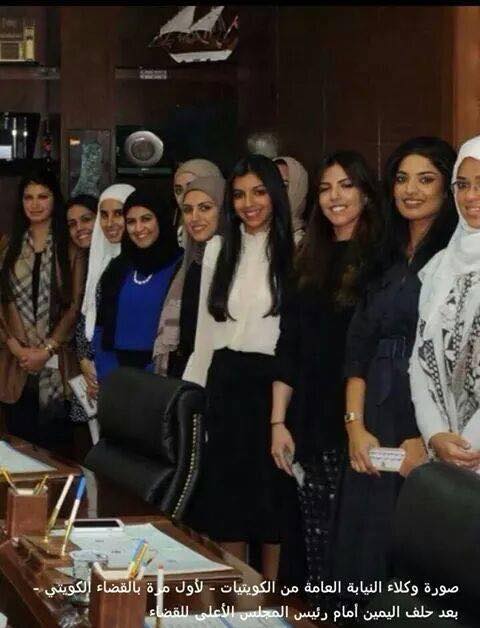
The other day the first batch of women prosecutors were sworn in, more precisely 22 of them, creating more headlines. It hadn’t been an easy path – Islamist MPs who opposed the women had delayed the process by several months, claiming that under Islamic Sharia law women cannot be judges, which they as prosecutors now have the possibility to be. In the end the new justice minister Yacoub Al-Sane (also a man) signed a decision to appoint the prosecutors, putting an end to the delay. After the women had been sworn in, MP Humoud Al-Hamdan held a press conference where he critiziced the decision and said that he and other Islamist MPs were to submit a draft law to ban the appointment of women judges, as this is against Islamic law.

Many others celebrated the event though and the group photo of smiling young women was shared widely online among Gulf people and women’s rights supporters, generating positive feedback but also comments from men such as “I can’t wait to be prosecuted in Kuwait!” and “They don’t look Kuwaiti, they must be Lebanese” (the ultimate insult for a Gulf girl).

I asked one of my male Kuwaiti friends what he thought of the women prosecutors and he gladly shared his views – on the condition that he could remain anonymous. My friend is not an activist, but he says he like to keep an eye on politics. His answer surprised me as I myself was very positive about the women prosecutors.

“I am not so excited” he says. “In 2005, I was super excited for women to get the ‘right’ of voting. But having a look into history will show something hidden. Before 2005, There was a lot of failed attempts for female activists for the right of voting. What was changed in 2005? It is external pressure. The government in Kuwait wanted to release this pressure by directing the members to vote for the right of the woman. Therefore, women were used to polish the authorities’ image to the West, and gaining this right was not because of local female activists.

The trick is using women to polish the image of the governments from the Western perspective, without allowing a real impact within the inside of the society. In all cases, what did women added in Kuwait after 10 years of gaining the right? We still see discrimination against women, less rights in the society etc.

The government today has a bad image because of funding the extremist groups all over the world, and it need to polish the image again. Therefore, women are the best tool to be used. I don’t feel that the society is pushing for more women rights. To see real impact, the change should come from the society, the average people. In fact I could say that using women this way is another way of abusing women in a completely patriarchal society. And we will never see any real impact to change the basic systematic violation of women rights.”

Let’s hope the appointment of these 22 women will be a step in the direction of real implementation of women’s rights and that this trickles down to the average people that my friend is talking about. So that the feedback for the next batch of prosecutors will generate more positive comments than sexist ones. At least they have male supporters. That’s something to cherish.

Photo credit: www.facebook.com/sultan.alqassemi

Iraqi Womens’ Petition to the White House to Act Against ISIS

I’m reluctant to what kind of international support Iraq and Syria are needing in the ongoing crisis of ISIS, as I as most other people don’t want to see previous disasters repeated all over again. But tonight my friends the women’s right activists at Warvin Foundation for Women’s Issues in Iraqi Kurdistan e-mailed me about a petition that they have signed for the White House, where they ask them to take immediate action to rescue the kidnapped Yesidi Kurdish women from ISIS, and I had a look.

The petition says:

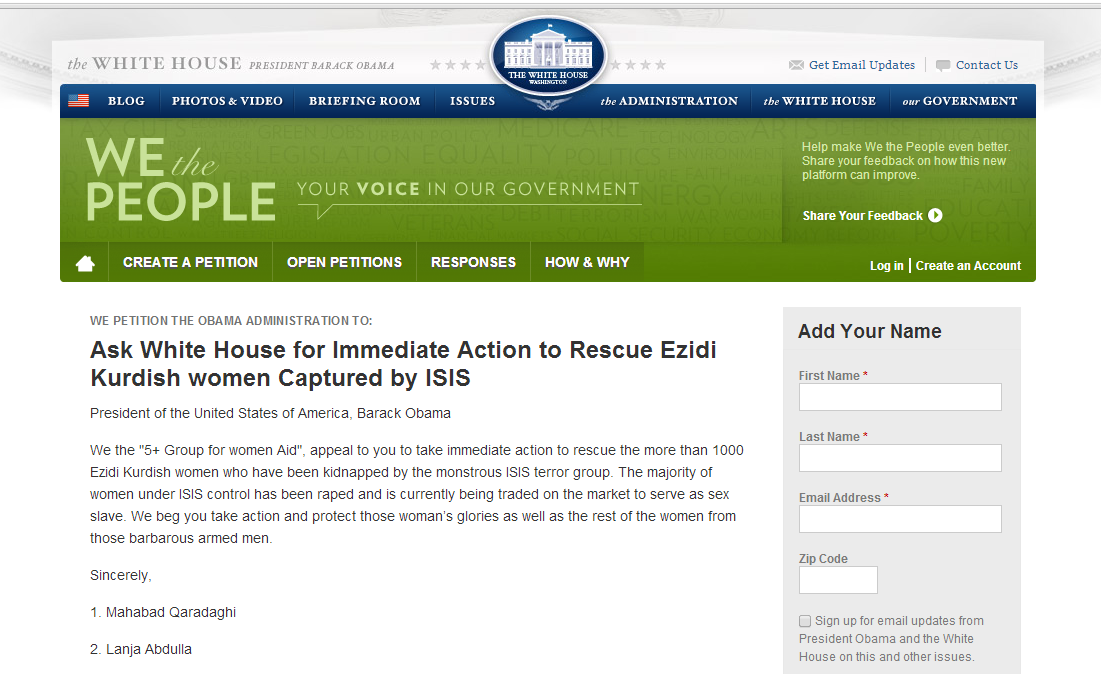
We the… appeal to you to take immediate action to rescue the more than 1000 Ezidi Kurdish women who have been kidnapped by the monstrous ISIS terror group. The majority of women under ISIS control has been raped and is currently being traded on the market to serve as sex slave. We beg you take action and protect those woman’s glories as well as the rest of the women from those barbarous armed men.

This isn’t some foreigners wanting to liberate women in the Middle East, it’s not a bombing campaign noone asked for. This is Iraqi women asking for help for their fellow citizens that are enslaved under conditions you don’t want to imagine. At least I don’t want to imagine. That’s why I decided to share this with you.

ISIS Seizing Women’s Rights NGO Office in Iraq

Hi Jenny, How are you? Our office in Sinjar is occupied by ISIS since last night.

It was my friend Abdulrahman Ali, one of the founders of the women’s rights NGO and magazine Warvin foundation in Iraqi Kurdistan, who contacted me Sunday night with the dangerous news.

In Sinjar Warvin had a small office with few number of staff who were running a project for war widows. Warvin Foundation is one of the most outspoken women’s rights NGOs in Iraq and are, as most women’s rights NGOs in the country, threatened from time to time. But this Sunday night things became extremely dangerous as rule of law seized to exist, in the small town in Mosul province. ISIS had already previously threatened all people dealing with women’s rights issues in Mosul. Warvin’s staff, usually so daring, realized the only thing they could do was to flee.

“(The staff of the magazine in Sinjar)… are all of them under threat… and they left the city and from last night they are in mountains,” Abdulrahman said. “We’re afraid from that point if they (ISIS) understand what is Warvin do there they may burn it.”

During the night between Saturday and Sunday ISIS entered the city and people fled in masses. Kurdistan’s army seems to have lost control.

What someone said about the killing of Osama bin Laden has become the prophecy for Iraq: “He’s like a dragon, if you cut of his head ten new heads will grow out and take his place instead.

In this ongoing nightmare with the ten-headed dragon, women are, as usual, the main loosers.

Photo credit: Warvin Foundation

Hawzhin The Middle Eastern Feminist

Hawzhin Azeez

The Middle Eastern Feminist page singled itself out from other feminist pages on Facebook when it started up in December last year. Feminism across boundaries of ethnicity and nations; love over hate; support over anger, seemed to be the red threads for the page.

If you are struggling today, remember that you were never meant to be ashamed, depressed and guilty. You were always meant to be victorious! Don’t let the bastards grind you down,” says a quote followed by a heart from July 16.

The reconciling approach seemed to appeal to many. The page soon had many followers.

Often white, middle class women are blamed for having this approach to women’s rights as they haven’t faced real hardships themselves. But the woman behind The Middle Eastern Feminist page is not one of those.

Hawzhin Azeez’s early childhood memories consists of escaping Iraqi Kurdistan as Saddam Hussein bombed the area with chemical weapons; her pressing a scarf against her face not to breath in the lethal smoke; her mother having skin burns all over her. Living as illegal refugees in Iran the family sometimes didn’t eat for days, and on a regular basis the police came and took away her father, accusing him of being a part of the resistance against the Iranian regime due to his Kurdish ethnicity. The family never knew when or if he was coming back. In this setting there was no room for women’s rights.

“When growing up in a refugee setting, in war-torn countries, it’s incredibly hard being a woman,” says Hawzhin when explaining her upbringing and how she became a feminist. “People hold on to their ethnicity and as a young woman you’re just supposed to behave.”

After finally receiving asylum in Australia, Hawzhin and her family faced a new dilemma: the one of suddenly being in a liberal culture with new gender roles that they had no idea how to manage.

“I was going through my puberty in a family traumatized from the war,” Hawzhin says. “And we were stripped off our identity. My parents were very traditional and conservative and it was difficult for me to be friends with Australian girls. It was an isolating experience going to a Western school.”

In the Kurdish community where they lived a strong social control was being exercised. Hawzhin points out that it was first and foremost the women who exercised this control over each other and each other’s daughters. She says they had internalized the racism and sexism they had been exposed to as Kurds in the Middle East, and turned it into misogyny.

“Gossip was used a tool to limit and control each other between women. It was used to shame and guilt what women and girls did in the community.”

Despite the lack of role models, Hawzhin knew she was a feminist.

“I was born a feminist!” she says. “In Iran I witnessed things that were incredibly wrong and unjust. Religion was used as an ideology to limit the women, what they wanted to achieve. What chador means for me as a human being is that I become sexualized.”

As a teenager she was incredibly angry because she wasn’t able to live her life the way she wanted to. She read a lot of feminist literature in high school, it was her escape.

“My choices were directly linked to my family, if they agreed. I couldn’t create any issues for my family in the Kurdish community. It was a constant struggle between the community’s values and my feminism.”

Despite having arrived to Australia as an 11 year old with only two years of primary school education, Hawzhin was able to enter university after high school to study international relations and political science. But even having made it so far, she couldn’t live the way she wanted to. When she moved out of her parents’ house to do her PhD in another city at 25 years old, she was finally able to be independent. But it took a long time for her to adjust.

“I had no idea who I was. Growing up in a patriarchal family I had been constantly told how to behave and how to live. I now choose to live independently and I wish for every girl to have this freedom. Unless you do this you will never be able to make informed decisions on yourself.”

When starting The Middle Eastern feminist page it was after a long and difficult semester at university, when she was emotionally drained and spent a lot of time in front of Facebook. She noticed how people mostly posted things about what they ate and going to the gym, and wanted to turn her Facebook time into something more intellectual. Her motivation also steamed from being back in her country of origin for the first time since the escape. She went on her own without her parents and met up with her relatives. The trips were wonderful, she says, but she noticed how little women in Iraqi Kurdistan knew about their rights, and this was something she wanted to change.

“I wanted a safe place for Middle Eastern women or women from developing societies where they could talk about their rights and issues they were dealing with. But I also wanted to challenge them and tell them they could have a traditional life and still be feminists.”

Hawzhin mean that some women in the Middle East might not be able to escape their traditional life but that they can find space where they can still be feminists.

Another goal was to educate Western women on Middle Eastern women’s issues. She wanted a place for women from the two worlds to meet and realize that they were dealing with the same issues.

“Women everywhere are dealing with for example street harassment. Although the issues Middle Eastern women have are on another level, we are all struggling. I wanted to create a place for solidarity, for women to find commonalities in their lives.”

“Have you felt supported by Australian feminists or have you felt excluded?”

“Feminism in Australia is not a priority for many people… There is also a barrier between privileged women and women of color. A lot of the feminist groups and women are diffused within the political movements, there are not many groups trying to bridge the gap between privileged women and women of color, to bring all of these different identities together. But this is necessary.”

The page is now an active place for discussions and many of the over 6.000 followers are not only from the Middle East but from all over the world. Through the page connections are being made and people are making friends across boundaries. Hawzhin is actively promoting other feminist pages on her own, urging her followers to like a new page that has recently been started. She’s also sharing her private Facebook page with followers that want to add her as a friend – a page where she has posted photos of herself and her mom hugging, dressed up in Kurdish clothes, as well as photos from university parties where she’s dolled up (“I dress very femininely, I love to wear lipstick,” she says on a side note).

On combining the different cultures, she says that she sees herself as a bridge between women in Afghanistan who can’t leave the house, and urban, developed women in Egypt; that they can contribute to each other through the page.

A long message to her followers on the page from July starts like this:

I haven’t said this in a while, but: I am so incredibly in love with all you inspiring feminists (male and female), and the new ones on this page and the ones that send me private emails and share their stories, and those of you who comment and make witty and brilliant comments to posts. I know that we all come from different cultural and social settings but that does not take away from the fact that we are all struggling against a global system which thrives on the oppression and subjugation of people based on their gender or sexual orientation or race. All of our struggles matter, though the problems we face may differ somewhat.

Hawzhin has had very little negative feedback on her page and says she is shocked by the amount of support and number of women that have been contacting her. Some people expect that she’s a Muslim feminist but this is not what she calls herself.

“I call myself a secular feminist,” she says. “But if women want to cover up that’s great – I don’t believe in ripping women off their scarf.”

“Does your family know you’re a feminist?”

She laughs:

“Oh yes, very much so.”

So how are her parents, the once traumatized refugees that had such a hard time to adjust to the new society they were in, dealing with their daughter having developed to being such an outspoken feminist?

“My family has come such a long way,” she says, delighted. “There were so many things we couldn’t discuss before due to our culture, but this has changed. I am now teaching my younger sister and brother about feminism. When I visit them I always show them feminist documentaries, and my sister who is 13 comes with me to political marches. I’m teaching her to be more independent. It’s important to start with the children.”

Photo 1: Copyright Hawzhin Azeez, Photo 2: Copyright Sweden and the Middle East Views Blog

Diving Sisters from Saudi Arabia

saudi gazette

Noor Al-Dubais (left) and Taammul Al-Dubais (right)

Photo credit: saudigazette.com.sa

Two sisters from Sanabis town on Tarout Island on the Eastern coast of Saudi Arabia made headlines this week as some of the few professional women divers in the country.

The local newspaper Saudi Gazette reports that Noor and Taammul Al-Dubais were raised in a seafaring family and that they have been surrounded by water all their lives. Noor was 5 when her father taught her how to breath under water and the sisters held their international diving licenses as 10 year olds. Now they wish to pass on their passion for diving to other girls. They are diving as a professional duo and have been diving on many different occasions.

They started to dive in the city of Jubail on the east coast, around Jana Island. Noor says to the newspaper Alsharq daily, regarding her diving experiences in the Red Sea off the coast of Jeddah:

I swam among the beautiful coral reefs as if I was a bird flying in a garden. I enjoy diving because my soul separates from my body when I am at great depths.

She says she finds guidance in her parents and that her friends from school encouraged her. The sisters’ father has been a great supporter and he himself is also a diver and a fisherman. He is also Noor’s and Taammul’s professional trainer and has designed a special diving suit for women that he said respects Saudi customs and traditions. Sports for Saudi women are not accepted by everyone and professional sports women in the Kingdom are an exception. But the sisters’ father says:

Noor and Taammul are part of a diving family that loves to look for coral reefs and explore the magical waters of the Gulf. All of my sons and daughters are divers.

Hopefully Noor and Taammul will set an example for many other brave young women around the world.