Dina – Women’s Rights Activist in Iraq

fist gallary(1)

Dina Najem became an activist after finishing her degree in French at the university in Baghdad, when she started blogging and became active in social media and realized how invisible the women were in Iraqi media.

“Iraq has always been a closed society,” she says. “Even before the US invasion the society was controlling towards women, and after 2003 there was no security at all. Women couldn’t even walk outside alone.”

Dina, now 24, decided she wanted to work for women to be able to participate more in the society.

“I have myself no support from the society” she says. “It’s my husband and my family that supports me. The government has the ability to improve the lives for Iraq’s women, they have the financial resources, but they are not doing anything.”

After a few years as an activist within local NGOs and social media Dina applied in 2012 to the Swedish Institute’s academic program for human rights activists from the Middle East and North Africa, “Social Innovation in a digital context”. She was accepted as one of 15 participants, and so was her husband Hayder, who is also an activist.

“I wanted to focus on women” she says. “Men are already dominating trainings, the political life, everything.”

She believes many women have not been fighting for their own rights.

“The war made so many stay at home, they were prevented from educating themselves. Women don´t have the knowledge to demand their rights.The one that does are not a big number.”

Lack of technical skills is another reason for the absence of women in Iraqi media according to Dina.This makes them unable to compete with men who are in the same business. With the knowledge gained on digital media from the Swedish Institutes program Dina was able to start training others.

After the six months long course she returned in April this year to Baghdad and started the photography project “Rights Without Words” for young women in the ages of 20 to 30. She went herself to look for a sponsor and got International Media Support to fund the project. By publishing information about the course online she received an overwhelming number of applications. There are obviously many young Iraqi women that want to make their spot on the media scene.

Finally Dina chose to include 22 participants instead of 15 as originally planned. The training was divided into three courses: human rights, photography and social media.

“I want to promote human rights in a creative way in my project. The participants have learned how to express themselves by photography, and how to illustrate the declaration of human rights without using any words.”

Dina has already been able to show the photos in the Iraq National Theatre, when the Iraqi musician Nasser Shamma was hosting a concert, a previously rare but nowadays more frequent happening in the capital.

Dina hopes that the world is interested of the positive development that is taking place in Iraq. She and her husband are not planning to move abroad – they want to continue with their activism despite the insecurity in Iraq. Even though she criticizes the domestic politics she thinks that there is hope in the expanding civil society. The many applicants to her project are a sign of willingness to change.

“I’m hopeful” she says. “I see so many girls that want to study and participate in everything.”

Next up in her work is to focus on women bloggers, and she also wants to work with mixed groups of young women and men. In a country where the sexes often are separated she thinks it’s crucial for women and men to work together and get to know each other.

The struggle for women’s rights is the core of her activism and she openly calls herself a feminist despite the resistance she often encounters. At the same time she is a Muslim and proud of that.

To the ones who question Dina’s commitment to human rights in a country where civilians are killed every day, she usually says:

“Well, but you can’t just sit on your chair. You have to defend your own rights.”
Rights without words

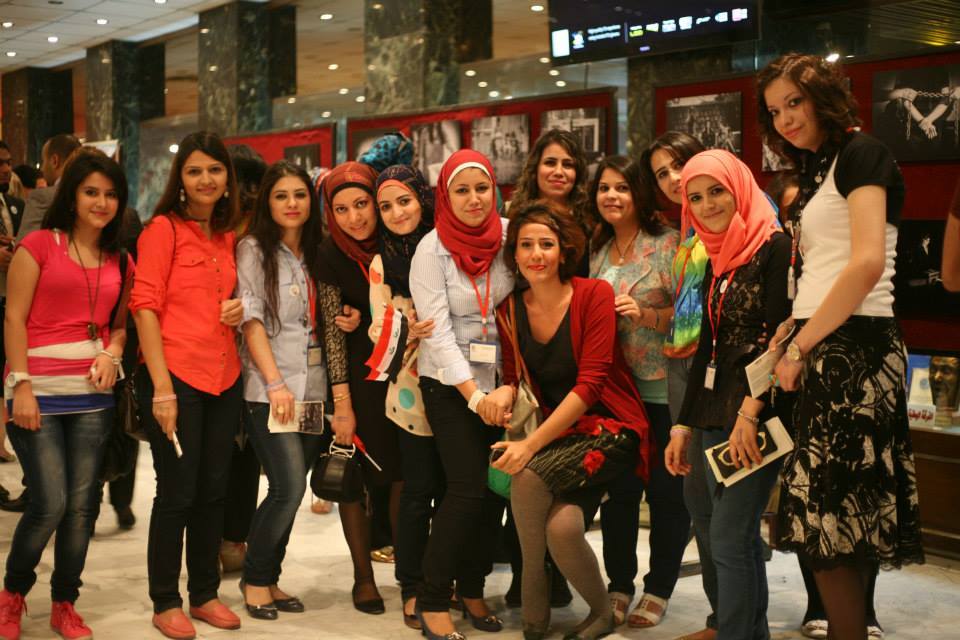
Participants in “Rights Without Words”

Photos: Copyright Dina Najem

Umayyad Mosque, Damascus

mosque 1

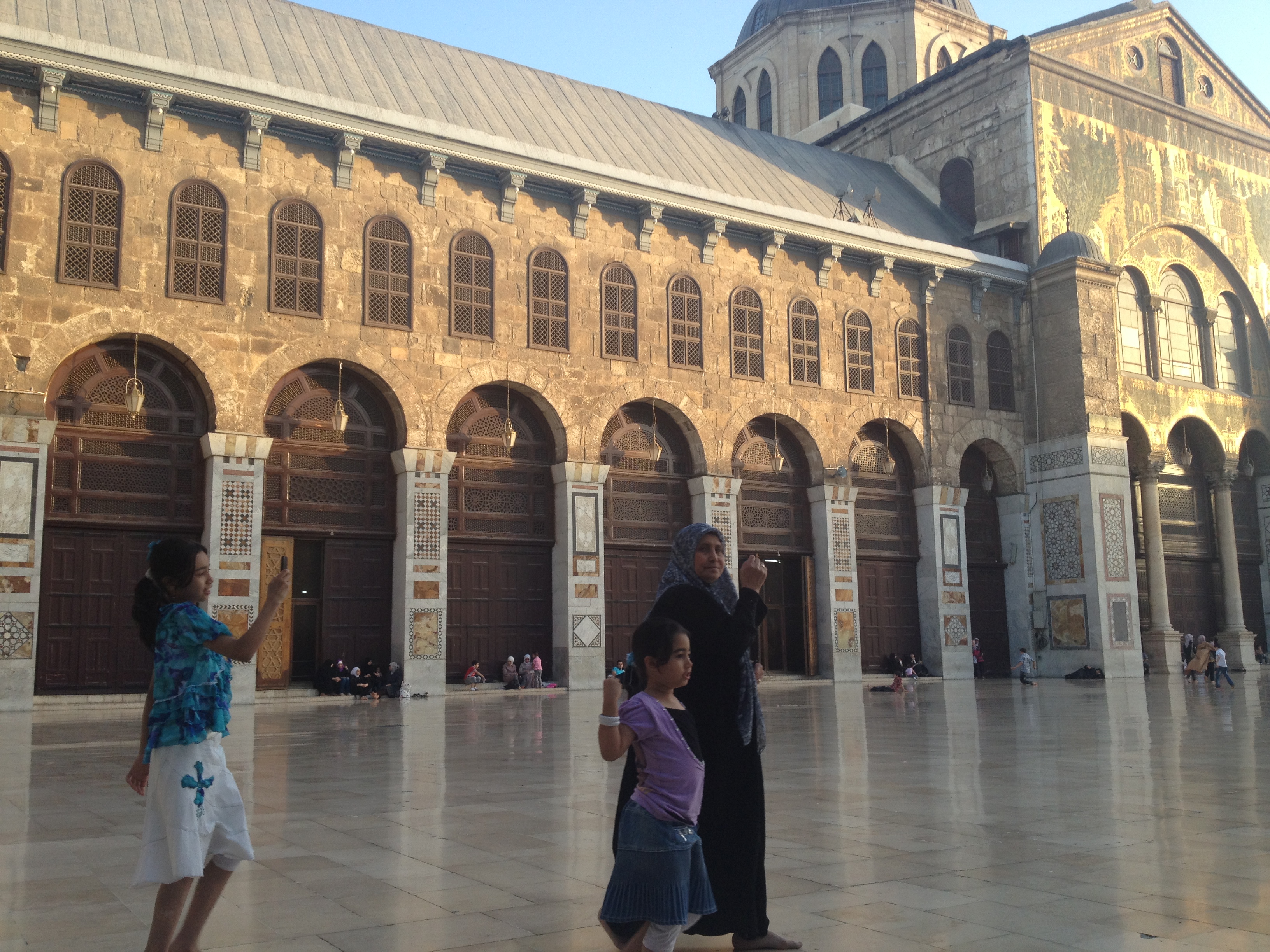
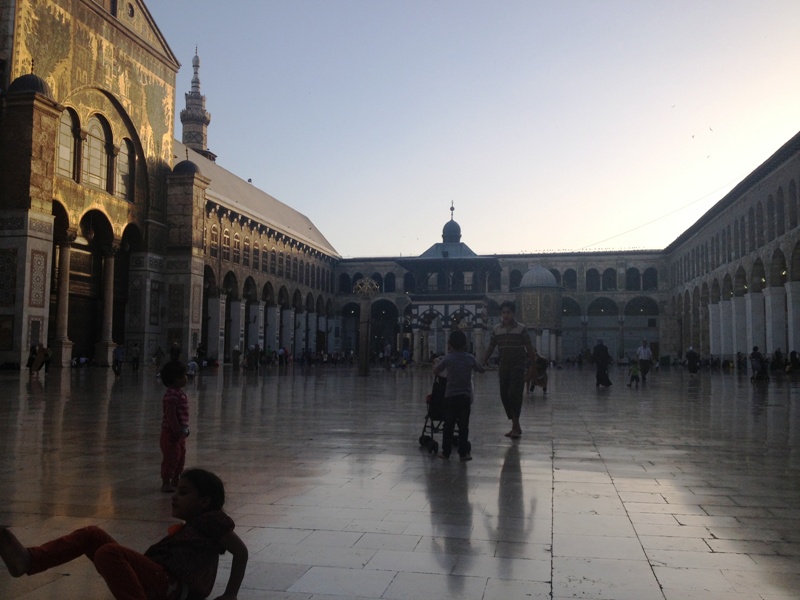
Umayyad Mosque in the heart of Damacus old city, an ancient building completed in year 715. Photos are taken during a Friday evening in June 2013.

mosque 2

Also an excellent place to spend a Friday night at, for prayers and socializing. Or a playground, with it’s shiny floor perfect for sliding on…

mosque 3

Let’s hope it will remain throughout the war.

Photos: Copyright Sweden and the Middle East Views Blog

Ruth Benyamin – The Real Miss Iraq 2013

Getting hold of Ruth Benyamin, the 67th Miss Iraq and winner of this year’s Miss Iraq competition, is not easy. The competition is no longer accepted by everyone, why in recent years Iraq’s beauty queens has stepped down one after another after death threats from hardcore religious groups, the competition had to move abroad – and Talat model agency that are handling the contest are careful. Over the course of a few months I exchange e-mails with the agency and upon request e-mail the questions that I want to ask in advance. Then all of a sudden I am in touch with the current Miss Iraq of 2013, or, as she boldly calls herself on Twitter and other social media: The Real Miss Iraq.

Ruth Benyamin was chosen in June this year after the first winner stepped down, but not due to death threats this time, according to Ruth it is because she wanted to get married – there seem to be many reasons for the Iraqi beauty queens not being able to hold on to their title. Ruth tells me that she in general is discouraged from giving interviews for security reasons, but she takes her time and writes me several e-mails with long replies to the questions. Born to an Iraqi father and a Hungarian mother, Ruth is actually one of the few Iraqis winning the last years’ competition.

“Miss Iraq is an old competition, being a titleholder is a great honor” she says. “I am the 67th titleholder, 66 previous amazing women have worn the crown, and they have represented different Iraqi ethnic backgrounds and have done well in their lives.”

This year’s competition was held in private and not advertised, why Ruth was officially crowned in a private cocktail party in Heidelberg, Germany. She explains that not many people know about the contest since the organizers keep a low profile due to the threats, and because of this, holding the crown doesn’t give her as much media attention as it could:

“The pageant itself is not a televised competition so it doesn’t get much exposure. There were attempts by organizers to sell air rights to various Iraqi TV satellite stations, but the deal were rejected as TV stations had their own reservations, plus they didn’t want to be attacked by Iraq’s hard line Shiite government.”

Her guess is that this will remain the conditions for the competition, citing the dependency on the country’s security but also the fact the modelling industry in Iraq is very limited and that there is no Iraqi fashion magazines.

Although born and raised in UK, Ruth has visited Iraq several times and have ideas about the potential development of the country. She points out that she believes the situation in Iraq will remain the same unless a three state solution is adopted; this means that apart from the already existing autonomous region of Iraqi Kurdistan, Southern/Central Iraq should be divided into two states, in order to curb the ethnic violence. She seems well acquainted with this political idea:

“Part of my work as Miss Iraq is promoting such a plan, a peaceful three-state solution. There is already a Miss Kurdistan which is treated as a contest that represents an independent country, and it’s not called Iraqi Kurdistan, for example.” Later on, when explaining why she would recommend another young Iraqi woman to participate in the competition, she adds: “You become nationalistic once you compete. We were 16 girls who competed in the 2013 edition in Mombasa-Kenya, each representing a city state. I represented Lagash (state in South-Eastern Iraq, author’s comment), we did not win local pageants, because there are no local pageants, but each candidate wears a banner of a city state and it was an amazing experience to learn about our heritage, culture and history.”

Ruth was modelling part time before being crowned Miss Iraq and is all positive about the sudden change in her life that the title has brought her:

“Talat Models has kept me busy travelling from one place to another. I have been to Dubai (where I am based, I am provided a luxury furnished apartment which I share with Miss Teen Iraq, Lina Ovadia), I have been invited by the Iraqi community in Brazil, Germany, I visited Frankfurt, Brasilia, Sao Paulo, Budapest, Rome, and I will visit Sydney and Auckland later in December… The advantages are that I get public relations training, etiquette classes, a model portfolio, public speaking.”

She hopes for a career in hotel management and believes that the work experiences she gets as Miss Iraq is beneficial for the future. As for her personal experience, she says:

“The title has shaped my personality and my perspective on life, it definitely boosted my confidence as young lady.”

Entering the contest was not only a daring decision for a young Iraqi woman, living outside Iraq is not necessarily a guarantee for safety; Ruth is also Jewish, an Iraqi minority that left the country en masse due to suppression, especially during the 1940s and 50s but also after. So what was the response from the Iraqi community on her participation?

“I guess some people like me, some don’t, so far the twitter feedbacks have been positive. Some feel because I’m Jewish that I don’t represent Iraq” she says, then adding, diplomatically: “But those are a minority.”

And diplomacy is definitely a much needed skill, when being in the sometimes dangerous position of the Iraqi beauty queen, that many of her predecessors have left in advance. The Real Miss Iraq seems to hold it up very well so far.

Photocredit: http://iraqibeauties.blogspot.com/

What Iraqis Think About Sweden

Irakier i sverigeSince the American invasion and the following gradual collapse of Iraq, many Iraqis has applied for asylum in Sweden and in 2007 constituted the largest group of asylumseekers among the many different nationalities that applied.

In my city Malmö, sometimes called “Little Baghdad”, many Iraqis have settled and formed their own communities. In small shops in the middle of our city you can now find things like halal meat, wonderful carrot-marmelade with 80% sugar (that Swedish health freaks would report to the police if they could) and other products that I would find in my local baqala in Erbil, Iraqi Kurdistan. Globalization is a great thing when you can find your favourite marmelade from another part of the world in your own hometown.

Host communities usually has opinions about newcomers, but I think the other way around can be more interesting. Iraq I dare to say is quite the antithesis of Sweden: a large country with a weak central state, where religion plays a major role for many, hospitality is highly valued and your family is the main social network to rely on. The clash is quite big for some – Sweden being very secular with a strong legal system where many people can feel controlled by the authorities; from the housing market to the humiliating procedures at the unemployment agency. If I ask though I might not receive the true answer – critizicing someone’s home country being such a taboo for most people. But what does Iraqis really think about Sweden?

A while ago I joined this interesting Facebook page, “Iraqis in Sweden“, to see what was going on. The group is nicely illustrated by a Swedish and an Iraqi flag intertwined, with updates in both languages. On the page news about Sweden and Iraq are posted, often in an informative way about Sweden. One of managers of the page, Mohammad, tells me that the aim of the page was to create a meeting point for Iraqis in Sweden/Europe and that the group aims to serve people who might need help in Sweden, for example legal assistance or to rent a flat. Quite a nice idea, isn’t it, especially if you think about the many hate groups online, dedicated to bring down other people?

Checking the updates, one post caught my attention: “What advantages/disadvantages are there in the Swedish culture/society do you think?” The answers to this post arrived quickly.

“That everyone pretends to be PERFECT while they’re worth nothing!” one man writes, the comment getting three likes.

Someone replies:

“There is no disadvantages everyone goes his own way, and there’s nothing better than the Swedish society!!” Two exclamation marks, 15 likes.

Other people add upp to the bad list: the politicans, the wheather, there is no summer, it’s hard to find a job. Then another one, the profile picture showing the face of a young woman in a hijab, comes up with a long, reflective post:

“There are both advantages and disadvantages in each society and this is the case for the Swedish society. But I think that the advantages in the Swedish society are more than the disadvantages (…) The RESPECT, FREEDOM, EQUALITY (social), HELPFUL etc… The disadvantages are that parents have some problems raising their children here since the parents wants to raise them according to their traditions/religion. This often leads to a big problem that in its turn is a big disadvantage!! Me myself I have all love and respect for SWEDEN”

Who knew that such a subject could bring on such strong feelings? I wouldn’t, if Ihadn’t found this page. Or as a post reads when scrolling up to another heated discussion: “Do you think you can say anything just because now you’re in Sweden?”

Well on this page, obviously yes. And what better is, everyone gets to share their views without censorship or feeling held back. How I love the dynamics of the diversity sometimes. In Iraq or in Sweden.

Photo credit: Irakier i Sverige

First Civil Marriage Registered in Lebanon

mixed loveSo this week all Middle Eastern-freaks like me noticed that the first couple ever were able to register their marriage as a civil marriage in Lebanon – something that mixed couples have been advocating for ages. Cyprus have been the choice for many mixed Lebanese couples if they had the money – otherwise one of them had to resign to marry under their partner’s religion (usually the man’s).

I meet people that says “it’s not possible” about interfaith marriages. Why? Some religions don’t accept it; sometimes the two religions clash when it comes to the childrens’ religion (in Judaism the children inherits the mother’s reigion and in Islam the father’s – so what happens if a Jewish woman marries a Muslim man?); sometimes it’s simply the society and family that says “it’s not possible”.

Well I have come across so many mixed marriages that I can conclude one thing in this messy discussion: you can’t make people stay away from each other. As often as societies puts up rules for love, there’s always someone that will break them.

A Swedish-Lebanese family that I know were so determined to stay together that they married in the midst of the civil war, despite the danger of being a mixed Christan-Muslim couple. During the first years of their small children’s lives they were living in hiding from militias, until finally being able to escape to Sweden. They now have three children that has been raised celebrating Christmas and Ramadan, learning about both religions, and they take pride in their mixed background. Sometimes maybe a mixed marriage is the best way of preventing a civil war? Unfortunately Lebanon is still a place where such an effort is extremely difficult to carry out.

So when the news about the registered marriage broke, I hurried to get online. What kind of groundbreaking couple was it that decided to make a point out of not register in one religion? Maybe a Muslim-Christian couple? If not, could it be Druze-Christian? No, it was a Sunni-Shia couple – two branches within one religion. Not accepted by everyone, but not the major breakthrough that I had hoped for. If it was, I’m not sure that they would have been able to have the marriage registered.

But let’s hope it’s a first step for Lebanon to heal from it’s intolerant past and the horrifying events that took place under the excuse of sectarian divisions. If Lebanon really wants to move on, there’s only one way, the way forward.

Photo credit: www.biculturalmom.com