“When Politicians Failed to Agree on Conducting the Country’s Affairs, the Quartet Helped Them.”

151009102440-tunisia-nobel-prize-winners-2015-large-169

The Tunisian National Dialogue Quartet

Congratulations Tunisia! We were many who were overwhelmed by joy when the Tunisian National Dialogue Quartet scored the – Swedish! – Nobel Peace Prize of 2015 a few days ago. Finally, a light at the end of the tunnel!

Now, what does a Tunisian person think of this? My friend Firas, who usually is happy to share his ideas about politics, especially the Tunisian ones, gave me his ideas, in a typical Tunisian style of mixing English with French vocabulary. He was, for once, very optimistic. A trait that is not very common among Middle Eastern and North African people nowadays.

He is happy to say that the quartet deserves it:

“They negotiated for a year in order to take country to the end of the tunnel. 2012 and 2013 were tough years. Radicals were in the government, economy was down and terrorism and unemployment up. The Nobel Peace lauréates managed to make a deal, through dialogue that allowed peaceful power shift.

They lobbied and conducted a dialogue that almowed power shift from mainly islamist government to a next one made of technocrats. This lowered social tensions… Each part of this quartet represented a part of the society. When politicians failed to agree on conducting country’s affairs, the quartet helped them.”

Firas says that the quartet helped in avoiding dictatorship and power vacuum, and points out that they negotiated around nine months to facilitate the power shift to a technocrat government and to prepare for the first democratic election:

“They negotiated around nine months the power shift to technocrat government, a non-politicised one whose mission is to keep the government afloat, and prepare for the first democratic election that will bring first democratically elected government.”

I share Firas’ hopefulness too. This quartet helped Tunisia in avoiding the fate of Egypt and Libya: where sectarian tensions has taken over and terrorism replaces politics. These days I think we should celebrate the victory over terrorism, or as the player would put it: Dialogue vs Conflict: 1-0.

Photo credit: cnn.com

All About Damascus, a Sign of Normal Life

War may torment larger parts of Syria and the Middle East, but few signs of the beautiful country that once was and in some places still is, exists and pops up like butterflies here and there. One of them is the Facebook page All About Damascus, a page that started before the war, in 2010, and that is still going strong.

Today, on July 13, the page uploaded a few photos from the every day life in the colourful city of Damascus, the life that is still going on despite the war.

In the politicised debate over Syria, some might say this page is a part of the regime’s propaganda to show that they are able to reign over some parts of the country, that they are able to keep some of the city calm. But I would prefer to say it might as well be a sign of normal life. A sign to remind of what life that can remain during the dirtiest of wars.

11138662_966076513445329_7080118056154571159_n

11709247_966076116778702_985712891824170832_n

11742848_966076183445362_3578537036096338827_n

11750637_966076066778707_4011958866093648226_n

Photo copyrights: All About Damascus Facebook page 

How Do We Feel about Tunisia?

How do feel about Tunisia? Do we have the energy to gather empathy for the victims, the country, after the terrorist attack, or are we by now so numb that we will just write it off as another horrible event that seems to be the trade mark of our time?

Me myself I’m upset and sad. I have a friend in Sousse where the massacre took place and it seems that each time a terror attack happens, it’s in a place where I have close friends, and I have to send e-mails, make phone calls, send texts, to make sure everyone is ok. The negative side of having friends all over the world is the constant worry. And I would also feel less of the lack of empathy that I sometimes experience for the ever-growing terrorism worldwide. Maybe I should have stayed in Sweden and never started my travels. Maybe my life would be less worrisome then.

But feelings aside, how does this attack feel for Tunisians? We sometimes seem to forget them in the aftermath of this very attack. Therefore I asked a friend of mine, living in France, to hear what he had to say. His name is Aymen El Amri and he was once one of the initiators to the Pirate party in Tunisia. He seemed upset and sad, and said that he doubted that he would feel secure in returning to live in Tunisia, but he still wanted to share his views.

A gunman trying to kill civilians, I think it happened in some other countries around the world throughout history, but personally I have never experienced such things except in some Hollywood movies. This is new to Tunisia…

Tunisia is a small country and everything is limited there, from natural resources to police security equipment but I appreciate the fact that it has helped and provided humanitarian aid to nearly two millions Libyan refugees. But the fact of being neighbor with Libya, the civil war in this country plus the economic instability of Tunisia gave the advantage to malevolent people and groups to infiltrate to the Tunisian land, by recruitment of teenagers and trafficking of weapons.

I’ve always had a reflection of linking what is happening; IS, terrorism, attacks, bombing, to an economic; oil, gas, and geopolitical; balance of forces context. Seeing this as a religious extremism consequence is right but not enough since this is just the tip of the iceberg.

Firstly, I accuse the incompetence of the current Tunisian government – even if it is a secular government it remains incompetent – and secondly I accuse all the international “forces” that invaded Libya, supposedly to give birth to a democracy while the only change was traded equities of some oil and gas companies that increased overnight following the invasion of Libya.

For sure, I will not be 100% comfortable returning to live there and at the same time I am uncomfortable not being able to participate in getting things progress in Tunisia given the distance.

What happened is very sad but it will happen in many other countries because we’re simply living in the same world.

What stands out to me in Aymen’s reply, is that despite his country’s current sad situation and his own despairs for the future, he himself can still appreciate the help his country have been giving to two million refugees. War and terror doesn’t have to conquer empathy, at least not for everyone. Sometimes I like to be proven to be wrong.

Photo credit: uknewsroom.tk

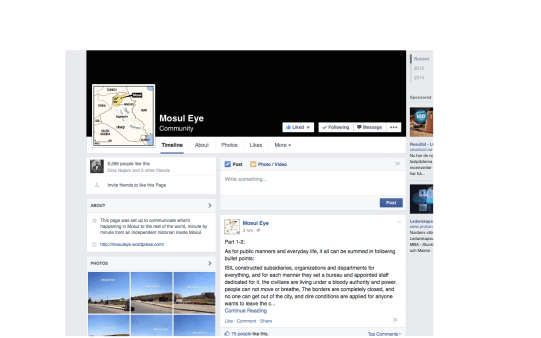
Inside Activists against IS from Mosul, Mosul Eye, Trying to Remain active

Local activists against Islamic State, behind the Facebook page Mosul eye, where they regularly publish news on how the city is ruined IS’s ruling, recently had to close down their activities, due to continuous attacks on their page. They have announced that they will reopen their page and continue to – anonymously – report about the ingoing crimes against humanity from inside Mosul. I want to share their statement here to support the activists:

“For public manners and everyday life, it all can be summed in following bullet points:

ISIL constructed subsidiaries, organizations and departments for everything, and for each manner they set a bureau and appointed staff dedicated for it. the civilians are living under a bloody authority and power. people can not move or breathe, The borders are completely closed, and no one can get out of the city, and dire conditions are applied for anyone wants to leave the city.

And ISIL issued and published these conditions, namely: 

1- hand over House mortgage ownership documents, 

2- $ 2,500 as a deposit 

3- a modern car which is manufactured no further that 2011, and 

4- a sponsor who sponsors the traveller, and for a duration of only one month. If the permission expires, the sponsor gets arrested and the house, the car and the deposit are all confiscated, and the traveller is considered to be an apostate infidel and is permitted to be killed on sight.

Kids are subjected to extreme measures of massing and incitement to all the mass murders and criminal operations ISIL leads through its media points that are scattered over the streets, and through exchanging of video clips that depict scenes of slaughter, crucifixion, burning and murder. large numbers of teenagers have been affected by ISIL’s enormous propaganda and amused by its capabilities of violence.

Lots of teens have voluntarily joined ISIL in its various ranks. Recent statistics study showed that the numbers of children volunteered into ISIL’s ranks, who were under the age of 16 years; were amounted to 370 and received religious and military training in ISIL’s camps, more than 130 children who actually participated in the battles and suicide bombings, many of them died mostly in battles for Baiji, Anbar and west of Nineveh.

ISIL imposes new strict and tough restrictions every day upon the citizens, and the last of its restrictions is men are forced to leave their beards unshaved, we already published on this page, about ISIL’s leaflet on the prevention of shaving the beard, and this is especially targeting the youth.  As for Women, ISIL is practicing extremely harsh restrictions upon them, things like wearing the veil is a must, prohibiting women from going out alone to the market unless they are accompanied with a male relative as a guardian, and as Ramadan is approaching, women are absolutely banned from leaving their houses.  Smoking is banned as well, and penalizing cigarettes vendors started at first with 70 lashes with a big fine, and now the penalty for anyone caught selling or trading cigarettes is “decapitation”!

Food prices constantly rising and will depend on whether the roads are closed with Baghdad and Kurdistan, Baghdad has recently closed the road to Mosul, and prevented the entry of large quantities of goods and foods to Mosul ISIL also imposed severe penalties on those who do not come to the mosque during prayers and closes his shop, and the penalty is confiscation of the shop with large fine and imprisonment for a whole month. Many libraries were closed, and complete banning of trading books that never call them ISIL “infidelity and apostasy books” of Arab and international novels and books of philosophy, history and literature.

In short: There are no sign of life in Mosul, I mean life in which man will be free and able to act freely and easily. The rights to live is guaranteed only by abiding by the conditions and ruthless control of ISIL and any one opposes ISIL is subjecting himself and his family to execution and confiscation of all property.

To be Continued …”

A Response to Islamic State

There has been plenty of inside resistance to the Islamic State in the Middle East. The blog Mosul Eye is reporting anonymously from inside Mosul about the disaster of the ruling of the Islamic State. Artist Rostam Aghala is painting the horrors of living with the threats of Islamic State.

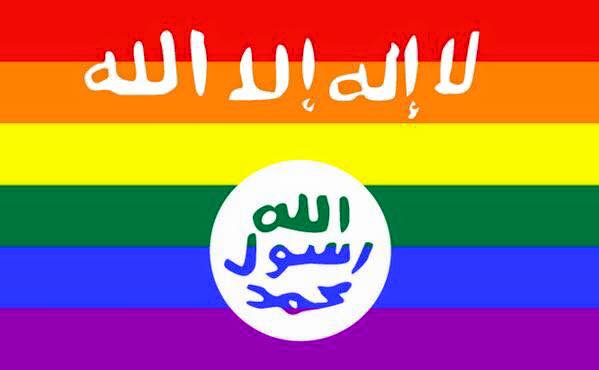
And here is the last one – Sultan Sooud Al-Qassemi, from Sharjah in United Arab Emirates, published this version of Islamic State’s infamous flag on his Facebook today on May 29. It has already created plenty of negative feedback according to himself on his Facebook page, it has been reported for nudity and taken down by Facebook (Sultan published it again).

Maybe he is right and the IS-thingy was just a joke all along? In reality, they were all just young, misunderstood gays.

11118817_10153085357656704_4276376596831400252_n

Photo credit: Sultan Sooud Al-Qassemi

Syrian Red Crescent Volunteers Attacked When Assisting War Victims

Hussain Saad

In the ever-ongoing hell of Syria’s civil, one of the few actors that are actually trying to assist the civil population without having a political agenda of their own, is the Syrian Arab Red Crescent. Throughout the civil war their volunteers have been assisting the victims; driving injured people to the hospital, picking up dead bodies and brining them to the grave yards, treating victims with first aid. The Red Crescent volunteers are unpaid and are carrying out their work for free.

Despite the huge effort from these volunteers – who often are having a job or their studies on the side – they are continuously targeted by one of the militant groups, sometimes even the government forces themselves.

The latest news was translated from Arabic and sent to me by a Syrian friend who has been active in the Red Crescent in Damascus:

15 /05/15 15:43

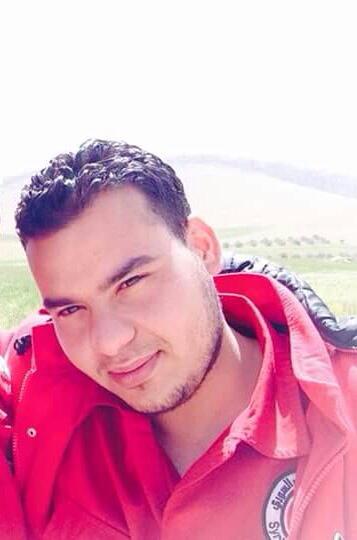
An ambulance car for the Syrian red Cresent Rural Damascus sub branch – al Domayer sub branch, got a shooting during a mission to drive a patient to a hospital, the team leader get bullet in his head and now he is in the intensive care room. The team leader is a SARC volunteer and his name is Hussain Saad and he is a mechanical engineer student.

I decided to share this news on my site so that Hussain, the mechanical engineer student who dedicated his free time during the civil war to assist suffering people, would not just be another number in the statistics – whether or not he will survive or pass away. Another Syrian whose case will go unnoticed.

A Massacre Among Massacres

blood_PNG6093

Massacres have become so common these days that we seem to forget them as quickly as we hear about them. A few minutes of horror, then we shake the information off and go on with our day. IS has contributed to this phenomenon, killing people video-game style where nicely chosen colours frame the scene of the killing. Many internet users click on the Youtube video click without thinking twice, without thinking on how for each click, IS or the ones performing the massacre grows in fame and celebrity. Just because it doesn’t happen next to us, it doesn’t mean it doesn’t affect us – we are growing numb for the lives lost in this uttermost horrifying way. We loose the respect for the right to live.

To remind myself about how massacres challenges the very core of our humanity, I went back to read my own story from the Banyas massacre in Syria 2013. It was a massacre among many massacres, exactly two years ago today, May 2nd 2013. Please let me share this story again so as to remind us all, myself included, about how massacres really affects the surviving community, the world’s population, all of us who calls ourselves humans. The original blog post is found here, the text is copied below.

——————————————————————–

Who told me this story? It doesn’t matter. When did I here this? In June this year, one month after the Banyas massacre had taken place on May 3 2013, conducted by governmental troops on civilians. In Damascus noone mentioned the massacre by name, instead we called it “unrest” or “outbreak of violence”. The result of the systematic killing of everyone in the village is easily found online, but in the heart of the government controlled capital that is nothing you can talk about.

Why did the person tell me this story, despite the danger of talking about the ongoing crimes against humanity in Syria? I guess some things are just too unbearable to keep to yourself. I couldn’t share this story while I was still in Syria, but I can now. And why am I sharing it? I want the world to know. I hope all of you readers do, too.

“Do you know what happened in Banyas? They did something horrible there. They did something that no God allows, no religion allows. What they did is forbidden in all religions!What does the persons want, who are controlling our country? What do they want from God?

There was a couple here some weeks ago. They left me their number, look, here’s the note… When I heard about what happened in Banyas I tried to call them, I was worried. But the line was shut down, I didn’t even get a signal. I heard that they had shut down the lines to all the telephones in Banyas. I called and called.

First after a couple of days the man answered. He said:

They came in the night, they killed my wife and my two children‘.

His wife was pregnant when she was here, I saw it myself, she was seven or eight months pregnant. Do you know what they did to her? They cut her in the chest, like this. Then they cut open her stomach, her whole stomach, and took out the baby. Her husband cried when he said:

They killed her, they killed my unborn baby, they killed our two little children. I’m the only one left. They are all gone.

——————————————————————–

Photo credit: pngimg.com

Kurdish Artist Rostam Aghala’s Response to IS in Arts

There’s plenty of resistance to the Islamic State in the Middle East, resistance that deserves far more attention than it gets internationally. One artist in Iraqi Kurdistan, Rostam Aghala, has delivered his response to the terrorists in form of paintings. He let me share his works on my website, and I’m happy to be able and show the world his art.

“Islam and Daesh” (Daesh = Arabic acronym for the Arabic version of Islamic State)

10854981_10206052829661316_1097859412622273230_o

10983125_884534161589149_3960891239605825019_n

10425890_878741198835112_5157365990787372651_n

Photo credit: copyright of all paintings, Rostam Aghala

Saudi Arabian Rap Video for Workers’ Rights

Saudi Arabia is not known for respecting human rights, and the current campaign for releasing the liberal Saudi blogger Raif Bedawi has shed light on the old phenomena of human rights abuses in the Gulf. But, like everywhere, there are exceptions to the rule.

The media group Tefaz 11 has produced a rap video shedding light on the situationen for foreign workers in the country, using the traditional tactics of humour and music to get their message through. The group is produced for Saudis, consisting of Saudis, showing that there is a diversity within Saudi Arabia and that everyone in the country does not support the discrimination that foreign workers are going though – or the human rights situationen as a whole.

See the video above, and below is a BBC clip portraying the people behind the video.

Inauguration of Iraq’s First Female Mayor in Baghdad

11000349_10153189222442668_1956345657821254005_n

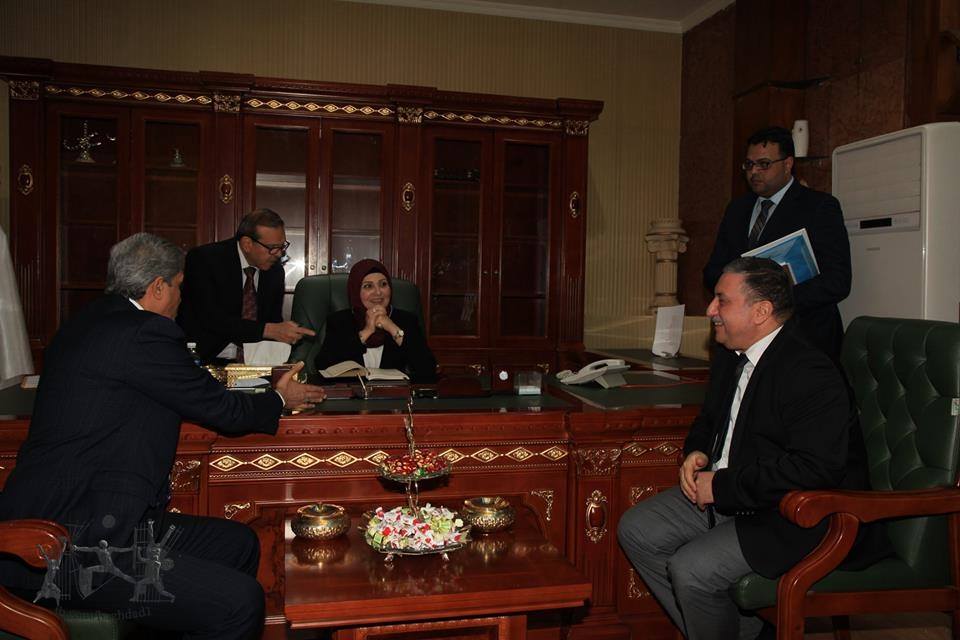
Iraq’s first female mayor Ms Thikra Awash was assigned her duties today on February 26, according to the Facebook page بغداد (“Baghdad”). Her position is so far only temporary, according to the news update, since she took over quite swiftly after the former mayor Naim Aboub who was made to leave due to dissatisfaction with his performance. The inauguration is still groundbreaking: it’s Iraq’s first female mayor, to be appointed in the capital, in a time when the IS terrorists are forcing their terrifying misogynist agenda on the regions that they have conquered.

In the ceremony the previous mayor participated, and Ms Awash was welcomed to her new office by the director of the Prime Minster’s office, Mr Mehdi Alallaq, who wished everyone in Baghdad a good cooperation in order to overcome all obstacles and reach the desired goal; which is to him, a service valued by Baghdad and its people.

Ms Awash said in her speech during the ceremony that she will be loyal and honest in handling the public funds, that she opposes any sort of partisanship and that she will not be biased to any clan, party or sectarian group. She said that her work in the initial phase would have two parallel focuses: to provide better services to the people of Baghdad and work on fast addressing the problems of the city, and also, as she stated: “To reinforce the status of the capital, to once again make it a modern city, while maintaining it’s authenticity and history”.

11025226_10153189222862668_3935465104331889415_n

Photo credits: https://www.facebook.com/Baghdad1