Photo: First Women’s Rights Demonstration in Egypt

921_800098586758111_6583151182963857305_n

This photo is from the Facebook site King Farouk of Egypt, a site that’s dedicated to showing photos and stories from ancient Egypt. This photo is allegedly portraying the first demonstration for women’s rights in Egypt, on March 9, 1919.

The site is reminding us of hopeful times, when the Middle East and North Africa region wasn’t bleeding. I believe we all need it right now.

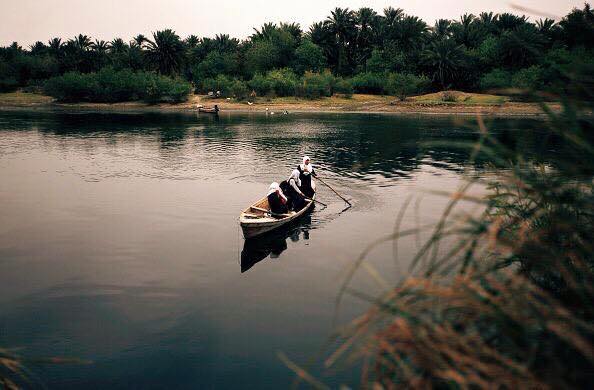
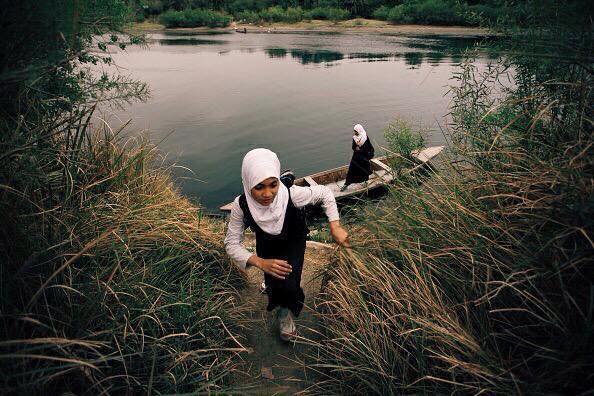
Iraqi Schoolgirls, Crossing a River To Go To School

Iraqi school girls paddle a small wooden boat across a river, as they head to school.

Najaf, Iraq

12088348_1040835819269928_8886031001314180471_n

12074551_1040835799269930_3607543124984798897_n

12079527_1040835789269931_1120048001275868244_n

Photo credits: Tourism in Iraq

The Death of a Woman – the Case of Farinaz Koshravani

Farinaz-Khosrawani-committed-suicide-May-2015-to-avoid-rape-by-Iranian-intelligence-officers-photo-anf.jpg.pagespeed.ce.SlU8eRANaE

Farinaz Koshravani

Did the news reach you about Farinaz Koshravani? She was a Kurdish-Irani woman who allegedly jumped or fell to death from the 4th floor at Tara hotel where she was working, in order to escape rape. Her fellow Iranian Reyhaneh Jabbari chose a different way when facing rape: she stabbed her attacker in self-defense, and for that she was herself killed, hanged in Gohardasht prison on October 25 last year.

Farinaz worked as a hotel maid in the Kurdish part of Iran, in the city of Mahabad. Violent demonstrations broke out after the news of her death and the hotel was attacked and burned. It’s still not confirmed whether she jumped herself or fell to her death, but one man has been detained, who has confessed he “was with” Farina before her death. Rumours claim he is a government official who had connections with the hotel and therefore was free to try and assault women in the hotel.

I asked a friend of mine who is from Iran, what she as an Iranian woman thought about the death of Farinaz. This is what she had to say:

Analyzing women issues is very complicated and difficult in Iran, mostly because we have not enough right to talk, share and to discuss about problems as much as men. Here again I hear about an accident which the victim is a woman. A woman who is not clear that has been suicide for protecting herself against being raped or she was murdered when she was hiding her relationship with a guy there. The only thing that is obvious here is this woman was murdered just because he scared of something and jumping from balcony to another one at the hotel was certainly an idea to runaway from the danger.”

Nowadays it is like a common story in accident page of Iran news! When a man spreads acid on a woman’s face or a husband who was in doubt about his wife relationship with another man kills her! You know the most painful part is, we never understand well who is the accused and why this accident should been happen? The worst issue after this is when you hear the killer pays the blood money to the judiciary and it is even half of the amount one pays for a man and gets free! The government and judiciary easily ignore many things about women and prefer them to just be quiet for everything. They always prefer to point to women instead of men for such accusations.

There are a lot of these examples in judiciary folders that hasn’t been solved yet or just led to very not fair results. And all those women who don’t know they should be sorry for protecting themselves or should accept the attack!

I’m just happy that woman activities against unfair woman laws are increasing and people bit by bit are understanding that they should not trust the government and wait for them to bring back the rights for them. It is something they have to learn the concepts by themselves and teach to their children from now on, for being a part of our culture in the near future.

Photo copyright: ekurd.net

Painting: Girls under Islamic State

The Kurdish artist Rostam Aghala, whose art I have shared before, has pictured women’s suffering in the hands of the terrorists in Islamic State. He wanted to share it with me for me to share it on my site, for the world to see. Rostam uses the Arabic acronym “Daesh” to name Islamic State.

“Girls under Esideat (Daesh)” by Rostam Aghala

Photo copyright: Rostam Aghala

Inauguration of Iraq’s First Female Mayor in Baghdad

11000349_10153189222442668_1956345657821254005_n

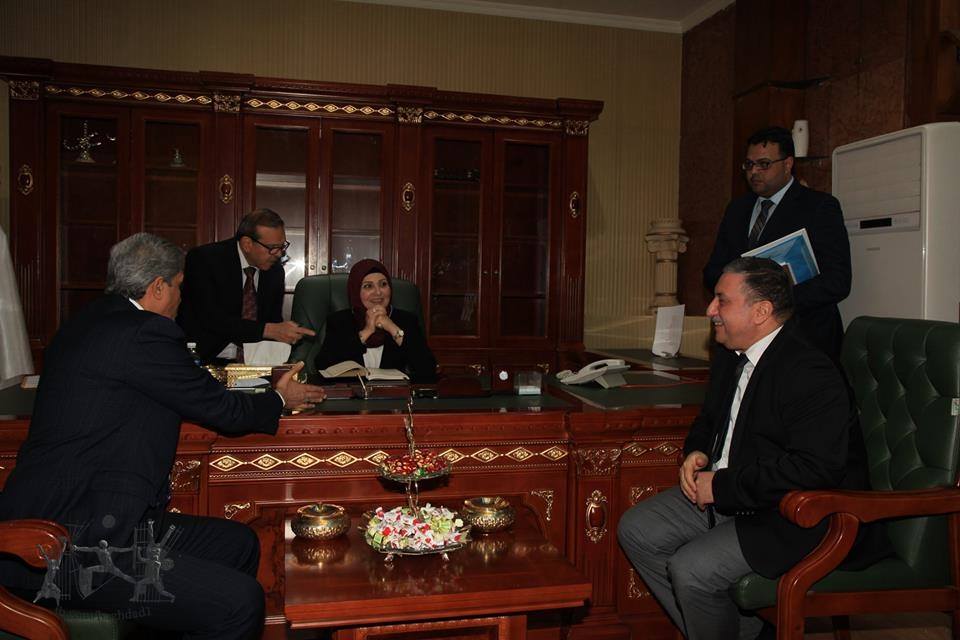
Iraq’s first female mayor Ms Thikra Awash was assigned her duties today on February 26, according to the Facebook page بغداد (“Baghdad”). Her position is so far only temporary, according to the news update, since she took over quite swiftly after the former mayor Naim Aboub who was made to leave due to dissatisfaction with his performance. The inauguration is still groundbreaking: it’s Iraq’s first female mayor, to be appointed in the capital, in a time when the IS terrorists are forcing their terrifying misogynist agenda on the regions that they have conquered.

In the ceremony the previous mayor participated, and Ms Awash was welcomed to her new office by the director of the Prime Minster’s office, Mr Mehdi Alallaq, who wished everyone in Baghdad a good cooperation in order to overcome all obstacles and reach the desired goal; which is to him, a service valued by Baghdad and its people.

Ms Awash said in her speech during the ceremony that she will be loyal and honest in handling the public funds, that she opposes any sort of partisanship and that she will not be biased to any clan, party or sectarian group. She said that her work in the initial phase would have two parallel focuses: to provide better services to the people of Baghdad and work on fast addressing the problems of the city, and also, as she stated: “To reinforce the status of the capital, to once again make it a modern city, while maintaining it’s authenticity and history”.

11025226_10153189222862668_3935465104331889415_n

Photo credits: https://www.facebook.com/Baghdad1

First Iraqi Female Mayor Elected

Unknown

Thikra Awash

With all awful news coming to us from everywhere these days, it’s wonderful to get positive news for once: Iraq appointed their first female mayor for Baghdad, Thikra Alwash (in some news spelled Zekra Alwach), and she is set to take up duties in her office as by today, Sunday February 22. In a country where women are fighting a slow battle against inequalities in many fields, a battle that is constantly facing set-backs due to the domestic conflicts, such an appointment is an important gesture to all of the country’s women. Although women traditionally have held many high political positions in Iraq – both during Saddam Hussein’s regime and after the US invasion – Ms Awash is supposedly the first one to hold the position of being a mayor.

According to Daily Star Lebanon, Ms Awash is a civil engineer by background and was previously the Director General of the Ministry of Higher Education – this is also stated in her Linkedin profile. In Ms Awash’s new role as a mayor she will be dealing directly with the Prime Minister Haider al-Abadi and will therefore be able to push her agenda, the agenda of the city of Baghdad, on a high level.

Some voices today criticised Ms Awash’s lack of political experience, and the fact that her predecessor Naim Aboub was removed by the prime minister in the blink of an eye. But still so, the choice of a female mayor in a time when dangerous, backwards powers are threatening the country of Iraq, is a brave and forward one. Let’s all keep our fingers crossed for Ms Awash and what the future holds for her, as well as her fellow Iraqi sisters.

Photo credit: Twitter @SAijaz_

First Female Prosecutors Sworn-In in Kuwait

In Kuwait women were given the right to vote and participate in elections as late as 2005, so when the news broke a few years back that the country would allow female prosecutors for the first time, this was to many a step forward. Kuwait is not as oppressive to women as some of their neighbouring countries – there’s no mandatory dress code for women, women are not banned from driving and there are fewer restrictions on work places for women than in Saudi Arabia. But it’s still behind many of the other Middle Eastern countries.

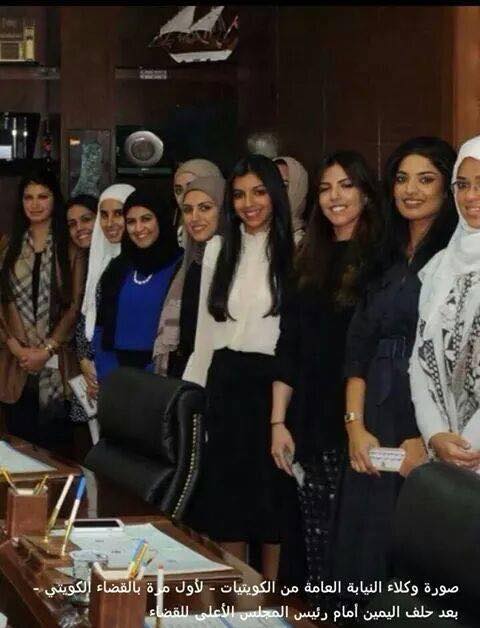
The other day the first batch of women prosecutors were sworn in, more precisely 22 of them, creating more headlines. It hadn’t been an easy path – Islamist MPs who opposed the women had delayed the process by several months, claiming that under Islamic Sharia law women cannot be judges, which they as prosecutors now have the possibility to be. In the end the new justice minister Yacoub Al-Sane (also a man) signed a decision to appoint the prosecutors, putting an end to the delay. After the women had been sworn in, MP Humoud Al-Hamdan held a press conference where he critiziced the decision and said that he and other Islamist MPs were to submit a draft law to ban the appointment of women judges, as this is against Islamic law.

Many others celebrated the event though and the group photo of smiling young women was shared widely online among Gulf people and women’s rights supporters, generating positive feedback but also comments from men such as “I can’t wait to be prosecuted in Kuwait!” and “They don’t look Kuwaiti, they must be Lebanese” (the ultimate insult for a Gulf girl).

I asked one of my male Kuwaiti friends what he thought of the women prosecutors and he gladly shared his views – on the condition that he could remain anonymous. My friend is not an activist, but he says he like to keep an eye on politics. His answer surprised me as I myself was very positive about the women prosecutors.

“I am not so excited” he says. “In 2005, I was super excited for women to get the ‘right’ of voting. But having a look into history will show something hidden. Before 2005, There was a lot of failed attempts for female activists for the right of voting. What was changed in 2005? It is external pressure. The government in Kuwait wanted to release this pressure by directing the members to vote for the right of the woman. Therefore, women were used to polish the authorities’ image to the West, and gaining this right was not because of local female activists.

The trick is using women to polish the image of the governments from the Western perspective, without allowing a real impact within the inside of the society. In all cases, what did women added in Kuwait after 10 years of gaining the right? We still see discrimination against women, less rights in the society etc.

The government today has a bad image because of funding the extremist groups all over the world, and it need to polish the image again. Therefore, women are the best tool to be used. I don’t feel that the society is pushing for more women rights. To see real impact, the change should come from the society, the average people. In fact I could say that using women this way is another way of abusing women in a completely patriarchal society. And we will never see any real impact to change the basic systematic violation of women rights.”

Let’s hope the appointment of these 22 women will be a step in the direction of real implementation of women’s rights and that this trickles down to the average people that my friend is talking about. So that the feedback for the next batch of prosecutors will generate more positive comments than sexist ones. At least they have male supporters. That’s something to cherish.

Photo credit: www.facebook.com/sultan.alqassemi

“You as a Woman are Guilty Until You Prove the Opposite” – The Execution of Reyhaneh Jabbari

taz.de

Reyhaneh Jabbari

As Reyhaneh Jabbari was hanged yesterday, the 26-year old Iranian woman convicted of stabbing a man who tried to rape her, international media filled up with stories about the unfair trial and the torture Reyhaneh supposedly was exposed to before being sentenced.

Reyhaneh claimed that she met Morteza Abdolali Sarbandi in a coffee shop and after he asked her to come to his office to discuss a business deal, he tried to rape her, why she in selfdefence stabbed him with her pocket knife before fleeing. Her lawyer reportedly published on his blog about the unfair trial against Reyhaneh as a plea for help, there were media campaigns against Reyhaneh’s execution, but the media attention didn’t help. After 7 years in prison, for which under some time she was prevented from contact with her family and from having a lawyer, she was hanged in Gohardasht prison in Teheran on the morning of Saturday October 25.

I asked an Iranian man that I know who’s living outside of Iran how he felt about the hanging, and he had many things to say. These are his words:

“Reyaneh has basically been considered guilty to one thing, and that is that she has defended herself as a woman. In many ways you as a woman are considered to be guilty until you in some way prove the opposite. ‘Evidence’ is here quite an irrelevant word.”

He talks about how the police in Iran are not conducting proper forensic investigations, and that facts is not important in the judicial system.

“If the judge thinks she is guilty for whatever reason,  she is guilty no matter what the circumstances are. It’s also ridiculously humiliating that Reyhaneh’s family have to ask the man’s family for mercy so that they shall spare her life. In this way the system is positioning one family against another. It’s not about proportion, facts or the right to defend yourself, but simply about a system that wants to prove that you as a woman shall not defend yourself and that you don’t have the right to a fair trial. But these kind of cases are not uncommon in Iran, there are worse… In the bigger picture this is not surprising. In Isfahan women have had acid thrown on their faces. This is just one case of many.”

Photo credit: taz.de

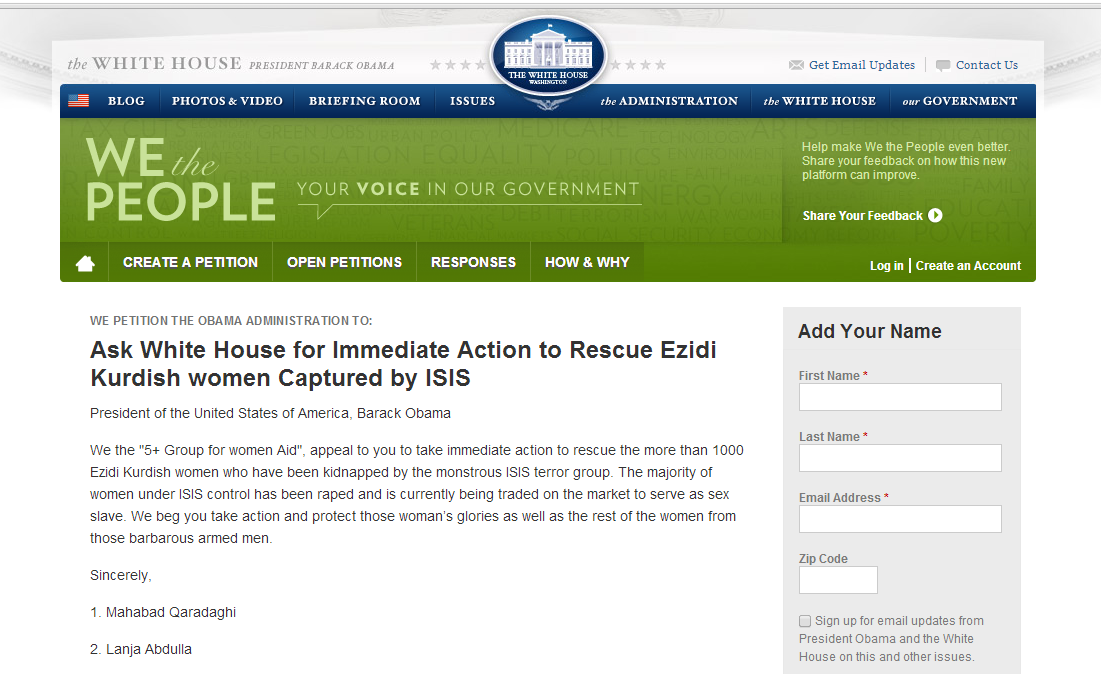
Iraqi Womens’ Petition to the White House to Act Against ISIS

I’m reluctant to what kind of international support Iraq and Syria are needing in the ongoing crisis of ISIS, as I as most other people don’t want to see previous disasters repeated all over again. But tonight my friends the women’s right activists at Warvin Foundation for Women’s Issues in Iraqi Kurdistan e-mailed me about a petition that they have signed for the White House, where they ask them to take immediate action to rescue the kidnapped Yesidi Kurdish women from ISIS, and I had a look.

The petition says:

We the… appeal to you to take immediate action to rescue the more than 1000 Ezidi Kurdish women who have been kidnapped by the monstrous ISIS terror group. The majority of women under ISIS control has been raped and is currently being traded on the market to serve as sex slave. We beg you take action and protect those woman’s glories as well as the rest of the women from those barbarous armed men.

This isn’t some foreigners wanting to liberate women in the Middle East, it’s not a bombing campaign noone asked for. This is Iraqi women asking for help for their fellow citizens that are enslaved under conditions you don’t want to imagine. At least I don’t want to imagine. That’s why I decided to share this with you.

ISIS Seizing Women’s Rights NGO Office in Iraq

Hi Jenny, How are you? Our office in Sinjar is occupied by ISIS since last night.

It was my friend Abdulrahman Ali, one of the founders of the women’s rights NGO and magazine Warvin foundation in Iraqi Kurdistan, who contacted me Sunday night with the dangerous news.

In Sinjar Warvin had a small office with few number of staff who were running a project for war widows. Warvin Foundation is one of the most outspoken women’s rights NGOs in Iraq and are, as most women’s rights NGOs in the country, threatened from time to time. But this Sunday night things became extremely dangerous as rule of law seized to exist, in the small town in Mosul province. ISIS had already previously threatened all people dealing with women’s rights issues in Mosul. Warvin’s staff, usually so daring, realized the only thing they could do was to flee.

“(The staff of the magazine in Sinjar)… are all of them under threat… and they left the city and from last night they are in mountains,” Abdulrahman said. “We’re afraid from that point if they (ISIS) understand what is Warvin do there they may burn it.”

During the night between Saturday and Sunday ISIS entered the city and people fled in masses. Kurdistan’s army seems to have lost control.

What someone said about the killing of Osama bin Laden has become the prophecy for Iraq: “He’s like a dragon, if you cut of his head ten new heads will grow out and take his place instead.

In this ongoing nightmare with the ten-headed dragon, women are, as usual, the main loosers.

Photo credit: Warvin Foundation