Sahab – Swedish-Iraqi Counselor with a Different Approach

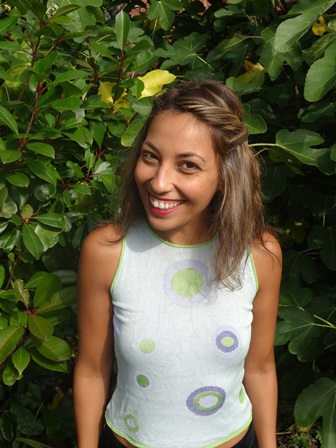
When Sahab Saheb started her therapy service Authentic Dialogues she had decided that she wanted to offer counseling in three languages: Swedish, Arabic and English. At 32 years old with a master’s degree in social work and sexology, she wanted to offer her counseling services to such a wide range of clients as possible.

“There’s a challenge in working in different languages,” she says. “But I wanted to use my full potential.”

I wanted to write about Sahab not only because of her interesting character as a Swedish-Iraqi woman, but also since her approach to counseling seemed different. According to her, psychological counseling should be accessible and of low cost. Based in Malmö, Sweden, she also offers counseling via Skype, and on her website, under description of fees, it states: “Fee reductions are available for people on low incomes and this can be negotiated on an individual basis”.

The aspect of wanting to reach out to the many Arabic speaking people in Sweden is not a coincidence. In her master thesis Sahab researched an integration project for Arab immigrants, where she examined factors that determined the effectiveness of the program. The thesis published this year and is titled “Transformation of newcomers, responsibilities and consequences. An evaluation of the project ‘Newcomers, Shortest path’” (Malmö University, Faculty of Health and Society, Department of Social Work). The research gave her new insights in the world of social work and psychological assistance. Through the research she met many immigrants who tried to integrate themselves in Sweden and learned about the challenges they faced.

“The most important aspect is the gap between the experience from the home country and Sweden. The main difference between the two countries is the role that the state plays. People from the Middle East, Syria for example, come from a society where the state has a very negative reputation. People associate the state with fear and betrayal, and it’s not responsible for the individual’s welfare and personal development. Here in Sweden, the state is in charge of everything and a lot of mistrust is going on (from the newly arrived immigrants, my comment) that the Swedish authorities have no clue about.”

In contrast with some other Western countries, where immigrants that have received asylum are left on their own to find housing and work, sometimes with help from voluntary organizations, Swedish authorities offer a roof-over-the-head-guarantee and financial assistance until the person is able to provide for him. However, the choices of where to live or what to do (financial assistance requires the person to take part of mandatory Swedish classes or work programs in return) become reduced to a minimum when being dependent on the system, which many are until they have learned enough Swedish to manage on their own.

Having seen the clash between the Swedish society and the newly arrived immigrants and how the society sometimes fails to help people who suffer from traumas and psychological illnesses, Sahab wanted to create her own service instead of being part of the system.

“The professionalism of the Swedish bureaucracy has a distanced approach to people, and this approach is by many immigrants perceived as something personal against them, it becomes the only thing that the immigrant experience during the first years in Sweden. Even if we have to carry out the integration aspect through the institutions, since this is the way it works in Sweden, we have to implement more of a personal reception since these persons come from a society where there are stronger bonds between people. We shouldn’t dehumanize people the way the system sometimes does now.”

Still, the failures of the system served as an incentive for her to contribute with what she believed would be the best way to help people with psychological problems from experiences of war and terror.

“Instead of being bitter over the fact that I can’t implement what I think is right, I wanted to start my own thing to help people in a way that I believe in”, she says. “If we learn how to be more empathetic we’ll have better dialogues and a stronger society.”

The therapy Sahab offers is based on the existential humanistic psychology, which she says pays respect to people’s own inner potential and responsibility for their actions.

“I wanted to work with counselling that derives from an equal dialogue between the therapist and the patient. I believe that an illness in the society is that we don’t communicate between each other. I believe that this therapy is very helpful since you can carry it with you the whole life and apply it to new relationships. In the therapy you help people to have more confidence in themselves so that they can take more initiative and thereby enhance their own self-esteem.”

She emphasizes that it’s still important not to see people as solely traumatized and damaged individuals, since people have a lot to offer that you can encourage and build on.

“You also have to be very careful in how you create a dialogue with people who come from traumatized societies,” she says. “This therapy is non-directive, there is no right or wrong, it’s up to the client how he or she thinks. I believe this is very important in a multi-cultural society where people have different values. This will create less guilt and insecurity.”

I ask her how she deals with people that might have twisted or reversed values as they come from countries where war or a repressive state have been prevailing for so long that it affects the persons and their personal values. What does she say to them if they have internalized what they have seen and for example believe that violence is justified?

“Even if I tell this person that this and that is wrong it won’t help him if he doesn’t realize this himself.  We need to understand why the person has chosen to believe in this, because it’s a defense mechanism. And the less we use our defense mechanisms, the more we get out of life.”

She adds:

“I believe in this small effect. If we help one person, we will also help many others that will exist down that person’s road.”

So what is her dream with her service, which she recently started earlier this year? She laughs when I ask the question.

“I don’t believe that much in dreams, I believe in being present in the moment and enjoy that. I try not to be too much in the future, my challenge right now is to be able to assist people in need of help. And well… maybe sometime in the future I’ll be able to work together with other people, who want to work in the same way I do.”

Photo copyright: Sahab Saber

To get in touch with Sahab please visit her website: authenticdialogues.com
Old Iraqi Photos

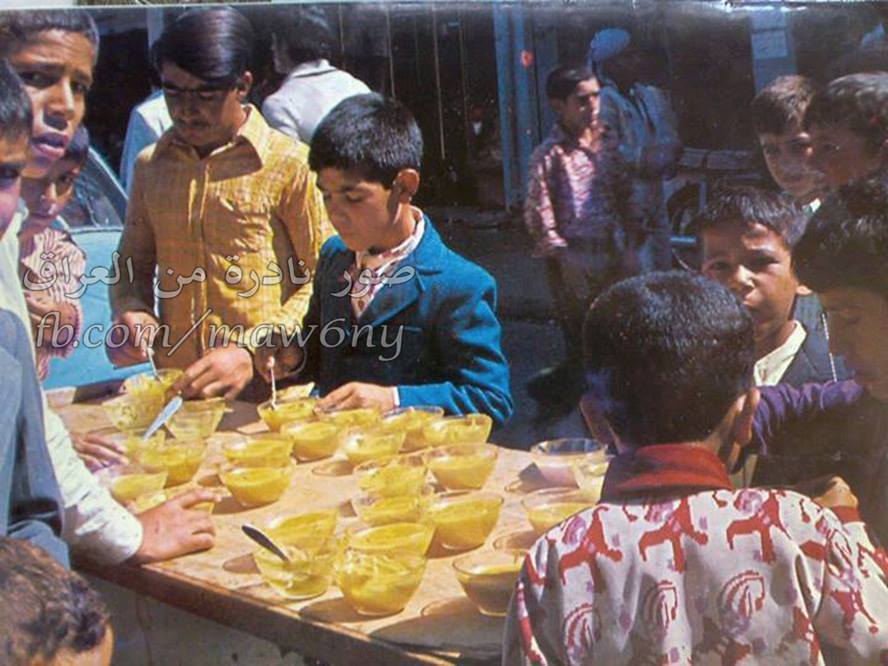
A Facebookpage that I follow is dedicated to show the world the old Iraq and regularly posts photos of a country many didn’t know exists. This is how the Rare Iraqi Pics page describes itself:

”Nostalgia is the only balm when we grow older… We miss our beginning as we approach the end.”

The page is popular, it has almost 40.000 followers, but the updates and descriptions are done in Arabic so many Westerners might not come across the page so easily. Therefore I decided to write about the page and share some of their photos with translations in English, with you.

Eid Mosul

Eid in Mosul, Northern Iraq, one of the cities now under control of ISIS, 1976

Tigris river

Tigris river, Baghdad. Year is unknown but the card is printed in 1955

seta

Seta Hagopian, Armenian-Iraqi singer, the photo is probably from early 1970s. Seta Hagopian was one of the first singers to combine old Iraqi songs with Western instruments. She’s still active and lives in Qatar and Canada since the late 1990s. You can find her MySpace page here.

fashin shoot

Fashion shoot in the marshes, a wetland area in Southern Iraq, 1974

Photo credits: Rare Iraqi Pics Facebook community

Ay hawar! Hawar! Hawar! (HELP US! HELP US! HELP US!)

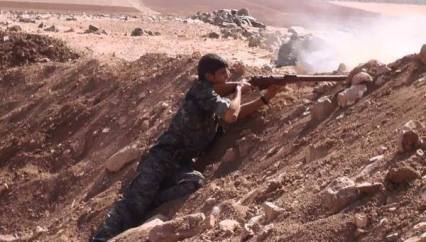
A number of my Kurdish, Iraqi and Syrian friends in the countries and abroad are horrifyed of the ISIS terror, and at times are unable to talk about anything else. A number of websites and social media pages are dedicated to launch news about the terrorists so as to create awareness and ask the world for help. Today I stumbled upon a heartbreaking message from a Facebookpage that is updating with news from Kobane in Northern Syria that is under immense threat of being abducted by ISIS. I thought I should share their message and let it speak for itself.

From: Kurdish Resistance & Liberation community 

”Our hearts are breaking at the moment. Kobane is under serious siege at the moment and our brave YPG/PKK forces are left to fight with outdated and limited weapons on the streets of Kobane. Kobane has a strategic, symbolic and psychological significance for the Kurds, but the lack of help from the west and lack of arms to the Kurds is allowing ISIS to succeed! An imminent genocide of the Kurdish forces as well as civilians is on the horizon all because they do not have the appropriate military supplies. The Kurdish forces have been fighting non stop for the past 48 hours. SHAME on the West for your inaction while these brave men and women die defending humanity, defending civilians, women and children and defend the West from ISIS. Shame!

Friends PLEASE share so that the Western community realizes that if Kobane falls it was not for lack of trying on behalf of the brave YPG/YPJ/PKK forces. It was because of Western cowardice and THEIR betrayal of humanity!

Ay hawar! hawar! hawar! (HELP US! HELP US! HELP US!)”

kurdish resistance 2

Kurdish resistance 1

Photo credit: Kurdish Resistance & Liberation Facebook page, source and location unknown

There’s More to Dubai Than the Scyscrapers

I admit it, I have a thing for the Gulf. And Dubai is more than the expats, more than the oil, more than the fast money. There are beautiful places worth seeing, if you go off the beaten tracks.

These photos date a few years back to one of my trips to Dubai.

Photo copyrights: Sweden and the Middle East Views Blog

Beautiful Iraq – There is Light in the End of the Tunnel

Saif Alani

After my article “Tourism in Iraq – Another Country is Possible” (that has been shared over 300 times on Facebook) I was by another Iraqi that, inspired my article, wanted to tell me about his project.

Consisting on nine people in London who works to keep up the website and the Facebook page with the aim to register as a company, Beautiful Iraq has big plans for the future.

“It was always one of my dreams to establish something in my beautiful and welcoming country for the whole world to enjoy,” says Saif Alani, the enthusiastic 23-year-old CEO.

The main idea with the project is to become a tour operator that can provide package holidays to Iraq, but also to provide a general source of information of Iraq. So far Beautiful Iraq describes themselves as a media outlet that provides people information about Iraq.

The page already contains travel recommendation on where to and not to travel in Iraq (basically most of the country except Kurdistan; “If you are leaving Kurdistan then make sure you hire a professional security team to escort you!”) and visitors can sign up to receive newsletters. The online shop sells backpacks, t-shirts and even umbrellas with labels such as “I love Iraq” – free delivery when you buy two or more items at the same time.

“We want to be a company for travelling and holiday travel”, Saif says. “And also to deliver the news of Iraq in a way for people to get a better understanding.”

As the name of his project suggests, Saif wants the world to know the beautiful sides of his home country that he himself left together with his family 10 years ago.

“I would like people to know that Iraq is a country as any other, all countries have beauties, the bad things are only temporary. We can share this knowledge through our customers’ successful insight of Iraq’s beauties, with our hospitality and unique way.”

Saif himself has a diploma in event management and two certificates in travel and tourism, so the tourism industry is not new to him. He maintains another job in a hotel reception and dedicates his free time to his business. When I ask him what a tour in Iraq could look like he is full of ideas and things that he wants to share.

“There are magical pictures that people haven’t thought about! A tour could start in the cathedral of Erbil and go on to explore the historical and natural beauties in Iraq, the churches, to the theme park Basra Land in the south… We have religious tourism such as Babylon, which is mentioned in the Bible, historical tourism such as the ancient sites of Iraq and adventurous such as the theme parks and roller coasters. You can explore the nightlife in Baghdad; there are shopping malls and cafes – this is a side of Iraq people haven’t seen yet.”

Saif has not been back since he left but maintains contact with family members that are still living in Baghdad. He is very keen on his goal of establishing a positive common Iraqi identity. Throughout our interview he talks about how welcoming and hospitable his home country is.

“Through this, we believe we can change something negative into something positive,” he says.

We talk about the world’s perception of Iraq and Saif brings up religion, the current ISIS crisis and how it’s perceived from the outside.

“People would think that the religious aspects of Iraq could be negative aspects when it’s not, religion is very much a private matter in Iraq. It’s done in the places of worship, that’s where it’s done.”

“We do not class them (ISIS, author’s comment) as Iraqis, we class them as bad person. A bad person could be of any nationality. The acts of (these) persons have unfortunately caused a certain picture of the country that is not true… Many would think it would make Iraq weaker which are true, people are somehow deflated about Iraq, but our concept has now been stronger in preparing for the future, and politicians are involved in the combat.”

The plans of starting tours are very current – Saif is planning on hiring tour guides who are keen on working in the hopeful environment that the concept of Beautiful Iraq is. I have to ask him when he thinks it’s realistic that Beautiful Iraq will be able to offer their first tours to Iraq and he says the aim is to start in March 2015.

“It all depends on the security situation and when that is improved.”

Despite the latest humanitarian tragedy that northern Iraq is experiencing in the hands of ISIS, Saif stays optimistic, just like the founder of Tourism in Iraq.

“We replace negativity with positivity through our program,” he says, determined, with his never-fading smile. “There is a light in the end of the tunnel.”

Basraland, Iraq

Photo copyrights: Beautiful Iraq

Another Side of Baghdad

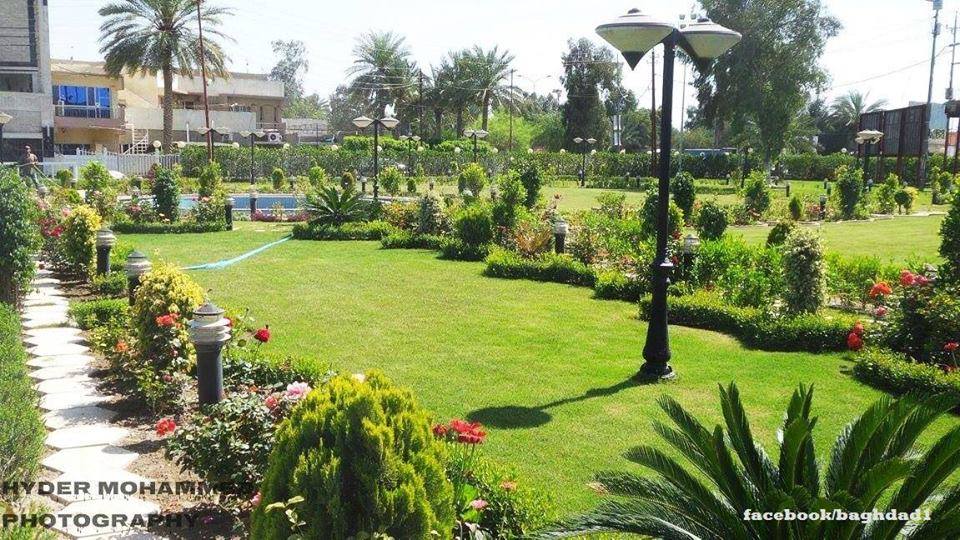
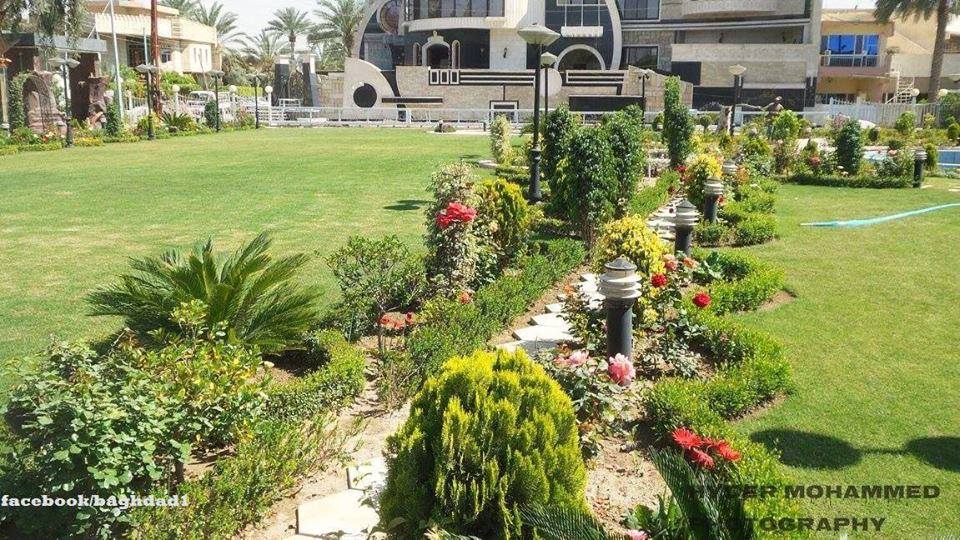
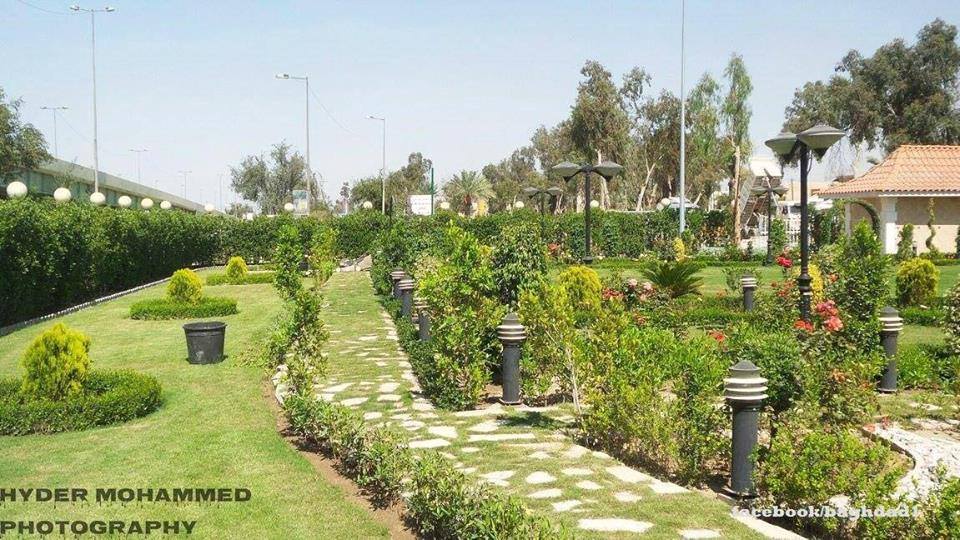
Gardens in Zayona district, Baghdad. Thank you Nawar Al-Saadi from Tourism in Iraq for allowing me to publish these photos! There are more sides than one of Baghdad.

Photo credits: Tourism in Iraq

Iraqi Womens’ Petition to the White House to Act Against ISIS

I’m reluctant to what kind of international support Iraq and Syria are needing in the ongoing crisis of ISIS, as I as most other people don’t want to see previous disasters repeated all over again. But tonight my friends the women’s right activists at Warvin Foundation for Women’s Issues in Iraqi Kurdistan e-mailed me about a petition that they have signed for the White House, where they ask them to take immediate action to rescue the kidnapped Yesidi Kurdish women from ISIS, and I had a look.

The petition says:

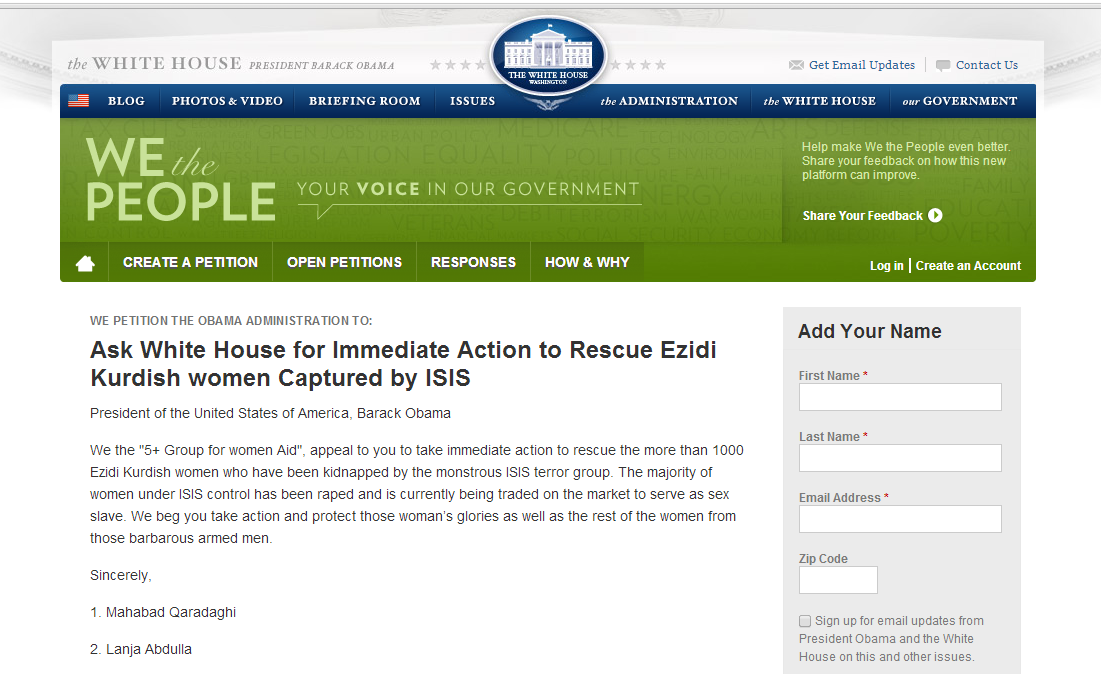
”We the… appeal to you to take immediate action to rescue the more than 1000 Ezidi Kurdish women who have been kidnapped by the monstrous ISIS terror group. The majority of women under ISIS control has been raped and is currently being traded on the market to serve as sex slave. We beg you take action and protect those woman’s glories as well as the rest of the women from those barbarous armed men.”

This isn’t some foreigners wanting to liberate women in the Middle East, it’s not a bombing campaign noone asked for. This is Iraqi women asking for help for their fellow citizens that are enslaved under conditions you don’t want to imagine. At least I don’t want to imagine. That’s why I decided to share this with you.

ISIS Seizing Women’s Rights NGO Office in Iraq

”Hi Jenny, How are you? Our office in Sinjar is occupied by ISIS since last night.”

It was my friend Abdulrahman Ali, one of the founders of the women’s rights NGO and magazine Warvin foundation in Iraqi Kurdistan, who contacted me Sunday night with the dangerous news.

In Sinjar Warvin had a small office with few number of staff who were running a project for war widows. Warvin Foundation is one of the most outspoken women’s rights NGOs in Iraq and are, as most women’s rights NGOs in the country, threatened from time to time. But this Sunday night things became extremely dangerous as rule of law seized to exist, in the small town in Mosul province. ISIS had already previously threatened all people dealing with women’s rights issues in Mosul. Warvin’s staff, usually so daring, realized the only thing they could do was to flee.

”(The staff of the magazine in Sinjar)… are all of them under threat… and they left the city and from last night they are in mountains,” Abdulrahman said. ”We’re afraid from that point if they (ISIS) understand what is Warvin do there they may burn it.”

During the night between Saturday and Sunday ISIS entered the city and people fled in masses. Kurdistan’s army seems to have lost control.

What someone said about the killing of Osama bin Laden has become the prophecy for Iraq: ”He’s like a dragon, if you cut of his head ten new heads will grow out and take his place instead.”

In this ongoing nightmare with the ten-headed dragon, women are, as usual, the main loosers.

Photo credit: Warvin Foundation

Being from Gaza

As the death toll rises and media is filled with reports from Gaza, I wanted to talk to someone from there to get a personal view of Israeli attacks. I have never been there myself, and even if I did, in this moment it wouldn’t really matter. How can I portray the grief and sorrow from a war zone when I don’t have family or friends there myself?

On Facebook I have a few friends from Gaza – all of them are outside – and their updates were filed with anger and sorrow. The ones who lost friends published photos of them, the kind of status you should never have to make.

I e-mailed my acquaintances and asked if anyone wanted to tell me their feelings or a comment on the situation. Normally people are happy to give their statements and I sometimes get contacted by people who want me to blog about something they find unjust or important. My last blog post has been shared around 200 times on Facebook already, so I was expecting someone to want to share their view.

But no one wanted to. One friend who usually is very vocal and passionately speaks about the cause of Gaza, replied and told me that he didn’t want to, because he had nothing to say. It was just too terrible to him. I suddenly felt stupid having asked for a comment when the people I asked all were in the middle of a crisis, when they spend all their time worrying about relatives and friends, dreading a call from home saying they had lost a loved one.

Being from Gaza must be a burden in itself. War in other countries usually has a beginning and an end – but for Gaza it’s a never ending story. I wish I hadn’t been that pushy, not thinking about what the persons I asked went through. It’s easy when you’re from the outside, looking in. Not the one being from Gaza himself.

Hawzhin The Middle Eastern Feminist

Hawzhin Azeez

The Middle Eastern Feminist page singled itself out from other feminist pages on Facebook when it started up in December last year. Feminism across boundaries of ethnicity and nations; love over hate; support over anger, seemed to be the red threads for the page.

“If you are struggling today, remember that you were never meant to be ashamed, depressed and guilty. You were always meant to be victorious! Don’t let the bastards grind you down,” says a quote followed by a heart from July 16.

The reconciling approach seemed to appeal to many. The page soon had many followers.

Often white, middle class women are blamed for having this approach to women’s rights as they haven’t faced real hardships themselves. But the woman behind The Middle Eastern Feminist page is not one of those.

Hawzhin Azeez’s early childhood memories consists of escaping Iraqi Kurdistan as Saddam Hussein bombed the area with chemical weapons; her pressing a scarf against her face not to breath in the lethal smoke; her mother having skin burns all over her. Living as illegal refugees in Iran the family sometimes didn’t eat for days, and on a regular basis the police came and took away her father, accusing him of being a part of the resistance against the Iranian regime due to his Kurdish ethnicity. The family never knew when or if he was coming back. In this setting there was no room for women’s rights.

“When growing up in a refugee setting, in war-torn countries, it’s incredibly hard being a woman,” says Hawzhin when explaining her upbringing and how she became a feminist. “People hold on to their ethnicity and as a young woman you’re just supposed to behave.”

After finally receiving asylum in Australia, Hawzhin and her family faced a new dilemma: the one of suddenly being in a liberal culture with new gender roles that they had no idea how to manage.

“I was going through my puberty in a family traumatized from the war,” Hawzhin says. “And we were stripped off our identity. My parents were very traditional and conservative and it was difficult for me to be friends with Australian girls. It was an isolating experience going to a Western school.”

In the Kurdish community where they lived a strong social control was being exercised. Hawzhin points out that it was first and foremost the women who exercised this control over each other and each other’s daughters. She says they had internalized the racism and sexism they had been exposed to as Kurds in the Middle East, and turned it into misogyny.

“Gossip was used a tool to limit and control each other between women. It was used to shame and guilt what women and girls did in the community.”

Despite the lack of role models, Hawzhin knew she was a feminist.

“I was born a feminist!” she says. “In Iran I witnessed things that were incredibly wrong and unjust. Religion was used as an ideology to limit the women, what they wanted to achieve. What chador means for me as a human being is that I become sexualized.”

As a teenager she was incredibly angry because she wasn’t able to live her life the way she wanted to. She read a lot of feminist literature in high school, it was her escape.

“My choices were directly linked to my family, if they agreed. I couldn’t create any issues for my family in the Kurdish community. It was a constant struggle between the community’s values and my feminism.”

Despite having arrived to Australia as an 11 year old with only two years of primary school education, Hawzhin was able to enter university after high school to study international relations and political science. But even having made it so far, she couldn’t live the way she wanted to. When she moved out of her parents’ house to do her PhD in another city at 25 years old, she was finally able to be independent. But it took a long time for her to adjust.

“I had no idea who I was. Growing up in a patriarchal family I had been constantly told how to behave and how to live. I now choose to live independently and I wish for every girl to have this freedom. Unless you do this you will never be able to make informed decisions on yourself.”

When starting The Middle Eastern feminist page it was after a long and difficult semester at university, when she was emotionally drained and spent a lot of time in front of Facebook. She noticed how people mostly posted things about what they ate and going to the gym, and wanted to turn her Facebook time into something more intellectual. Her motivation also steamed from being back in her country of origin for the first time since the escape. She went on her own without her parents and met up with her relatives. The trips were wonderful, she says, but she noticed how little women in Iraqi Kurdistan knew about their rights, and this was something she wanted to change.

“I wanted a safe place for Middle Eastern women or women from developing societies where they could talk about their rights and issues they were dealing with. But I also wanted to challenge them and tell them they could have a traditional life and still be feminists.”

Hawzhin mean that some women in the Middle East might not be able to escape their traditional life but that they can find space where they can still be feminists.

Another goal was to educate Western women on Middle Eastern women’s issues. She wanted a place for women from the two worlds to meet and realize that they were dealing with the same issues.

“Women everywhere are dealing with for example street harassment. Although the issues Middle Eastern women have are on another level, we are all struggling. I wanted to create a place for solidarity, for women to find commonalities in their lives.”

“Have you felt supported by Australian feminists or have you felt excluded?”

“Feminism in Australia is not a priority for many people… There is also a barrier between privileged women and women of color. A lot of the feminist groups and women are diffused within the political movements, there are not many groups trying to bridge the gap between privileged women and women of color, to bring all of these different identities together. But this is necessary.”

The page is now an active place for discussions and many of the over 6.000 followers are not only from the Middle East but from all over the world. Through the page connections are being made and people are making friends across boundaries. Hawzhin is actively promoting other feminist pages on her own, urging her followers to like a new page that has recently been started. She’s also sharing her private Facebook page with followers that want to add her as a friend – a page where she has posted photos of herself and her mom hugging, dressed up in Kurdish clothes, as well as photos from university parties where she’s dolled up (“I dress very femininely, I love to wear lipstick,” she says on a side note).

On combining the different cultures, she says that she sees herself as a bridge between women in Afghanistan who can’t leave the house, and urban, developed women in Egypt; that they can contribute to each other through the page.

A long message to her followers on the page from July starts like this:

“I haven’t said this in a while, but: I am so incredibly in love with all you inspiring feminists (male and female), and the new ones on this page and the ones that send me private emails and share their stories, and those of you who comment and make witty and brilliant comments to posts. I know that we all come from different cultural and social settings but that does not take away from the fact that we are all struggling against a global system which thrives on the oppression and subjugation of people based on their gender or sexual orientation or race. All of our struggles matter, though the problems we face may differ somewhat.”

Hawzhin has had very little negative feedback on her page and says she is shocked by the amount of support and number of women that have been contacting her. Some people expect that she’s a Muslim feminist but this is not what she calls herself.

“I call myself a secular feminist,” she says. “But if women want to cover up that’s great – I don’t believe in ripping women off their scarf.”

“Does your family know you’re a feminist?”

She laughs:

“Oh yes, very much so.”

So how are her parents, the once traumatized refugees that had such a hard time to adjust to the new society they were in, dealing with their daughter having developed to being such an outspoken feminist?

“My family has come such a long way,” she says, delighted. “There were so many things we couldn’t discuss before due to our culture, but this has changed. I am now teaching my younger sister and brother about feminism. When I visit them I always show them feminist documentaries, and my sister who is 13 comes with me to political marches. I’m teaching her to be more independent. It’s important to start with the children.”

Photo 1: Copyright Hawzhin Azeez, Photo 2: Copyright Sweden and the Middle East Views Blog