Don’t Hate

images

I wrote the post “Being from Gaza” during the Israeli attack on Gaza this summer when thousands of civilians died. Now news popped up the other day on the shooting during prayer time in a synagogue in Jerusalem and the predictable counterattacks by the Israeli army. I wanted to comment on the violence and then I found this quote on the Facebook page “Palestine Loves Israel“, a peacepromoting page (not a pro-Israel page) managed by a Palestinian. He captured things so well that I’d like to let his quote speak for itself.

I’ve been managing this page for almost 3 years and during this time, I’ve met hundreds of amazing people from both sides and from every corner of the world. We’ve endured two wars together, we’ve celebrated our holidays together (who can forget the chanukka candles from Gaza?) and mourned our dead together. During all this time, I’ve never lost hope that one day, we can live as neighbors and friends in peace and prosperity. I don’t loose hope because I know we’re all in this together.

But in times like this, I see so much hatred on both sides. It’s painful to watch. What I see is always the same: It’s dehumanization. It’s easy to dehumanize the other side, to call them monsters, to hate them. It’s much easier than to try and find a solution. In times like this, it’s a very difficult thing to reach out to the other side, especially when there is so much pain. It’s a difficult thing to show compassion for “the enemy” when you’re supposed to be hating them. Reaching out to the other side despite the traumatic pain, despite the ongoing conflict is a heroic act. Dehumanizing and hating everyone on the other side is certainly easier. But it’s not helpful. It’s fueling the fire. And the vicious cycle of hate and revenge is going on and on…

In this project, I’ve met many heroes. I’ve met Palestinians and Israelis who reached out to each other, no matter what. Who said: “I’m sorry for your pain, I wish you well” in the middle of war. Who said: “I love you so much and say hi to your mom!” despite the ongoing conflict. I’ve met so many heroes… people who changed from extremists into peace workers. People who let go their hate and replaced it with compassion. So many heroes…

No, I don’t loose hope.

Please stay safe everyone and take good care of each other. These are troubled times but we will make it through together.

Photocredit: abc.net.au (the photo is from a previous attack in Jerusalem)

Remembering Old Palestine in Photos

Photographs is a great way for knowing something that was without having been there.

Agricultural memory of Palestine is a Facebook page dedicated to show the world the agricultural heritage of Palestine through photos. Their shared images range from late 1800s up until the 1960s, and show men and women working in the fields and on the markets in the cities. The page were happy for me to write about them as they want to share their photos with the world. This is how they describe themselves:

“Our belief in the need to maintain the Palestinian memory, our goal is to strengthen the identity and belonging to the homeland and the cause. Through the page ‘Agricultural Memory of Palestine’ we highlight the heritage and agricultural history as part of an important and original aspect of our culture and the Palestinian identity.”

So what did Palestine once look like? Have a tour among the shared memories.

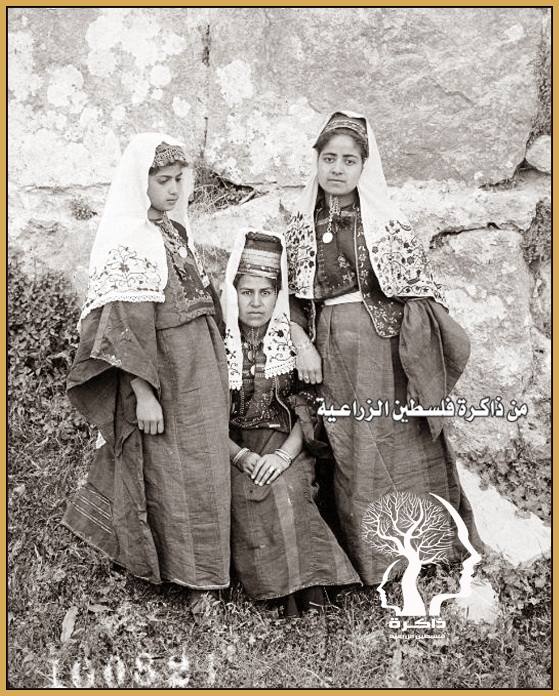
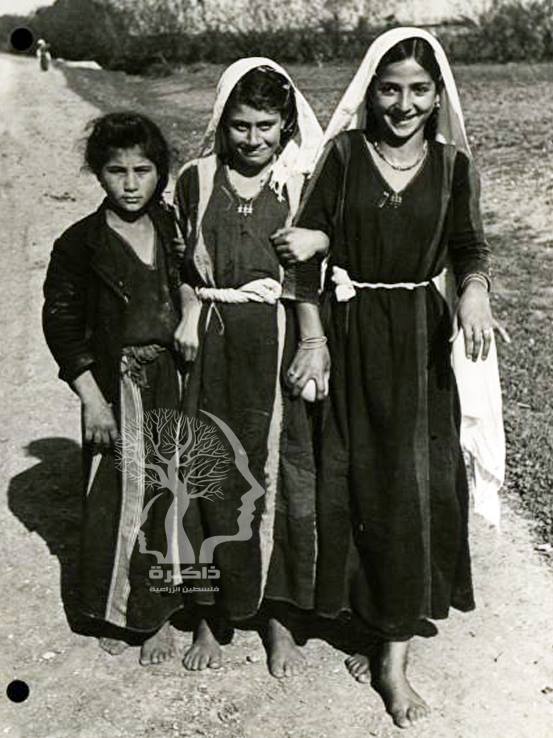
Girls of Betlehem 1890

Girls in Betlehem, 1890.

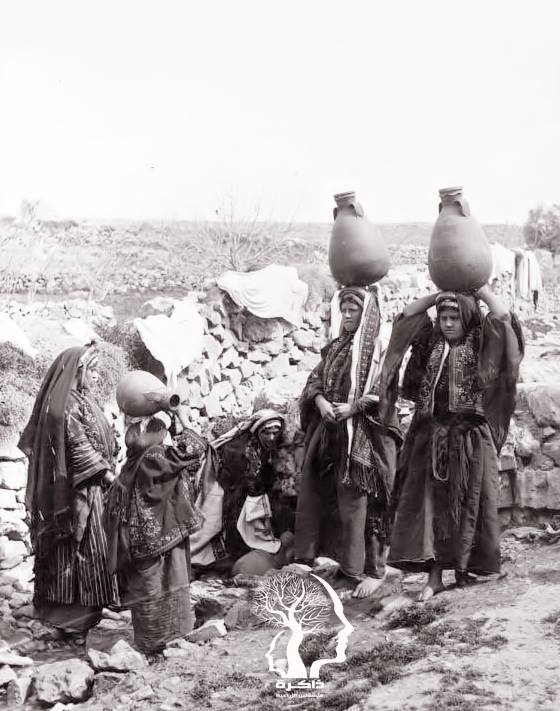
Peasants from Ramallah who fill water tractor-1900 m

Peasants in Ramallah collecting water, 1900.

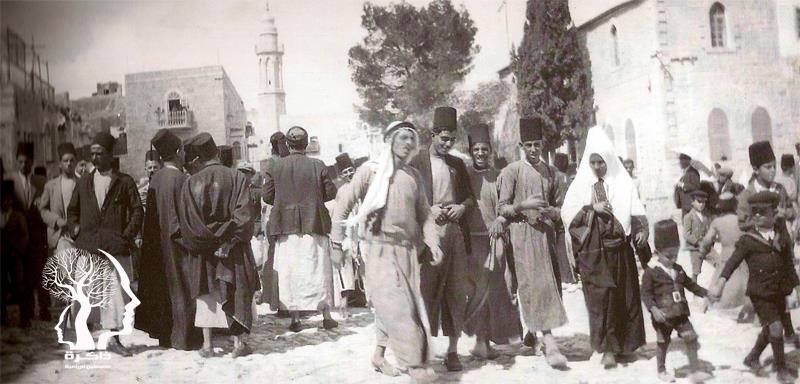
Betlehem market 1931

Betlehem market, 1931.

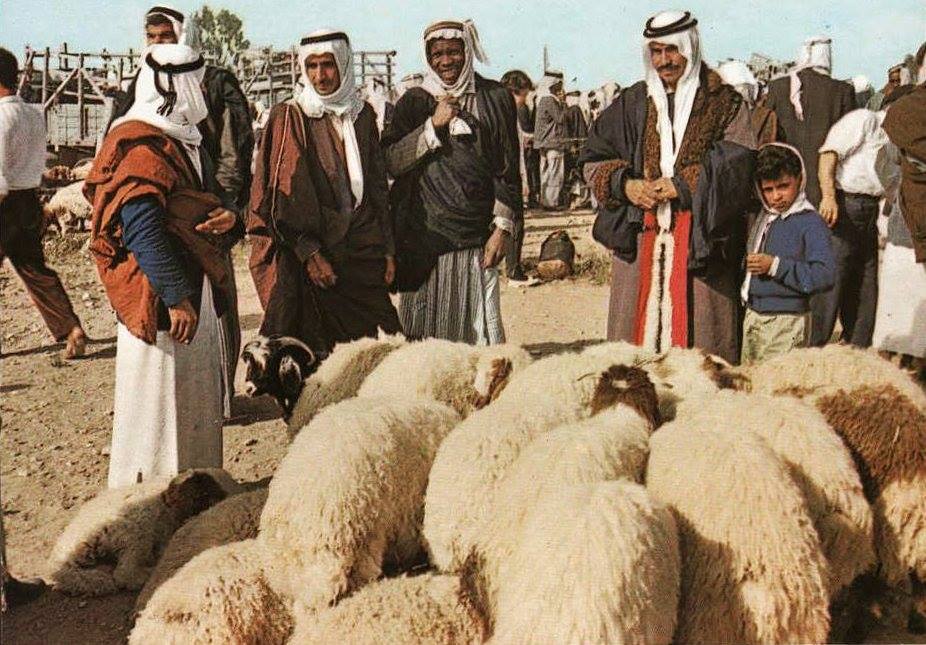
Ber Sheva halal market in 1960s

Ber Sheva halal market in the 1960s.

Girls

Girls, place and year unknown.

Photo copyrights: facebook.com/agriculture.memory

First Female Prosecutors Sworn-In in Kuwait

In Kuwait women were given the right to vote and participate in elections as late as 2005, so when the news broke a few years back that the country would allow female prosecutors for the first time, this was to many a step forward. Kuwait is not as oppressive to women as some of their neighbouring countries – there’s no mandatory dress code for women, women are not banned from driving and there are fewer restrictions on work places for women than in Saudi Arabia. But it’s still behind many of the other Middle Eastern countries.

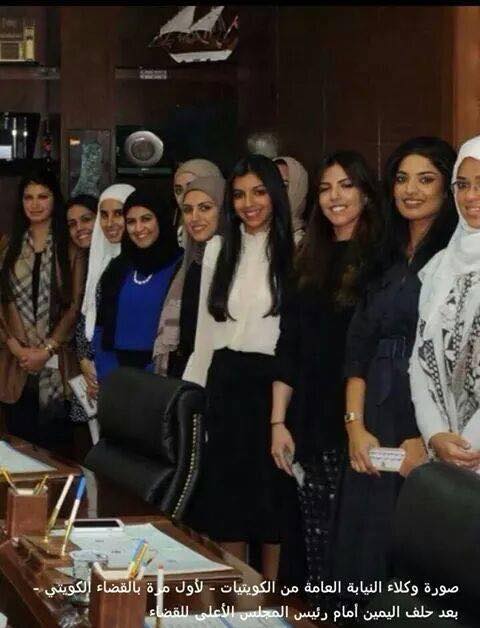
The other day the first batch of women prosecutors were sworn in, more precisely 22 of them, creating more headlines. It hadn’t been an easy path – Islamist MPs who opposed the women had delayed the process by several months, claiming that under Islamic Sharia law women cannot be judges, which they as prosecutors now have the possibility to be. In the end the new justice minister Yacoub Al-Sane (also a man) signed a decision to appoint the prosecutors, putting an end to the delay. After the women had been sworn in, MP Humoud Al-Hamdan held a press conference where he critiziced the decision and said that he and other Islamist MPs were to submit a draft law to ban the appointment of women judges, as this is against Islamic law.

Many others celebrated the event though and the group photo of smiling young women was shared widely online among Gulf people and women’s rights supporters, generating positive feedback but also comments from men such as “I can’t wait to be prosecuted in Kuwait!” and “They don’t look Kuwaiti, they must be Lebanese” (the ultimate insult for a Gulf girl).

I asked one of my male Kuwaiti friends what he thought of the women prosecutors and he gladly shared his views – on the condition that he could remain anonymous. My friend is not an activist, but he says he like to keep an eye on politics. His answer surprised me as I myself was very positive about the women prosecutors.

“I am not so excited” he says. “In 2005, I was super excited for women to get the ‘right’ of voting. But having a look into history will show something hidden. Before 2005, There was a lot of failed attempts for female activists for the right of voting. What was changed in 2005? It is external pressure. The government in Kuwait wanted to release this pressure by directing the members to vote for the right of the woman. Therefore, women were used to polish the authorities’ image to the West, and gaining this right was not because of local female activists.

The trick is using women to polish the image of the governments from the Western perspective, without allowing a real impact within the inside of the society. In all cases, what did women added in Kuwait after 10 years of gaining the right? We still see discrimination against women, less rights in the society etc.

The government today has a bad image because of funding the extremist groups all over the world, and it need to polish the image again. Therefore, women are the best tool to be used. I don’t feel that the society is pushing for more women rights. To see real impact, the change should come from the society, the average people. In fact I could say that using women this way is another way of abusing women in a completely patriarchal society. And we will never see any real impact to change the basic systematic violation of women rights.”

Let’s hope the appointment of these 22 women will be a step in the direction of real implementation of women’s rights and that this trickles down to the average people that my friend is talking about. So that the feedback for the next batch of prosecutors will generate more positive comments than sexist ones. At least they have male supporters. That’s something to cherish.

Photo credit: www.facebook.com/sultan.alqassemi

“You as a Woman are Guilty Until You Prove the Opposite” – The Execution of Reyhaneh Jabbari

taz.de

Reyhaneh Jabbari

As Reyhaneh Jabbari was hanged yesterday, the 26-year old Iranian woman convicted of stabbing a man who tried to rape her, international media filled up with stories about the unfair trial and the torture Reyhaneh supposedly was exposed to before being sentenced.

Reyhaneh claimed that she met Morteza Abdolali Sarbandi in a coffee shop and after he asked her to come to his office to discuss a business deal, he tried to rape her, why she in selfdefence stabbed him with her pocket knife before fleeing. Her lawyer reportedly published on his blog about the unfair trial against Reyhaneh as a plea for help, there were media campaigns against Reyhaneh’s execution, but the media attention didn’t help. After 7 years in prison, for which under some time she was prevented from contact with her family and from having a lawyer, she was hanged in Gohardasht prison in Teheran on the morning of Saturday October 25.

I asked an Iranian man that I know who’s living outside of Iran how he felt about the hanging, and he had many things to say. These are his words:

“Reyaneh has basically been considered guilty to one thing, and that is that she has defended herself as a woman. In many ways you as a woman are considered to be guilty until you in some way prove the opposite. ‘Evidence’ is here quite an irrelevant word.”

He talks about how the police in Iran are not conducting proper forensic investigations, and that facts is not important in the judicial system.

“If the judge thinks she is guilty for whatever reason,  she is guilty no matter what the circumstances are. It’s also ridiculously humiliating that Reyhaneh’s family have to ask the man’s family for mercy so that they shall spare her life. In this way the system is positioning one family against another. It’s not about proportion, facts or the right to defend yourself, but simply about a system that wants to prove that you as a woman shall not defend yourself and that you don’t have the right to a fair trial. But these kind of cases are not uncommon in Iran, there are worse… In the bigger picture this is not surprising. In Isfahan women have had acid thrown on their faces. This is just one case of many.”

Photo credit: taz.de

Spring in Kuwait

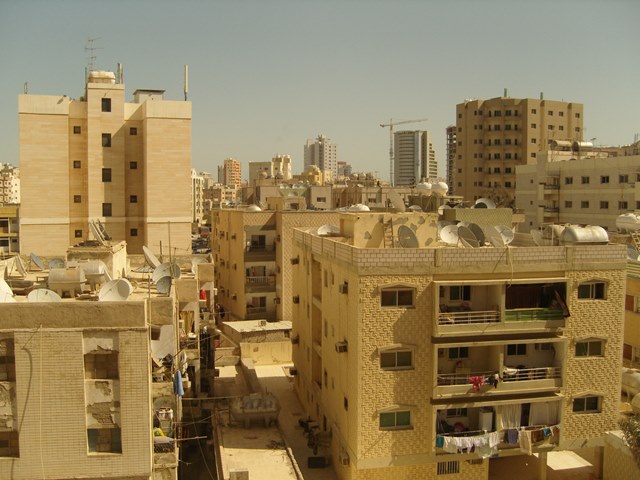
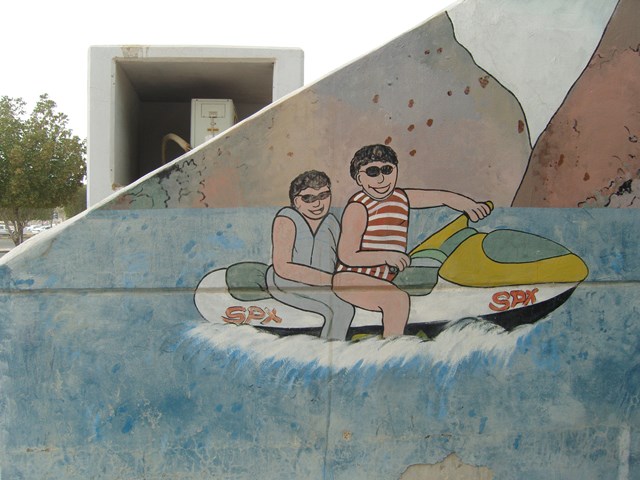
Different glimpses of the small gulf country that few people on the outside know much about. These photos are from when I lived in Kuwait 2007-2008, more presicely in the spring of 2008. Oh, and did I tell you how much I enjoyed the country?


Photo copyright: Sweden and the Middle East Views


I Dream to See My Country Iraq Again, Receiving People from All Over the World

“I am now officially a doctor. Can you write about my doctorate?” Nawar Al Saadi wrote to me the other day, sending over a link from his graduation ceremony.

Nawar is in charge of the popular Tourism in Iraq Facebookpage that I have written about previously. His enthusiasm and love for his country touched many: the blog post has been shared over 300 times on Facebook and other Iraqis got in touch with me after reading the post.

When I first spoke with Nawar he was still a PhD student in Bucharest, Romania, specializing in tourism, hoping to be a part of the future tourism industry in Iraq. He wanted to return to Iraq despite having family living in Sweden – he had a burning desire to show the world another country than what usually features in Western media, and to be a part of it’s future. And he seems to do well, the Facebookpage has over 31.000 followers and is regularly updating with positive news from Iraq and conciliatory messages for a united country. During the ISIS first attacks on Mosul and the mass escape, Nawar published photos of Iraqis in other cities handing out food and water to the newly arrived refugees on the streets.

Six months later Nawar has now received his doctorate degree and is officially a doctor from Faculty of Geography, University of Bucharest, with his doctoral thesis called “The role of international relations in the development of the tourism sector – case study of Iraq“. In the graduation ceremony one of his teachers praises Nawar and points out that their best students are always coming from outside of Romania.

But other things have changed too – ISIS has taken over large strategic parts of Northern Iraq and has at times also threatened Baghdad and Iraqi Kurdistan’s capital Erbil. In the video from his doctoral ceremony Nawar is thanked by his professors and applauded when receiving his diploma. Dressed up and handsome in a suit and smart glasses, he holds a speech and makes a point of addressing exile Iraqis.

“For all Iraqi people living outside Iraq: we need really to work and we need really to study more. We have to make much effort because we have to change the image which is put by media about Iraq. We are not bad people, we are not terrorists as all the world thought. And I hope to see my country…”

Suddenly his voice breaks. It takes him a few moment before he can finish.

“…and I dream to see my country again to receive people from all over the world.”

When his speech ends, he rubs the tears out of his eyes as people in the room comes up to hug him.

Will his wishes about Iraq come through? Will he be able to return and pursue his dream? I don’t know, but I wish the best for Nawar whatever will happen. I haven’t met him in person yet, but I know Iraq needs him.
________________________________________
UPDATE 17/10/2014

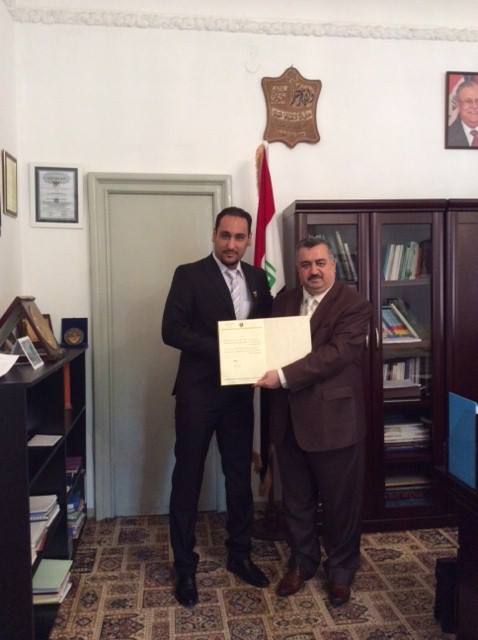
The ambassador for Iraq’s embassy in Bucharest was so impressed by Nawar after reading this and the previous article about Tourism in Iraq on Sweden and the Middle East Views, that he invited Nawar over the the embassy to give him an award for his achievements for his Iraq on October 15, 2014:

10578330_844236518929860_1318520362_n

Photo and video copyright: Nawar Al Saadi

Sahab – Swedish-Iraqi Counselor with a Different Approach

When Sahab Saheb started her therapy service Authentic Dialogues she had decided that she wanted to offer counseling in three languages: Swedish, Arabic and English. At 32 years old with a master’s degree in social work and sexology, she wanted to offer her counseling services to such a wide range of clients as possible.

“There’s a challenge in working in different languages,” she says. “But I wanted to use my full potential.”

I wanted to write about Sahab not only because of her interesting character as a Swedish-Iraqi woman, but also since her approach to counseling seemed different. According to her, psychological counseling should be accessible and of low cost. Based in Malmö, Sweden, she also offers counseling via Skype, and on her website, under description of fees, it states: “Fee reductions are available for people on low incomes and this can be negotiated on an individual basis”.

The aspect of wanting to reach out to the many Arabic speaking people in Sweden is not a coincidence. In her master thesis Sahab researched an integration project for Arab immigrants, where she examined factors that determined the effectiveness of the program. The thesis published this year and is titled “Transformation of newcomers, responsibilities and consequences. An evaluation of the project ‘Newcomers, Shortest path’” (Malmö University, Faculty of Health and Society, Department of Social Work). The research gave her new insights in the world of social work and psychological assistance. Through the research she met many immigrants who tried to integrate themselves in Sweden and learned about the challenges they faced.

“The most important aspect is the gap between the experience from the home country and Sweden. The main difference between the two countries is the role that the state plays. People from the Middle East, Syria for example, come from a society where the state has a very negative reputation. People associate the state with fear and betrayal, and it’s not responsible for the individual’s welfare and personal development. Here in Sweden, the state is in charge of everything and a lot of mistrust is going on (from the newly arrived immigrants, my comment) that the Swedish authorities have no clue about.”

In contrast with some other Western countries, where immigrants that have received asylum are left on their own to find housing and work, sometimes with help from voluntary organizations, Swedish authorities offer a roof-over-the-head-guarantee and financial assistance until the person is able to provide for him. However, the choices of where to live or what to do (financial assistance requires the person to take part of mandatory Swedish classes or work programs in return) become reduced to a minimum when being dependent on the system, which many are until they have learned enough Swedish to manage on their own.

Having seen the clash between the Swedish society and the newly arrived immigrants and how the society sometimes fails to help people who suffer from traumas and psychological illnesses, Sahab wanted to create her own service instead of being part of the system.

“The professionalism of the Swedish bureaucracy has a distanced approach to people, and this approach is by many immigrants perceived as something personal against them, it becomes the only thing that the immigrant experience during the first years in Sweden. Even if we have to carry out the integration aspect through the institutions, since this is the way it works in Sweden, we have to implement more of a personal reception since these persons come from a society where there are stronger bonds between people. We shouldn’t dehumanize people the way the system sometimes does now.”

Still, the failures of the system served as an incentive for her to contribute with what she believed would be the best way to help people with psychological problems from experiences of war and terror.

“Instead of being bitter over the fact that I can’t implement what I think is right, I wanted to start my own thing to help people in a way that I believe in”, she says. “If we learn how to be more empathetic we’ll have better dialogues and a stronger society.”

The therapy Sahab offers is based on the existential humanistic psychology, which she says pays respect to people’s own inner potential and responsibility for their actions.

“I wanted to work with counselling that derives from an equal dialogue between the therapist and the patient. I believe that an illness in the society is that we don’t communicate between each other. I believe that this therapy is very helpful since you can carry it with you the whole life and apply it to new relationships. In the therapy you help people to have more confidence in themselves so that they can take more initiative and thereby enhance their own self-esteem.”

She emphasizes that it’s still important not to see people as solely traumatized and damaged individuals, since people have a lot to offer that you can encourage and build on.

“You also have to be very careful in how you create a dialogue with people who come from traumatized societies,” she says. “This therapy is non-directive, there is no right or wrong, it’s up to the client how he or she thinks. I believe this is very important in a multi-cultural society where people have different values. This will create less guilt and insecurity.”

I ask her how she deals with people that might have twisted or reversed values as they come from countries where war or a repressive state have been prevailing for so long that it affects the persons and their personal values. What does she say to them if they have internalized what they have seen and for example believe that violence is justified?

“Even if I tell this person that this and that is wrong it won’t help him if he doesn’t realize this himself.  We need to understand why the person has chosen to believe in this, because it’s a defense mechanism. And the less we use our defense mechanisms, the more we get out of life.”

She adds:

“I believe in this small effect. If we help one person, we will also help many others that will exist down that person’s road.”

So what is her dream with her service, which she recently started earlier this year? She laughs when I ask the question.

“I don’t believe that much in dreams, I believe in being present in the moment and enjoy that. I try not to be too much in the future, my challenge right now is to be able to assist people in need of help. And well… maybe sometime in the future I’ll be able to work together with other people, who want to work in the same way I do.”

Photo copyright: Sahab Saber

To get in touch with Sahab please visit her website: authenticdialogues.com

Old Iraqi Photos

A Facebookpage that I follow is dedicated to show the world the old Iraq and regularly posts photos of a country many didn’t know exists. This is how the Rare Iraqi Pics page describes itself:

“Nostalgia is the only balm when we grow older… We miss our beginning as we approach the end.”

The page is popular, it has almost 40.000 followers, but the updates and descriptions are done in Arabic so many Westerners might not come across the page so easily. Therefore I decided to write about the page and share some of their photos with translations in English, with you.

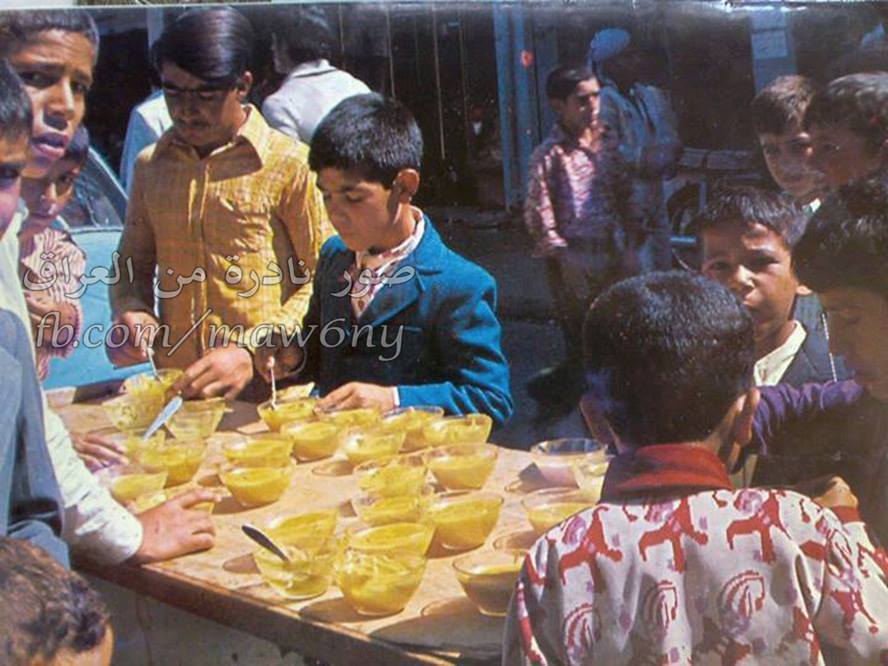
Eid Mosul

Eid in Mosul, Northern Iraq, one of the cities now under control of ISIS, 1976

Tigris river

Tigris river, Baghdad. Year is unknown but the card is printed in 1955

seta

Seta Hagopian, Armenian-Iraqi singer, the photo is probably from early 1970s. Seta Hagopian was one of the first singers to combine old Iraqi songs with Western instruments. She’s still active and lives in Qatar and Canada since the late 1990s. You can find her MySpace page here.

fashin shoot

Fashion shoot in the marshes, a wetland area in Southern Iraq, 1974

Photo credits: Rare Iraqi Pics Facebook community

Ay hawar! Hawar! Hawar! (HELP US! HELP US! HELP US!)

A number of my Kurdish, Iraqi and Syrian friends in the countries and abroad are horrifyed of the ISIS terror, and at times are unable to talk about anything else. A number of websites and social media pages are dedicated to launch news about the terrorists so as to create awareness and ask the world for help. Today I stumbled upon a heartbreaking message from a Facebookpage that is updating with news from Kobane in Northern Syria that is under immense threat of being abducted by ISIS. I thought I should share their message and let it speak for itself.

From: Kurdish Resistance & Liberation community 

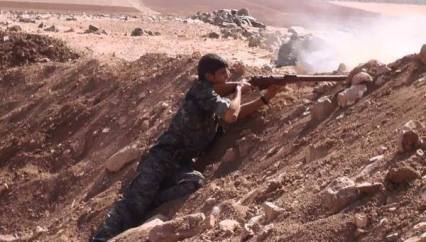
Our hearts are breaking at the moment. Kobane is under serious siege at the moment and our brave YPG/PKK forces are left to fight with outdated and limited weapons on the streets of Kobane. Kobane has a strategic, symbolic and psychological significance for the Kurds, but the lack of help from the west and lack of arms to the Kurds is allowing ISIS to succeed! An imminent genocide of the Kurdish forces as well as civilians is on the horizon all because they do not have the appropriate military supplies. The Kurdish forces have been fighting non stop for the past 48 hours. SHAME on the West for your inaction while these brave men and women die defending humanity, defending civilians, women and children and defend the West from ISIS. Shame!

Friends PLEASE share so that the Western community realizes that if Kobane falls it was not for lack of trying on behalf of the brave YPG/YPJ/PKK forces. It was because of Western cowardice and THEIR betrayal of humanity!

Ay hawar! hawar! hawar! (HELP US! HELP US! HELP US!)

kurdish resistance 2

Kurdish resistance 1

Photo credit: Kurdish Resistance & Liberation Facebook page, source and location unknown

There’s More to Dubai Than the Scyscrapers

I admit it, I have a thing for the Gulf. And Dubai is more than the expats, more than the oil, more than the fast money. There are beautiful places worth seeing, if you go off the beaten tracks.

These photos date a few years back to one of my trips to Dubai.

Photo copyrights: Sweden and the Middle East Views Blog