Appreciation Post to All the Mothers Out There

A long time ago I was riding around Beirut with my friend Hanan and her daughter Lina in a borrowed cabriolet. The summer evening was sticky, the humidity almost unbearable, and the sounds of the partying, young rich in Downtown far away. 

“Dance, Lina!”, Hanan exclaimed, and Lina started shaking her chubby little body, standing up on Hanan´s lap. 

Hanan danced along with her while sitting down in the front seat, snapping her fingers. Lina shaking her head so that her short curls bounced made Hanan laugh. Lina’s silliness was contagious.  

We had hung out for a few weeks, and Hanan was soon to go back to what she called home. She didn’t miss Lebanon; it was just a place she visited sometimes from her residence in the Gulf.

“I didn’t think of anything but leaving”, she said once about growing up.

She hadn’t seen much of Lebanon anyhow; mostly her parents’ house and the public school where she failed most courses. Still, she had seen more of the country than her own mother, who usually refused to step out of the house, preferring unhappiness and her prescription pills. 

Whatever Hanan had tried to do beforehand seemed to have failed her: moving away from her family, starting a job in the beauty industry, becoming independent. Getting married, moving abroad and having a baby, was the start of her own life. 

“Ice-cream!” Hanan said as the car approached one of the many sweet stands, and Lina jumped enthusiastically. Beirut evenings were always sparkling – at least on the surface – and buying sweets was our favorite to top off the evening.

We stopped at the corniche. Hanan pretended to throw Lina into the sea, and Lina laughed. She was used to the outdoors. Every day she and her mom strolled the streets, enjoying malls and playgrounds, had a sandwich for lunch outside. They enjoyed life together, a life new to them both. Even though the sadness in Hanan’s eyes never seemed to fade, I haven’t met many parents that enjoyed parenting as much as she did. 

“Ice-cream, mama, bottle!” Hanan practiced her small vocabulary while aimlessly jumping up and down on the corniche. 

If Hanan would have lived in any European country, she probably would have ticked several boxes of a social worker’s risk assessment form. Not only was she from a poor, uneducated family, but she would also earn the labels of adolescent parentvictim of violencelack of family support. All these factors must be an equation for bad parenting – right? But during those sticky, hot weeks in July, Hanan taught me that things are not always as one might think.

That summer, Hanan would tell her family in the village that she was going to stay at her in-laws in Beirut, and after they dropped her off, headed over to my place. The little studio I rented had two single beds; we put them together, I tucked a large blanket over the two and the three of us shared the improvised double bed with Lina in the middle. I still remember Lina kicking me in my head as she was sleeping, happily taking over the whole bed.

We created some memories those weeks. 

“Can you babysit?” she asked her in-laws, and they agreed; they loved Lina and were generous, kind people. 

And off we went; I brought Hanan to an expat party, she took me to Bay Rock café to smoke sheesha. 

But most of all, we often broke night talking on my balcony. What she told me those nights is private, that stays between us. But I blamed myself afterwards, when Hanan abruptly stopped being in touch. Because I know I tend to ask too many questions. 

Did I dig up too many painful memories that she would have been better off not being in touch with? Did I do wrong, jumpstarting deep buried emotions? Was it wrong to tell her she deserved a better life? 

I knew something was not right, that I maybe had brought up too much. Because upon her return to the Gulf, she was devastated. She called me crying. 

“What’s wrong?” I asked, afraid something bad had happened. 

“I miss you.”

She cried about everything she had been through, everything we had talked about that she hadn’t told anyone before. It was like Pandora’s box had been opened. Maybe it would have been better to keep it closed. 

I have had some memorable evenings during my years abroad, but if there is one I could return to, it would be riding around Beirut in a borrowed cabriolet with Hanan. Because there’s a magic in seeing a mother breaking dysfunctional patterns, showing her daughter true love when she had never experienced one herself. Since I became a parent myself, Hanan continues to amaze me. How she could put so much love and strength into motherhood where many others, more fortunate, cannot. 

And she’s not the only one I’ve met, even if she is the one I remember the most. Many mothers are parenting in war zones; parenting other people’s kids; doing the best they can not to transfer the traumas they’ve been through to the children they care for. Unfortunately, these mothers are the ones that rarely get the appreciation they deserve for it. No flowers on Mother’s Day for giving love in impossible situations. They’re often mistrusted, questioned. I don’t believe anyone thanked Hanan for her job; her own family certainly never did. 

This post is for all the mothers out there, who are doing the best that they can with whatever little they were handed. 

Hanan, if you see this, this flower here is for you. 

(please note: not their real names)

Once Upon a Time I was 25 and in Beirut

OLYMPUS DIGITAL CAMERA

Once I was 25, once I was a master student in humanitarian assistance, finding myself in Beirut for the last semester. A friend asked me how I felt about the anniversary of the harbor explosion and the honest answer is this; whenever Lebanon pops up in the news, I wish the news would be better, and I also have ambiguous feelings about the country. May I share them?

It was the longest period of time I had spent in a foreign city. Beirut was a colorful postcard at a first glance, with its bright lights and turquoise beaches. But there were dark sides beneath. This was a year before the Israeli summer war, when many of the young people I had met left for Dubai; before the Arab spring; and way before the harbor explosion wounded an already wounded country.

The men I met all had blackberrys and wanted to drive nice cars. Topics among most of the girls were eyebrows and when to get married. I rarely felt a connection. Not that this would have been necessary; I experienced a fatigue among the young, educated population, with the foreign students coming to Lebanon to do their thing (“gender projects in the Palestinian camps!”; “photography and community development!”), and it was hard to blame them. There’s a self righteousness among many young, white activists that can be hard to digest.

I also found myself disappointed in the world of NGO, at least in Lebanon, where the influx of foreign funding seemed to do as much harm as it did good. Having been so passionate about my field, making it to a prestigious master program, I lost some hope in the role development aid had in supporting a society towards positive change. Yes, there was poverty and despair in the Palestinian camps and among the many very poor Lebanese. Yes, there were a number of internationally funded projects to improve the situation. And the equation between the two rarely made up. Corruption; different actors getting the most they could off inconsistent funding; donors with suspicious agendas – it was all news to a 25 year old idealist.

The autumn seemed to consist of electricity cuts; people who didn’t keep their promises; men I weren’t into who tried to ask me out or invite themselves to my flat; and corrupt NGOs contributing to the inflation that made it hard for most Lebanese people to make a living.

Beirut was as inconsistent in its appearance. The nightclubs, the breathtaking mountains, the hardcore religious preachers, the sectarian hatred that seemed to creep in anywhere. Well-off youngsters spent hundreds of dollars on vodka and cocaine in one night in Gemmayze street; while in the poor suburbs, people worked 12 hour shifts for ten dollars a day, cockroaches ruled the blocks and sewage water overflowed the streets.

I made friends with some Swedish-Lebanese families that had moved back to Lebanon, and the comfort was a relief (that, and a burned cd of Kanye West’s Late Registration, purchased in the black market in Cola bus station); I often found myself hanging out in their living rooms.

Then I was preparing to wrap up my field study for my master thesis; focusing on the outcomes of dialogues among university students from different sectarian groups, and head back home. And then, after months of ignoring men’s phone calls to my Nokia 1110, I fell head over heels, stumbling in to an unfamiliar feeling of anxiety and euphoria. One of the Swedish-Lebanese moms cautioned me; “There are many guys here, be careful who you choose. There will be differences, you know.” But this one, I was sure, was special.

Still I remember the details; the leather jacket, shiny black hair, spotless skin and a hoarse voice. I would have fallen for his type in any part of the world. I can still point out which table at the Hamra bar we once shared our secrets at.

We hung out as friends. He shared my values. He was educated, from a well off family – and a communist. He’d taken classes in domestic violence, even educated me on the subject. But most of all: he listened to me. Was interested in what I had to say. And he seemed to like me, too. He smoked a certain type of cigarettes that I liked but didn’t know where to get.

“I won’t tell you where I buy them”, he said with a grin, “so you’ll have to meet me every day before you go home.”

At the same time, my research among students who had taken part of coexistence dialogues, showed me a different side of Lebanon. Many of the students I interviewed were non prestigious and down to earth. It started to seem possible, what I had been longing for. People who spoke of things like coexistence, peace with Israel, staying in Lebanon, contributing to the positive development of the country. I started to regain trust in this beautiful country; that it was possible for it to heal and corruption to be fought by the young, enthusiastic people I had met; and I also regained hope in the fact that international funding could make a difference.

The night of my flight, he came over to the simple, overpriced studio I rented. We spent some hours talking before a car was going to pick me up at midnight. Having given most of my stuff to the Syrian janitor who lived with his wife and five kids in a single room at the bottom floor, the flat was bare, my bags packed. I asked him to read a short story of Hanan al-Shaykh and give me his opinion, and we discussed it. Neither one dared making the move. After we had hugged goodbye and he’d left, it took around 15 or 20 minutes of thoughts like it’s not necessary, just drop it – then I picked up the Nokia cellphone.

“I forgot to tell you something. Can you come back?”

Within a few minutes he was at my door and before I knew it, I was in his arms. We kissed, carefully, for what felt like an eternity, while the clock was ticking fast towards midnight.

From the view of my balcony, I watched him disappear down the Hamra street, into the foggy December night. He smoked a cigarette and his leather jacket was open. He raised his face towards the sky and the rain, closing his eyes as if he was in a dream. I felt I was in one, too. All the disappointment that had gathered inside of me had seemed to vanish.

Tears started flowing when on the airplane. It wasn’t the first or last time a man made me cry from one airport to another (and this man would make me cry on flights again, which I didn’t know at the time); but this one felt different. It was like soulmates meeting each other in a lost place. I wondered if I would ever see him again. And I would, even though it would take several years.

I still believed in love; love as a force greater than long distances, cultural differences – and that the fast money and lifestyle of Dubai wouldn’t change someone for the worse.

That was a beautiful, childlike belief. Whenever Lebanon pops up in the news today, I wish I hadn’t heard the bad news. I wish that memory could have been my very last memory of him, and of Lebanon. I wish I could have had that belief forever.

Shia Girls Singing Christmas Carols in Lebanese Church

A message from this past Christmas, from Lebanon: here’s a video of Shia orphan girls performing Christmas carols in the Saint-Elie church in Beirut.

Happy coexistence everyone, enjoy the music!

https://twitter.com/sahouraxo/status/812726924984328192

The Fighting

744px-Lebanese_French_flag.svg

The fighting over flags is ridiculous.

The fighting over who suffers the most is ridiculous.

The fighting over where people come from is ridiculous.

The fighting over refugees is ridiculous.

We are all tired, afraid.

We all want to live.

Photo credit: Wikipedia.org

Beiruti Graffiti in a Time of Turbulence

10402964_10153188059712903_4009785402964153413_n

Beiruti graffiti, captured with someone’s smartphone and posted online.

Is it maybe a comment to the ongoing protests against the uncollected garbage in the city, the so called Garbage Crisis? Or is it a comment to the terrorist groups in the region, pretending to commit crimes in the name of God? Or maybe it’s just the people being fed up with not being listened to by anyone in power?

The graffiti reads, in translation:

“There is no God but the people.”

Did you get the reference?

“There is no God but God.”

Photo credit: Charbel Maydaa’s Facebook page

Beirut Randoms

Do believe the rumours, it is a fascinating city.

The Destiny of Being Lebanese – on Today’s Bombings

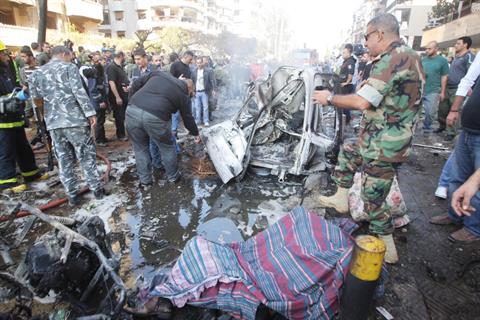
beirut bombingsWhenever I think about Lebanon I think about night life and the beach, sunny memories from long summers. But there are other things too that comes to my mind – the underlying fear of something to happen, because that something regularly does happen, and the intolerance that so easily pops up, young people that many years after the civil war still despise anyone from another group. The wounds from the civil war just doesn’t get a chance to heal when the violence button seems stuck on repeat. Today’s bombings of Iran’s embassy in Beirut is a depressing but recurrent event.

The destiny of being Lebanese if I can have my say is having a country to be proud of – beautiful and dynamic, a place people from more boring countries loves to visit. Who wouldn’t want their home country being the given summer destination instead of wanting to go anywhere else every year?

But the cost of being Lebanese is also often bitter – I dare to say this after all the “where are you from” questions with dreamy eyes I have received from various people at any occassion. For a country with all it’s potential, a vibrant job market and internationally prestigious universities, the young people still just wanna leave. And who can blame them, when your Sunday brunch in the center of Beirut suddenly can be shattered by explosions tearing people’s bodies into pieces?

The bombings and occassional violence in Lebanon has different reasons, from internal Islamic groups targeting the crazy night clubs to people who wanted to get rid of that inconvenient politician. But the very worst reason for being bombed in your own country must be when it has absolutely nothing to do with you. When your country happens to be a playground for dirty international affairs just because it has always been and because your own government can’t or won’t control the violence within their own borders.

We condemn this cowardly terrorist act which is aimed at inciting tensions in Lebanon and using the country as an arena to send political messages”, Prime Minister Najib Mikati said today.

I hope next time the government will back up their wise words with some actions. Giving the Lebanese people the right to being able to stay in their own country that should be no one elses but theirs.

Photo credit: http://www.dailystar.com.lb

First Civil Marriage Registered in Lebanon

mixed loveSo this week all Middle Eastern-freaks like me noticed that the first couple ever were able to register their marriage as a civil marriage in Lebanon – something that mixed couples have been advocating for ages. Cyprus have been the choice for many mixed Lebanese couples if they had the money – otherwise one of them had to resign to marry under their partner’s religion (usually the man’s).

I meet people that says “it’s not possible” about interfaith marriages. Why? Some religions don’t accept it; sometimes the two religions clash when it comes to the childrens’ religion (in Judaism the children inherits the mother’s reigion and in Islam the father’s – so what happens if a Jewish woman marries a Muslim man?); sometimes it’s simply the society and family that says “it’s not possible”.

Well I have come across so many mixed marriages that I can conclude one thing in this messy discussion: you can’t make people stay away from each other. As often as societies puts up rules for love, there’s always someone that will break them.

A Swedish-Lebanese family that I know were so determined to stay together that they married in the midst of the civil war, despite the danger of being a mixed Christan-Muslim couple. During the first years of their small children’s lives they were living in hiding from militias, until finally being able to escape to Sweden. They now have three children that has been raised celebrating Christmas and Ramadan, learning about both religions, and they take pride in their mixed background. Sometimes maybe a mixed marriage is the best way of preventing a civil war? Unfortunately Lebanon is still a place where such an effort is extremely difficult to carry out.

So when the news about the registered marriage broke, I hurried to get online. What kind of groundbreaking couple was it that decided to make a point out of not register in one religion? Maybe a Muslim-Christian couple? If not, could it be Druze-Christian? No, it was a Sunni-Shia couple – two branches within one religion. Not accepted by everyone, but not the major breakthrough that I had hoped for. If it was, I’m not sure that they would have been able to have the marriage registered.

But let’s hope it’s a first step for Lebanon to heal from it’s intolerant past and the horrifying events that took place under the excuse of sectarian divisions. If Lebanon really wants to move on, there’s only one way, the way forward.

Photo credit: www.biculturalmom.com

Xena the True Lebanese Feminist

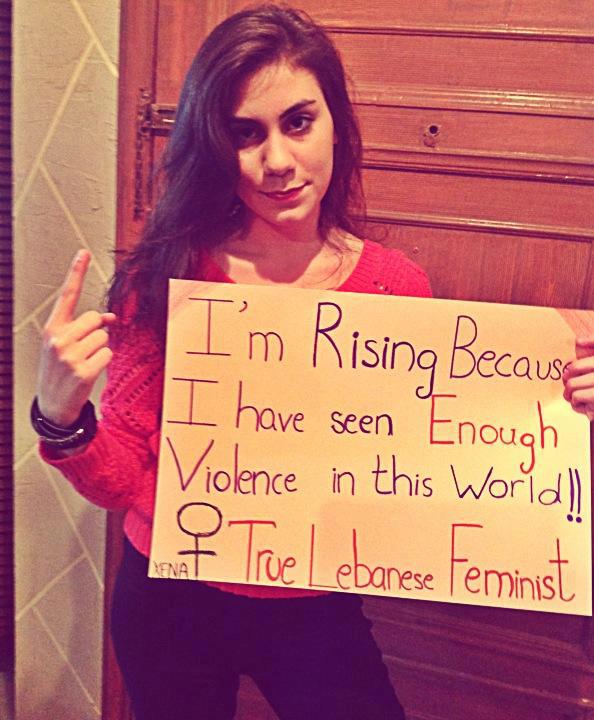
Xena Amro

This article is published in an edited, Swedish version in the feminist magazine AstraNova’s October issue 2013.

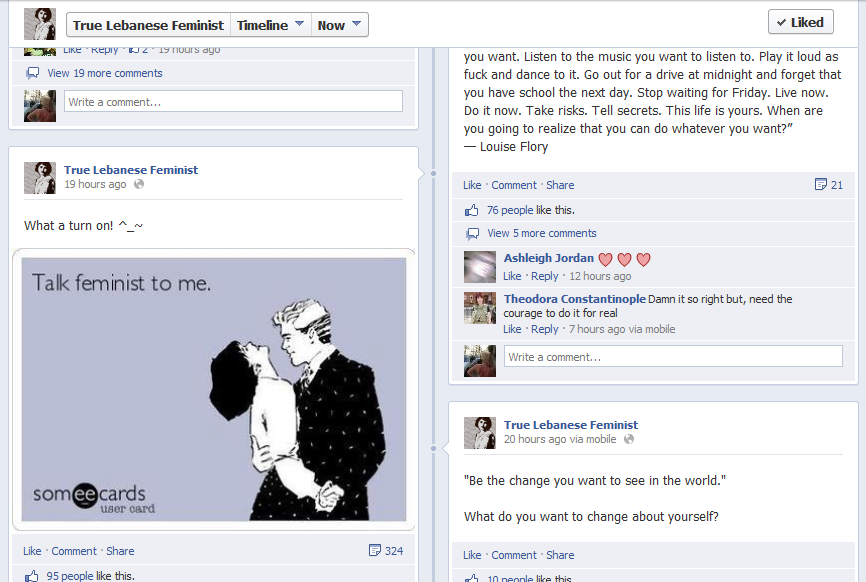
When Xena Amro started the True Lebanese Feminist Facebook page in July 2012, it created turmoil. Xena’s own Facebook page had been reported and blocked several times, so she wasn’t surprised.  On her desk in high school, random insults were written in the beginning of her school year: “Xena is stupid”,Lesbian”, “Feminism sucks ass”, reads the messages that she shows to me when we meet at Starbucks in Beirut, pictured on her smartphone.

Why was it so provoking to her fellow students that Xena was an outspoken feminist? Was it because of the success of her page? Or was it because of her uncompromising position? “I am a feminist, because those ignorant rapists out there, have limited my Freedom! They have ruined my childhood! And made me lose my mental innocence!” says one post from September 2012.

Despite the harassments in school and on the Facebook page, Xena kept up her page and now it has over 6.000 followers. She has support from both men and women, and she says she loves it especially when men become feminists:

“That’s what’s keeping me strong” she says.

Xena became a feminist early in 2012 when she was one of the winners in a competition for young writers, on the topic “In Lebanon”. “True Lebanese Feminist” was the story’s name and it was chosen to be in the top 12 list nominated for the prize. After the story and the competition, it was impossible to look back.

Xena explains on how stories about domestic violence reached her and that the general suppression against women was what made her become aware at such a young age.

“The purpose of the page is to raise awareness about women’s issues not just in Lebanon, but also globally” she says. “There are too many stereotypes placed on women that I want to fight against.”

I started to follow the page myself in the beginning and have seen it explode in to what must have been a previous vacuum, where a similar feminist page didn’t exist before. On Facebook there are many pages for women’s rights, but few that create as much discussions. What makes the page different is also that when someone attacks Xena or her statements she often don’t reply, but let the discussion have its course, relying on her supporters on the page, and makes a point out of not insulting anyone back.

Every day the self-taught 17-year-old Xena updates the page with pictures combined with quotes; invites the followers to discussions; and shares other women’s stories. Female Arab writers like Joumana Haddad and Nawal El Saadawi inspired her. The numbers of followers quickly increased and the page turned into a place full of heated discussions. Not shying away from any subject, Xena brings up religion, sexuality and mass media from a feminist point of view:

Today is the international day for safe abortion!” reads a post with a link to “Women’s Rights to Abortion in Lebanon

True?” over a photo that states “Girls see over 400 advertisements per day telling them how they should look”.

Calling myself an outspoken dictator wouldn’t get me as much hate as I’m getting for calling myself an outspoken feminist” says another one.

Despite being as provocative in a society as Lebanon, one of Xena’s goals is to increase the number of Lebanese people on her page – out of 6,000 followers only 528 are from Lebanon (in comparison with 1,532 from US). It might not be a coincidence since her posts on religion and its links to patriarchy provokes many, and she has been accused of being a westernized atheist that hates religious people – a quite harsh insult in a society where religion plays a crucial role. Still Xena wants her page to stay relevant in her own country.

“I don’t hate religious people” she says. “They have the right to think whatever they want, and so do I – this is freedom.”

Since the beginning also emails for help has poured in. Many women from different countries have been writing to her about violence and rape, desperate for support, probably not knowing Xena is only 17. Xena takes her time to answer all emails, urging girls and women to seek help and not to feel ashamed.

I ask her how she handles it all. On top of managing the page on her own and the publicity it has given her, she gives feedback to all the members writing to her, and is also trying to finish high school to hopefully be admitted to nursing school this year. She admits that her parents, although very supportive of her feminist page, are worrying about the toll it might take on her grades.

“It takes all my free time… But the page is not pressure, it’s relief. I see a lot of injustice in the society, and I don’t want to hold these grudges in my heart.”

Photo credit: Xena Amro

Beirut Revolution Now!

021

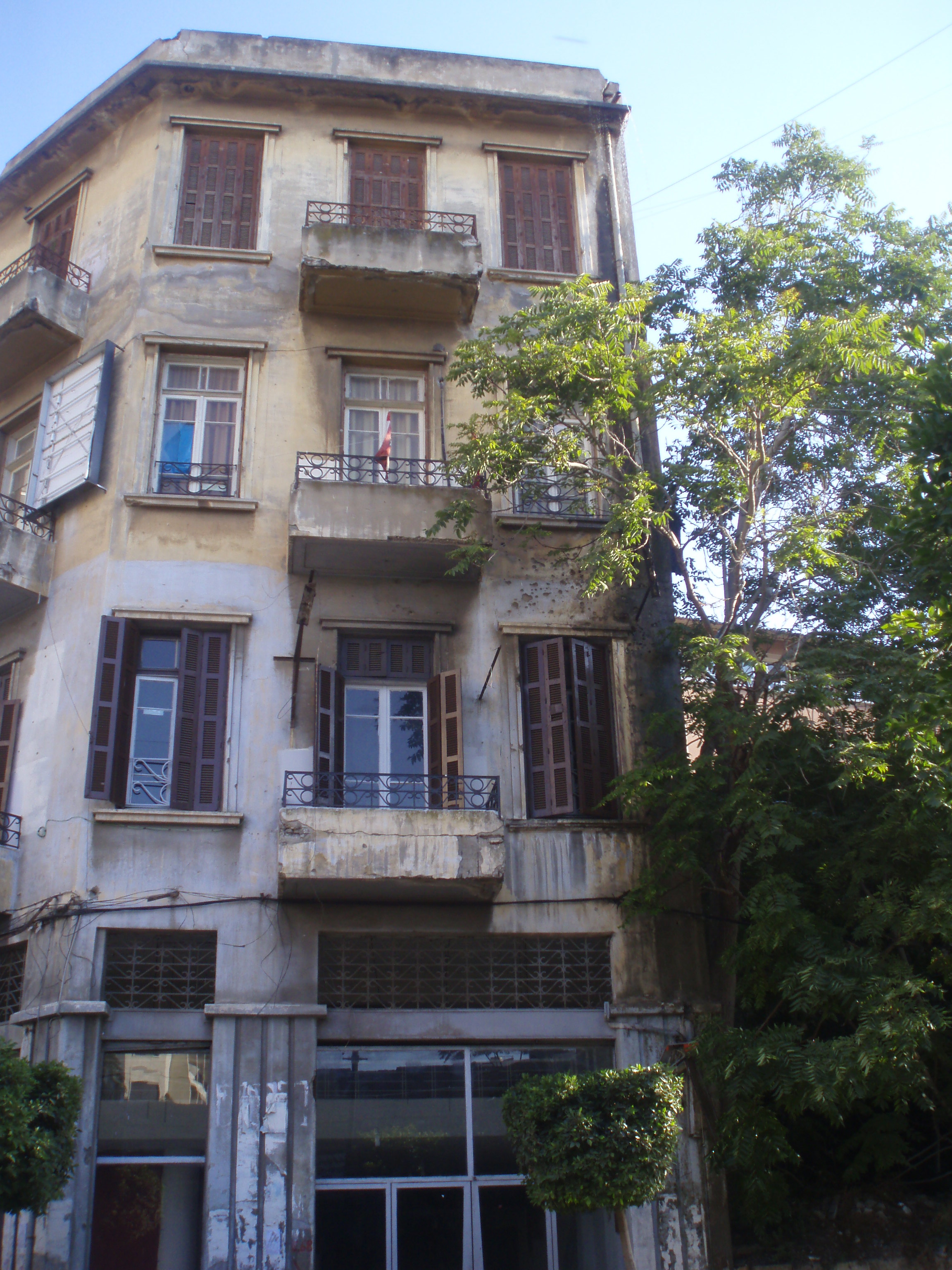
Street in the area of Hamra, Beirut, Lebanon

IMG_0049

Photo: Copyright Sweden and the Middle East Blog