All About Damascus, a Sign of Normal Life

War may torment larger parts of Syria and the Middle East, but few signs of the beautiful country that once was and in some places still is, exists and pops up like butterflies here and there. One of them is the Facebook page All About Damascus, a page that started before the war, in 2010, and that is still going strong.

Today, on July 13, the page uploaded a few photos from the every day life in the colourful city of Damascus, the life that is still going on despite the war.

In the politicised debate over Syria, some might say this page is a part of the regime’s propaganda to show that they are able to reign over some parts of the country, that they are able to keep some of the city calm. But I would prefer to say it might as well be a sign of normal life. A sign to remind of what life that can remain during the dirtiest of wars.

11138662_966076513445329_7080118056154571159_n

11709247_966076116778702_985712891824170832_n

11742848_966076183445362_3578537036096338827_n

11750637_966076066778707_4011958866093648226_n

Photo copyrights: All About Damascus Facebook page 

I Love Syria, That’s Why I’m Writing This Post

The old city in Damascus

I am a, for now, retired humanitarian aid worker, who have worked in many countries across the world, mostly in the Middle East. In my former profession I tried not to be too wrapped up in the countries that I lived in, since it’s important to remain calm and neutral as much as possible. Plenty of young Westerners have been travelling to countries in what we used to love to call the third world and start to identify with the countries, the politics and the people. As a humanitarian aid worker you’re not supposed to do that; overly identifying means you loose part of your focus.

But here’s a confession to make from my side: when I see the current news from Syria, and when I hear other aid workers talk about Syria in the most general ways, it breaks my heart.

It breaks my heart, because people who didn’t know Syria before the war don’t know anything about the country. Aid workers and people outside who have never been, seem to see it as just another country where conflict has been going on and will be going on forever. They see it as a country where every person is a potential islamic fundamentalist. They see it as a country where there are few functioning schools, few functional hospitals, where water and electricity is a luxury. A country like any other country they have worked in.

What breaks my heart is, people who only have seen Syria in a state of conflict, have never seen it as it really is. I have been living in many countries in the Middle East and Syria is my absolute favourite. Not by choice, it was just one of the places where I grew really attached to the place, where the good by far outweighed the bad. Syria is my pearl in the ocean. Let me tell you why.

Syria is the country that has a beautiful capital, a capital where night clubs takes place just like late-night cafés and restaurants; beach resorts; mosques and ancient buildings.

Syria is a country that lacks the superficiality that sometimes takes over in Lebanon, a country that has the night life that you won’t find in Jordan (with or without alcohol), a place where men and women; people from different religions; locals and foreigners, easily mix.

Syria is the country where people will keep their promise, they pick you up when they say they will pick you up, call you when they say they will call you.

Syria is a country where liberal people are next door neighbours with conservative.

Syria is a country where you sit in a café playing dawla with your girlfriend until midnight and no one bothers you.

Syria is the country where you go to have ice cream with your colleagues after work at Abu Shaker’s restaurant in Damascus on a weekday, or hit the swimming pool in your bikini in Damarose Hotel on a hot summer’s day, working on your tan and ordering plenty of arabic coffees to have at the pool, or go to Lounge 808 on a Friday night for a drink.

Syria is not a country of extremists, it’s a not a country of terrorists, it’s a country where people used to live and prosper in some of the most dynamic ways in the Middle East, before the civil war started.

Syria was once a place where friendship, love and beautiful things took place – now it’s a country that’s reduced to the international headlines of terror and misery, and humanitarian aid workers whose beer drinking and generalised ideas of a country full of war and terrorists, have taken over a place where beautiful things once was. That is what breaks my heart.

Photo copyrights: Sweden and the Middle East Views

Syrian Red Crescent Volunteers Attacked When Assisting War Victims

Hussain Saad

In the ever-ongoing hell of Syria’s civil, one of the few actors that are actually trying to assist the civil population without having a political agenda of their own, is the Syrian Arab Red Crescent. Throughout the civil war their volunteers have been assisting the victims; driving injured people to the hospital, picking up dead bodies and brining them to the grave yards, treating victims with first aid. The Red Crescent volunteers are unpaid and are carrying out their work for free.

Despite the huge effort from these volunteers – who often are having a job or their studies on the side – they are continuously targeted by one of the militant groups, sometimes even the government forces themselves.

The latest news was translated from Arabic and sent to me by a Syrian friend who has been active in the Red Crescent in Damascus:

15 /05/15 15:43

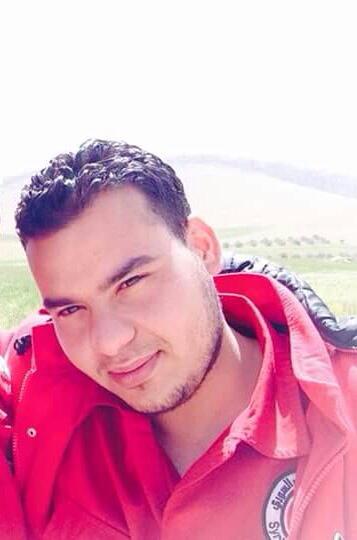
An ambulance car for the Syrian red Cresent Rural Damascus sub branch – al Domayer sub branch, got a shooting during a mission to drive a patient to a hospital, the team leader get bullet in his head and now he is in the intensive care room. The team leader is a SARC volunteer and his name is Hussain Saad and he is a mechanical engineer student.

I decided to share this news on my site so that Hussain, the mechanical engineer student who dedicated his free time during the civil war to assist suffering people, would not just be another number in the statistics – whether or not he will survive or pass away. Another Syrian whose case will go unnoticed.

A Massacre Among Massacres

blood_PNG6093

Massacres have become so common these days that we seem to forget them as quickly as we hear about them. A few minutes of horror, then we shake the information off and go on with our day. IS has contributed to this phenomenon, killing people video-game style where nicely chosen colours frame the scene of the killing. Many internet users click on the Youtube video click without thinking twice, without thinking on how for each click, IS or the ones performing the massacre grows in fame and celebrity. Just because it doesn’t happen next to us, it doesn’t mean it doesn’t affect us – we are growing numb for the lives lost in this uttermost horrifying way. We loose the respect for the right to live.

To remind myself about how massacres challenges the very core of our humanity, I went back to read my own story from the Banyas massacre in Syria 2013. It was a massacre among many massacres, exactly two years ago today, May 2nd 2013. Please let me share this story again so as to remind us all, myself included, about how massacres really affects the surviving community, the world’s population, all of us who calls ourselves humans. The original blog post is found here, the text is copied below.

——————————————————————–

Who told me this story? It doesn’t matter. When did I here this? In June this year, one month after the Banyas massacre had taken place on May 3 2013, conducted by governmental troops on civilians. In Damascus noone mentioned the massacre by name, instead we called it “unrest” or “outbreak of violence”. The result of the systematic killing of everyone in the village is easily found online, but in the heart of the government controlled capital that is nothing you can talk about.

Why did the person tell me this story, despite the danger of talking about the ongoing crimes against humanity in Syria? I guess some things are just too unbearable to keep to yourself. I couldn’t share this story while I was still in Syria, but I can now. And why am I sharing it? I want the world to know. I hope all of you readers do, too.

“Do you know what happened in Banyas? They did something horrible there. They did something that no God allows, no religion allows. What they did is forbidden in all religions!What does the persons want, who are controlling our country? What do they want from God?

There was a couple here some weeks ago. They left me their number, look, here’s the note… When I heard about what happened in Banyas I tried to call them, I was worried. But the line was shut down, I didn’t even get a signal. I heard that they had shut down the lines to all the telephones in Banyas. I called and called.

First after a couple of days the man answered. He said:

They came in the night, they killed my wife and my two children‘.

His wife was pregnant when she was here, I saw it myself, she was seven or eight months pregnant. Do you know what they did to her? They cut her in the chest, like this. Then they cut open her stomach, her whole stomach, and took out the baby. Her husband cried when he said:

They killed her, they killed my unborn baby, they killed our two little children. I’m the only one left. They are all gone.

——————————————————————–

Photo credit: pngimg.com

Sahab – Swedish-Iraqi Counselor with a Different Approach

When Sahab Saheb started her therapy service Authentic Dialogues she had decided that she wanted to offer counseling in three languages: Swedish, Arabic and English. At 32 years old with a master’s degree in social work and sexology, she wanted to offer her counseling services to such a wide range of clients as possible.

“There’s a challenge in working in different languages,” she says. “But I wanted to use my full potential.”

I wanted to write about Sahab not only because of her interesting character as a Swedish-Iraqi woman, but also since her approach to counseling seemed different. According to her, psychological counseling should be accessible and of low cost. Based in Malmö, Sweden, she also offers counseling via Skype, and on her website, under description of fees, it states: “Fee reductions are available for people on low incomes and this can be negotiated on an individual basis”.

The aspect of wanting to reach out to the many Arabic speaking people in Sweden is not a coincidence. In her master thesis Sahab researched an integration project for Arab immigrants, where she examined factors that determined the effectiveness of the program. The thesis published this year and is titled “Transformation of newcomers, responsibilities and consequences. An evaluation of the project ‘Newcomers, Shortest path’” (Malmö University, Faculty of Health and Society, Department of Social Work). The research gave her new insights in the world of social work and psychological assistance. Through the research she met many immigrants who tried to integrate themselves in Sweden and learned about the challenges they faced.

“The most important aspect is the gap between the experience from the home country and Sweden. The main difference between the two countries is the role that the state plays. People from the Middle East, Syria for example, come from a society where the state has a very negative reputation. People associate the state with fear and betrayal, and it’s not responsible for the individual’s welfare and personal development. Here in Sweden, the state is in charge of everything and a lot of mistrust is going on (from the newly arrived immigrants, my comment) that the Swedish authorities have no clue about.”

In contrast with some other Western countries, where immigrants that have received asylum are left on their own to find housing and work, sometimes with help from voluntary organizations, Swedish authorities offer a roof-over-the-head-guarantee and financial assistance until the person is able to provide for him. However, the choices of where to live or what to do (financial assistance requires the person to take part of mandatory Swedish classes or work programs in return) become reduced to a minimum when being dependent on the system, which many are until they have learned enough Swedish to manage on their own.

Having seen the clash between the Swedish society and the newly arrived immigrants and how the society sometimes fails to help people who suffer from traumas and psychological illnesses, Sahab wanted to create her own service instead of being part of the system.

“The professionalism of the Swedish bureaucracy has a distanced approach to people, and this approach is by many immigrants perceived as something personal against them, it becomes the only thing that the immigrant experience during the first years in Sweden. Even if we have to carry out the integration aspect through the institutions, since this is the way it works in Sweden, we have to implement more of a personal reception since these persons come from a society where there are stronger bonds between people. We shouldn’t dehumanize people the way the system sometimes does now.”

Still, the failures of the system served as an incentive for her to contribute with what she believed would be the best way to help people with psychological problems from experiences of war and terror.

“Instead of being bitter over the fact that I can’t implement what I think is right, I wanted to start my own thing to help people in a way that I believe in”, she says. “If we learn how to be more empathetic we’ll have better dialogues and a stronger society.”

The therapy Sahab offers is based on the existential humanistic psychology, which she says pays respect to people’s own inner potential and responsibility for their actions.

“I wanted to work with counselling that derives from an equal dialogue between the therapist and the patient. I believe that an illness in the society is that we don’t communicate between each other. I believe that this therapy is very helpful since you can carry it with you the whole life and apply it to new relationships. In the therapy you help people to have more confidence in themselves so that they can take more initiative and thereby enhance their own self-esteem.”

She emphasizes that it’s still important not to see people as solely traumatized and damaged individuals, since people have a lot to offer that you can encourage and build on.

“You also have to be very careful in how you create a dialogue with people who come from traumatized societies,” she says. “This therapy is non-directive, there is no right or wrong, it’s up to the client how he or she thinks. I believe this is very important in a multi-cultural society where people have different values. This will create less guilt and insecurity.”

I ask her how she deals with people that might have twisted or reversed values as they come from countries where war or a repressive state have been prevailing for so long that it affects the persons and their personal values. What does she say to them if they have internalized what they have seen and for example believe that violence is justified?

“Even if I tell this person that this and that is wrong it won’t help him if he doesn’t realize this himself.  We need to understand why the person has chosen to believe in this, because it’s a defense mechanism. And the less we use our defense mechanisms, the more we get out of life.”

She adds:

“I believe in this small effect. If we help one person, we will also help many others that will exist down that person’s road.”

So what is her dream with her service, which she recently started earlier this year? She laughs when I ask the question.

“I don’t believe that much in dreams, I believe in being present in the moment and enjoy that. I try not to be too much in the future, my challenge right now is to be able to assist people in need of help. And well… maybe sometime in the future I’ll be able to work together with other people, who want to work in the same way I do.”

Photo copyright: Sahab Saber

To get in touch with Sahab please visit her website: authenticdialogues.com

Ay hawar! Hawar! Hawar! (HELP US! HELP US! HELP US!)

A number of my Kurdish, Iraqi and Syrian friends in the countries and abroad are horrifyed of the ISIS terror, and at times are unable to talk about anything else. A number of websites and social media pages are dedicated to launch news about the terrorists so as to create awareness and ask the world for help. Today I stumbled upon a heartbreaking message from a Facebookpage that is updating with news from Kobane in Northern Syria that is under immense threat of being abducted by ISIS. I thought I should share their message and let it speak for itself.

From: Kurdish Resistance & Liberation community 

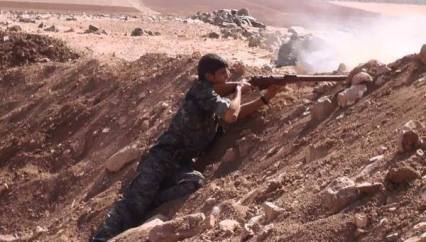
Our hearts are breaking at the moment. Kobane is under serious siege at the moment and our brave YPG/PKK forces are left to fight with outdated and limited weapons on the streets of Kobane. Kobane has a strategic, symbolic and psychological significance for the Kurds, but the lack of help from the west and lack of arms to the Kurds is allowing ISIS to succeed! An imminent genocide of the Kurdish forces as well as civilians is on the horizon all because they do not have the appropriate military supplies. The Kurdish forces have been fighting non stop for the past 48 hours. SHAME on the West for your inaction while these brave men and women die defending humanity, defending civilians, women and children and defend the West from ISIS. Shame!

Friends PLEASE share so that the Western community realizes that if Kobane falls it was not for lack of trying on behalf of the brave YPG/YPJ/PKK forces. It was because of Western cowardice and THEIR betrayal of humanity!

Ay hawar! hawar! hawar! (HELP US! HELP US! HELP US!)

kurdish resistance 2

Kurdish resistance 1

Photo credit: Kurdish Resistance & Liberation Facebook page, source and location unknown

I Love My City Damascus

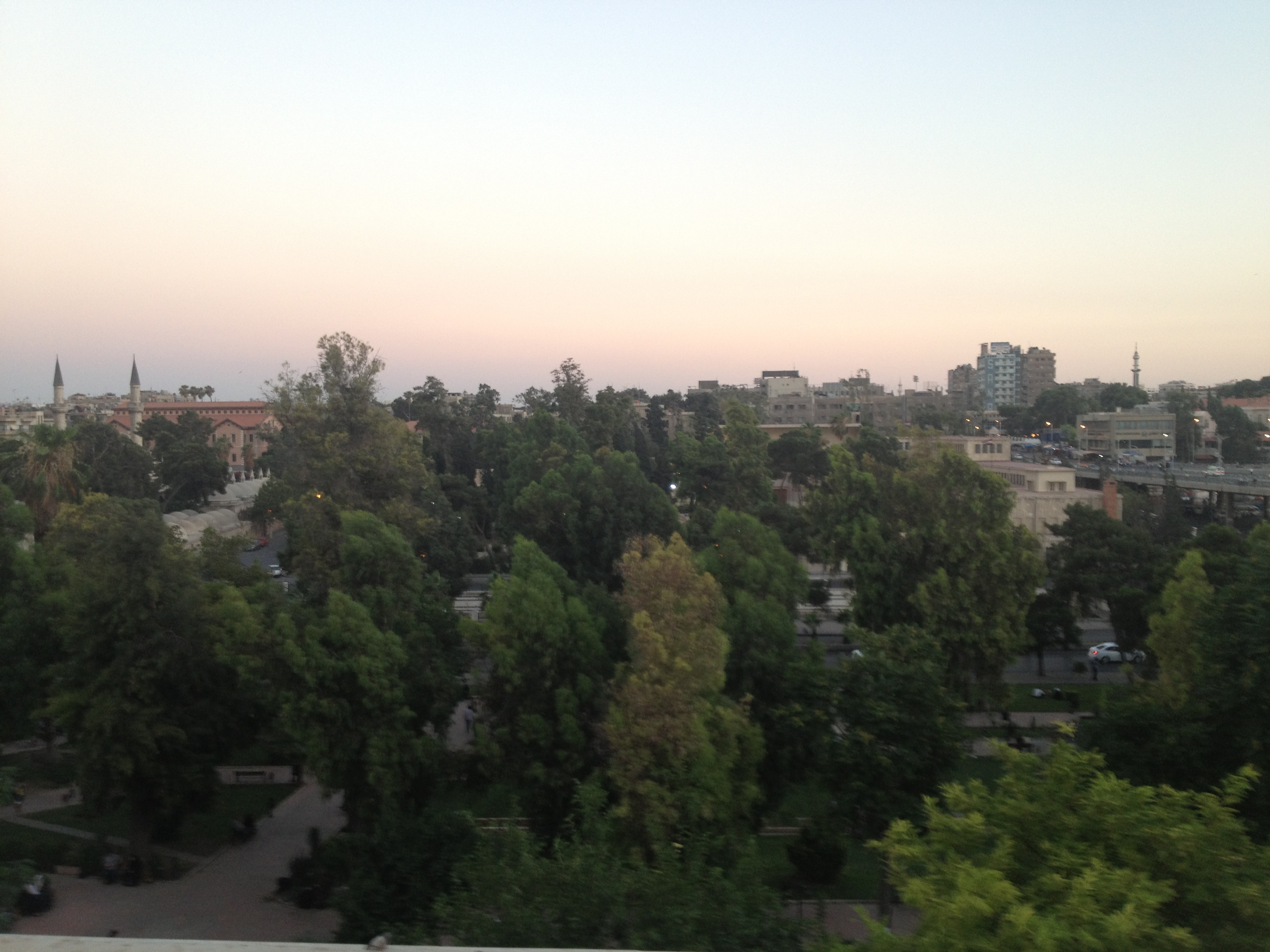
View from 4 Seasons Hotel in Damascus

News from Damascus are always depressing nowadays. But it used to be a vibrant city, full of life. When I lived there last year the fear of the war was present in the city, but here are the words of a young woman from Damascus and how her life used to be before the war.

“I grew up in Damascus and when we went to visit the village my parents came from, I just wanted to go back home. My parents’ village is beautiful, green and with fresh air, but it’s not like the city. In Damascus I had everything; freedom and friends.

Summers were the best. My cousin was older and worked in Saudi Arabia and used to come home for vacation in the summers. She got divorced and when she came home she wanted to have a good time, to live a free life, a life she couldn’t live over there. When she was in Damascus I packed a bag with all my stuff and moved in with her. She rented a flat downtown and I stayed with her there all summer. My family was angry with me for moving out from them, they thought my cousin had bad influence on me, but there was nothing they could do. I had become so independent from them since I started working and making my own money.

Me and my cousin never cooked, we just ordered take out to the house or went to restaurants. We went to the swimming pools somewhere in the city and ordered sheesha. In the evenings we went clubbing, there were many nightclubs to go to, and there were always a lot of guys after us. We had a good time with them, we let them pay for everything, then when we got bored with them we just hopped in a taxi and left” (she shows how they teasingly waved goodbye from the car window while laughing) “We never talked politics back then. She supported the president, she thought it was because of Bashar al Assad that she could live a free life in Syria comparing to the life she had as a divorced woman in Saudi Arabia. I was against Assad, just like my father was, but me and my cousin never spoke about it. We just had a great time together. I loved my city.”

Photo: Copyright Sweden and the Middle East Views Blog

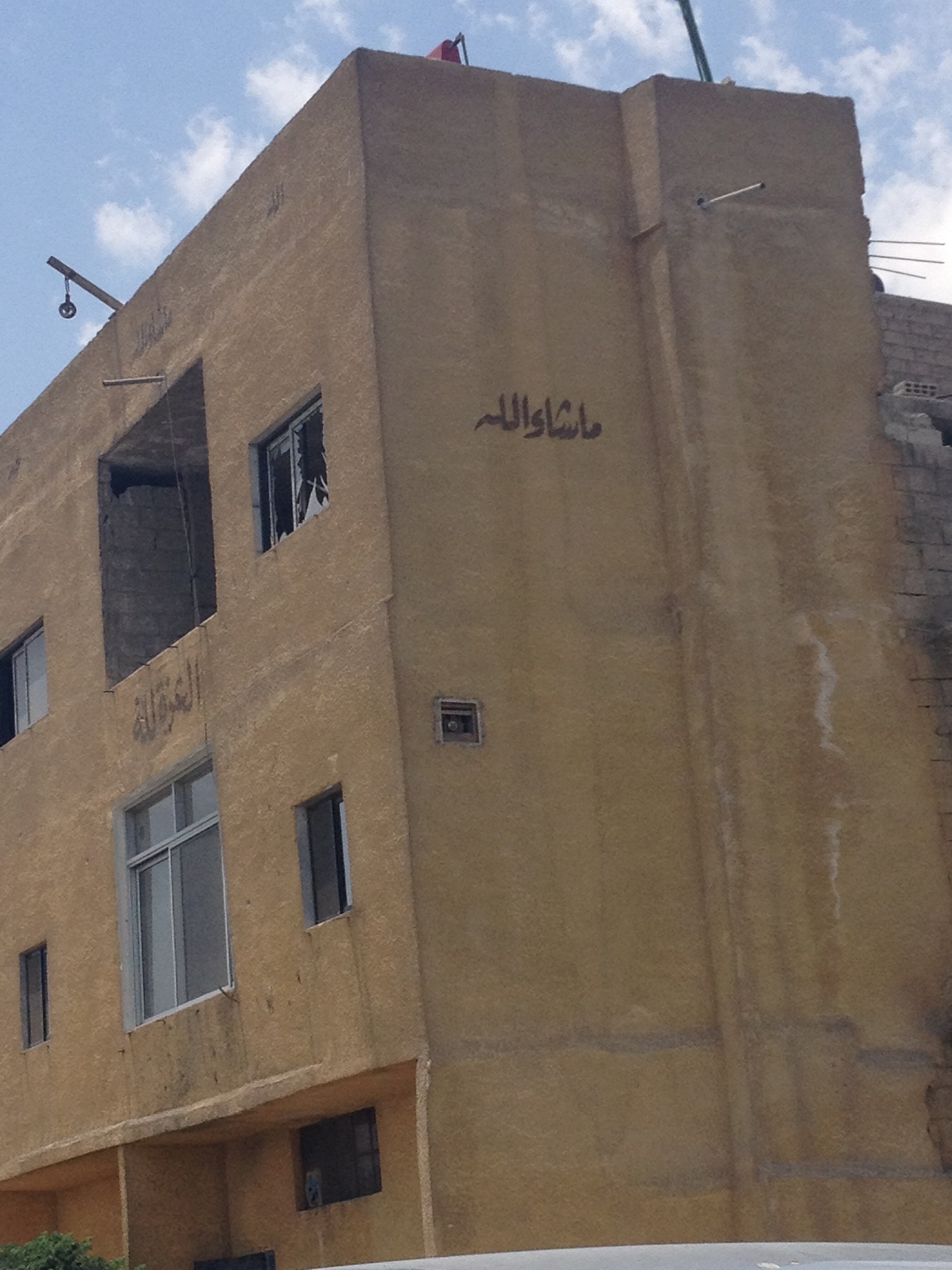
God Save Our House

Writing on the wall of a house in one of the wartorn suburbs of Damascus, Syria, in July 2013:

“Mashallah” – God save our house from the evil eye. Whatever there is left to save.

Photo: Copyright Sweden and the Middle East Views Blog

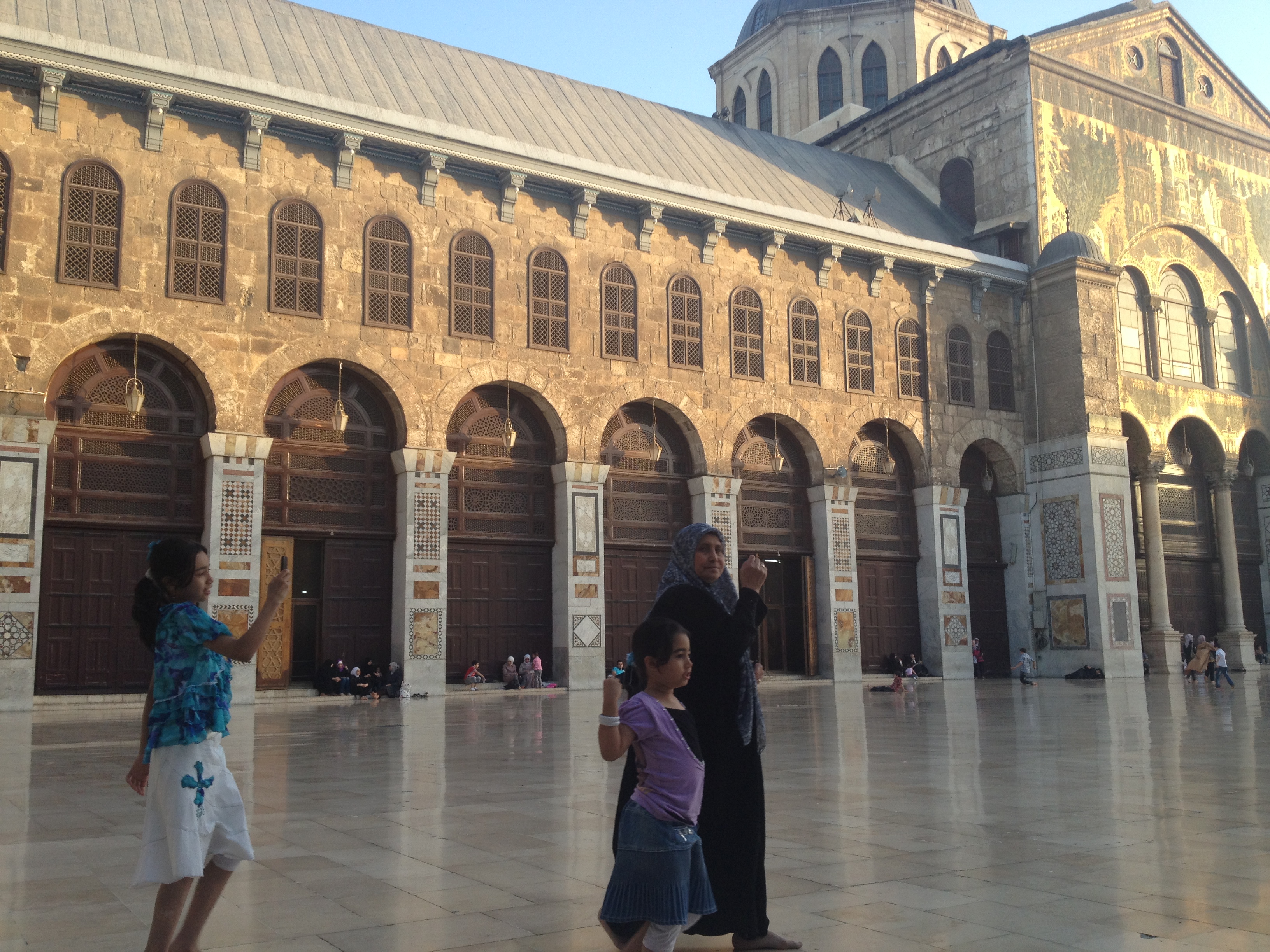
Umayyad Mosque, Damascus

mosque 1

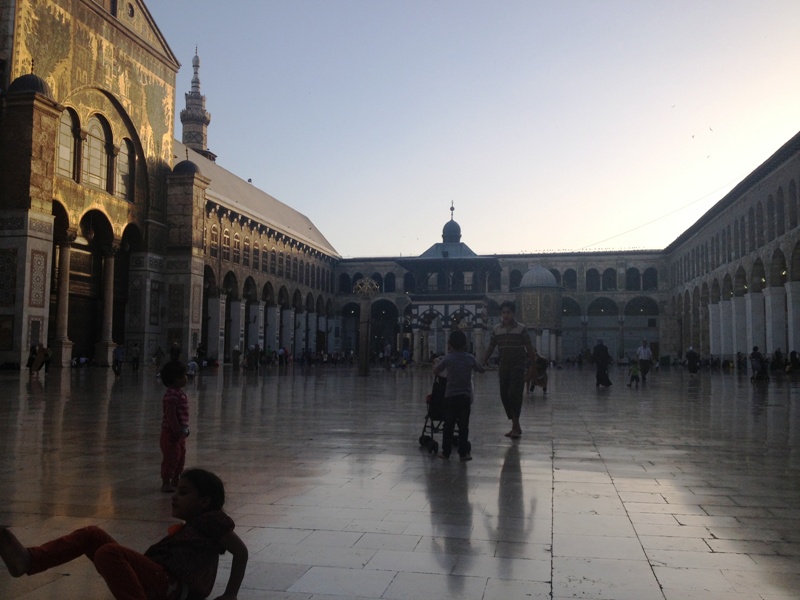
Umayyad Mosque in the heart of Damacus old city, an ancient building completed in year 715. Photos are taken during a Friday evening in June 2013.

mosque 2

Also an excellent place to spend a Friday night at, for prayers and socializing. Or a playground, with it’s shiny floor perfect for sliding on…

mosque 3

Let’s hope it will remain throughout the war.

Photos: Copyright Sweden and the Middle East Views Blog

Two Voices from Aleppo University

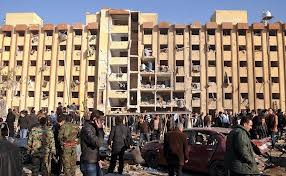
Aleppo University after the bombings January 2013

I was able to talk with two persons from Aleppo University in Syria, that shared what they had been going through.

Here are their stories:

I was offered a job at Aleppo university after my studies. When the revolution started we as employees in a governmental institution were made to cooperate with shabiha (a feared subgroup within the Syrian intelligence/military, some claim they are criminals that the government recruits to terrorize civilians, a strategy to stop the revolution). We had to assist them in their fights against the protests. I tried to act as if I assisted them, then I was able to escape the country.

My home in Syria is all destroyed, my street is in ruins. No food is available and when going to search for food to buy people are being killed by snipers. Why are the government and the Free Syrian Army taking it out on us? We are only citizens.I  didn’t think the revolution would go this bad, and I blame both sides now. They have both helped in destroying my city.”

I was a student in Aleppo university. In January 2012 students were gathering in front of the cafeteria, holding a protest. They were protesting peacefully, shouting for freedom, protesting against the war and demanding the release of political prisoners. Security guards inside the university called shabiha without the students knowing. They came directly and started arresting students on spot and hit them with electrical batons. Another time they gassed the university with teargas.

Then on January 15 2013, it was first day of the examinations, the government bombed the university, many people saw the attack and that it was carried out by a warplane. Still when I see a plane or helicopter in the sky I get an awful feeling. One missile hit the entrance of the faculty of architecture; the other one hit the student dorm that had been evacuated to host refugees from other areas of Aleppo, people that had have to flee their homes. Dead people were littering the streets all around.

I can’t forget the barbarity of Shabiha and the security forces, the way I saw them attack the students or the sounds of clashes and missiles around us. I still have nightmares and then I wake up sometimes and I have to say to myself: ‘It’s ok, I’m out of Syria,I’m safe now’. But now a year after my departure, the situation is more much worse. There are inner borders and snipers in everywhere and there isn’t any safe place left in Aleppo.

Photo credit: New York Times