


Photos: Copyright Sweden and the Middle East Blog

Photos: Copyright Sweden and the Middle East Blog
In a time of peace and normality, the border between Syria and Lebanon is like any other border: queues are busy, rules are neglected, bored military officials are stamping passports in between smoking and drinking endless cups of tea. Now everything is different. And as the road to the airport is not safe, crossing the Lebanese border by land is the only safe alternative for leaving the country, making an otherwise sheltered humanitarian aid worker like me left to mingle with the Syrians that are trying to get out.
The border on the road between Damascus and Beirut is still controlled, heavily controlled, with new checkpoints every few minutes before reaching the border office. Outside the office cars are parked everywhere and masses of people are moving with their plastic bags and children, the chaos mirroring the domestic collapse. Many internal refugees are now dirt-poor, without money for bus or shared taxi, leaving the country by foot.
I was holding on to my passport and documents, trying to make my way in through the crowd and into the office. It was steaming hot and people were pushing and shoving each other, small children were crying. The lines leading up to the cashiers where the necessary stamps were given to the lucky ones that were able to reach there, was swamped. The driver that had taken me was not allowed to do the documents for me, and without stamp you couldn’t cross the border. I was able to make my way a few meters in to the crowd before I got stuck. People were so tightly packed it was impossible for a short woman like me to advance forward, and the crowd was turning aggressive. Even if I wouldn’t be squeezed, would I be saved from being assaulted? A man that was trying to make his way back through the crowd was being squeezed and received help from his wife and another man that pulled him out. The officers behind the counters shouted out, telling people to stop, and some shouted back: “How can we do it?” “We’re stuck!” “Help us instead!”
A military man passed by and people flipped their papers to him, begging for help: “My husband is sick, please help us!”, “Ammo, we need to get out, please stamp our passports!” The man ignored them, but I took my chance and pulled out my humanitarian worker’s ID:
“I’m a foreigner, I work for the Red Cross! Or something like the Red Cross!”
He glanced at me.
“Ok, come here.”
He let me go before him through the door he was entering and shoved away the others that tried to follow. A big metal tool was placed against the door to prevent it from opening again and the desperate bangs from the outside followed immediately. In the small room aside of the counters a few other people, a man on crutches and some lone women like me, were waiting hopefully, squeezed together in the small window facing the officers. Maybe we would be able to leave the country today? But we were being ignored.
“Go stand in line!” an officer yelled.
“We can’t stand in line, they’ll squeeze us! We’ll die there!” a woman replied.
Through an open window some young men climbed in. From all ways everyone was desperately trying to reach the officers, the stamps. The room was filling up with people and was becoming unpleasantly crowded as well. A girl who was pressed next to me laid her head on my shoulder, seizing the opportunity of the closeness to rest. She was maybe 10 years old.
“Are you tired?” I asked her.
“Eh.” Her voice was just a whisper.
The girl drifted off to sleep as we waited, her head staying on my shoulder, her body leaning on me. The pressure from other people kept her upright.
After maybe an hour an officer appeared and suddenly lost his temper when seeing the amount of people that had materialized in the back room:
”Get out, all of you!”
The protests made him furious, he violently pushed us out:
“Go! I said go!”
No one wants to unfold an argument with an armed military. We stumbled upon each other as we hurriedly left the room. I was being pushed to the right and lost my balance, quickly catching it before falling face down. The driver that had been waiting for me in the back of the main room saw me from a distance and shouted: “Someone help her at least, she’s small, she can’t make it there! She’s afraid of all you men!”
A man suddenly gave in, reached out for me through the forest of people, took my passport and papers and sent them through the crowd. “A small girl” I heard him mumbling to the others protesting. A few minutes later the papers came back, sent from hand to hand, with the proper stamps, nothing missing. I advanced backwards through the masses and was able to press through the door. Before reaching the relief of the fresh air I saw the little girl that had slept on my shoulder, now slumping alone on the floor. Her mother probably had left her there while trying to make it on her own. She was also a small girl, but no one took notice of her.
Have you been here before? Then the emptiness might strick you. Previously crowded and full of tourists, now a quiet part of the city, where unsold tourist souvenirs have replaced the liveliness.
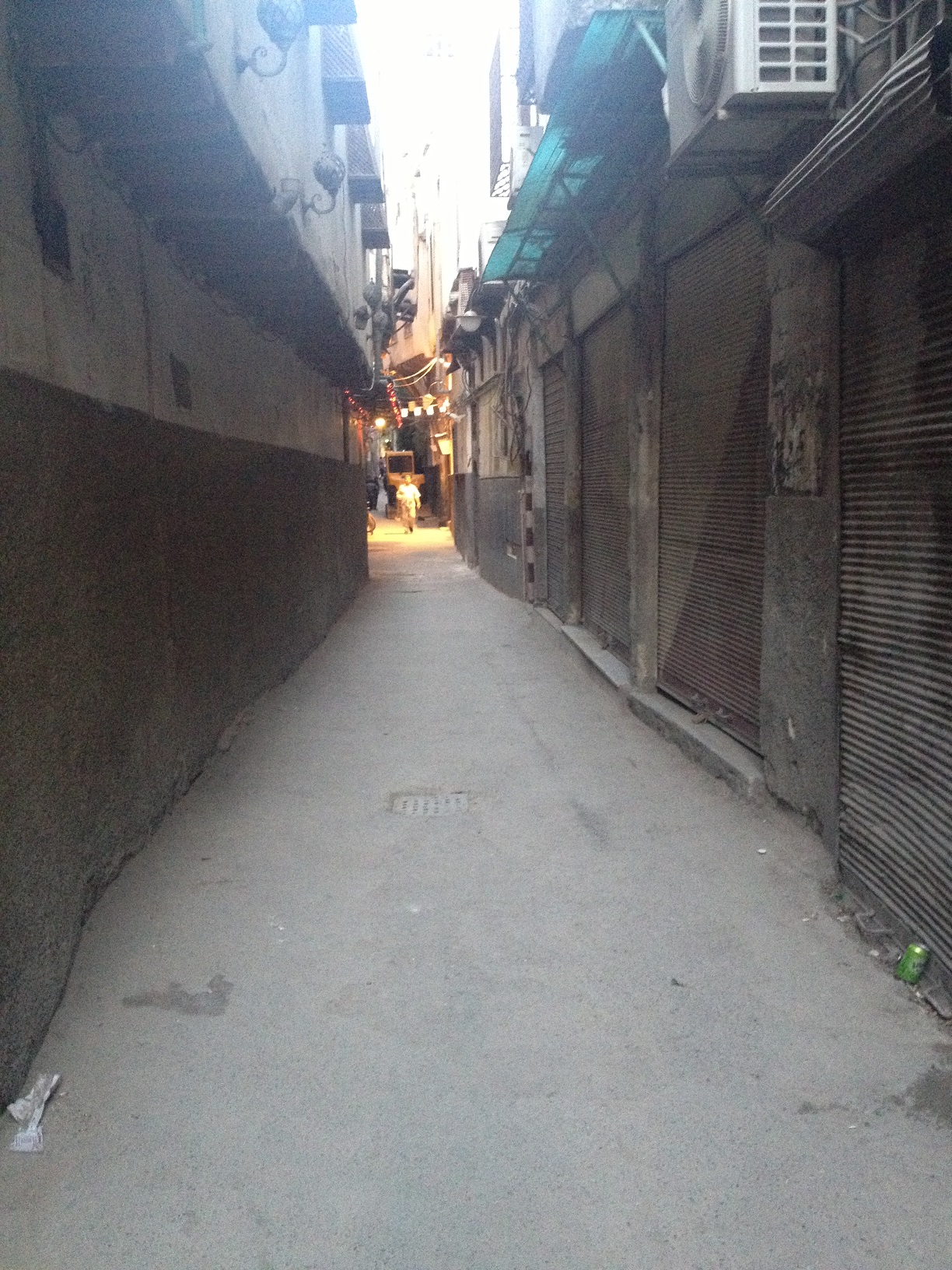
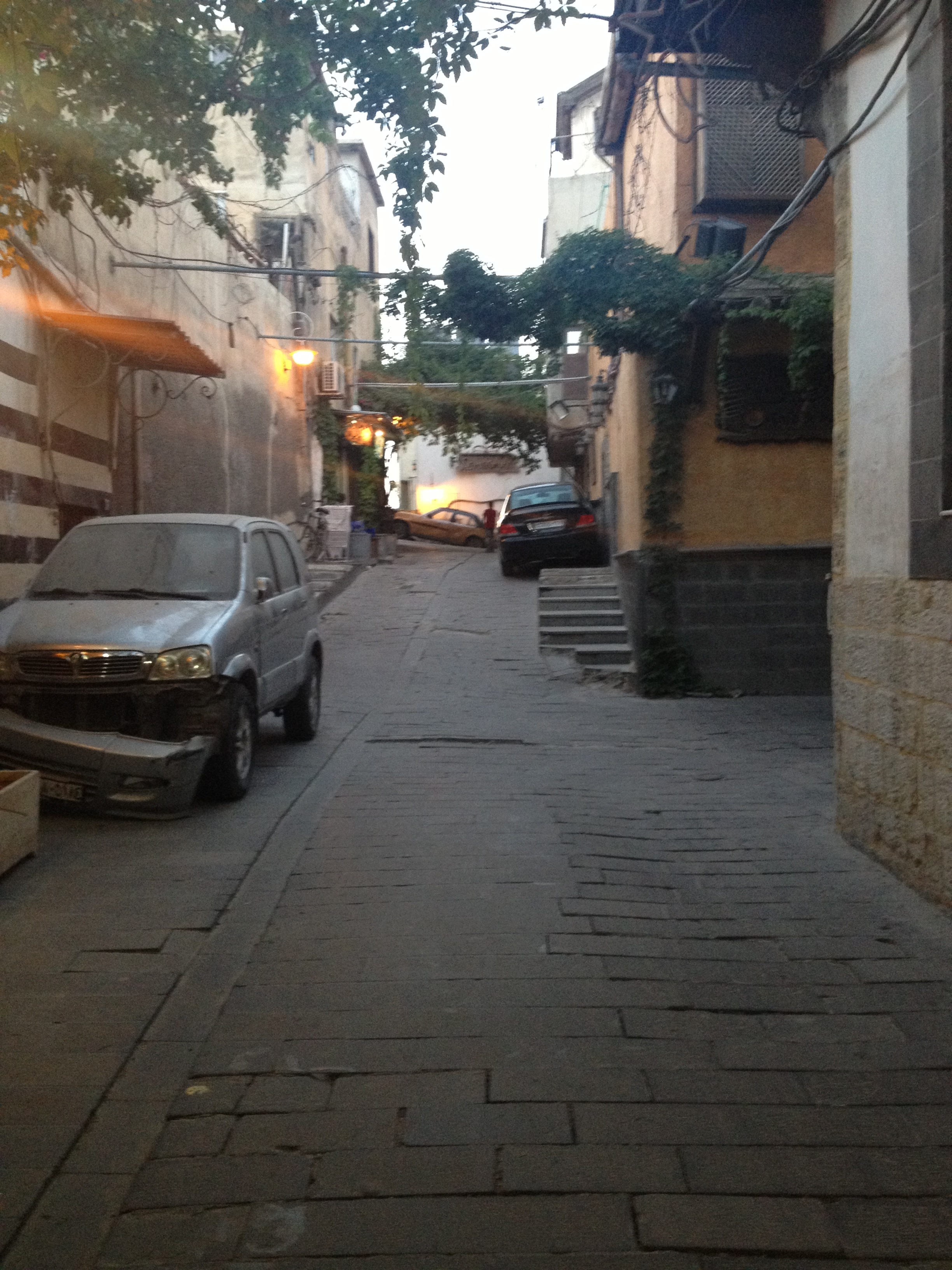
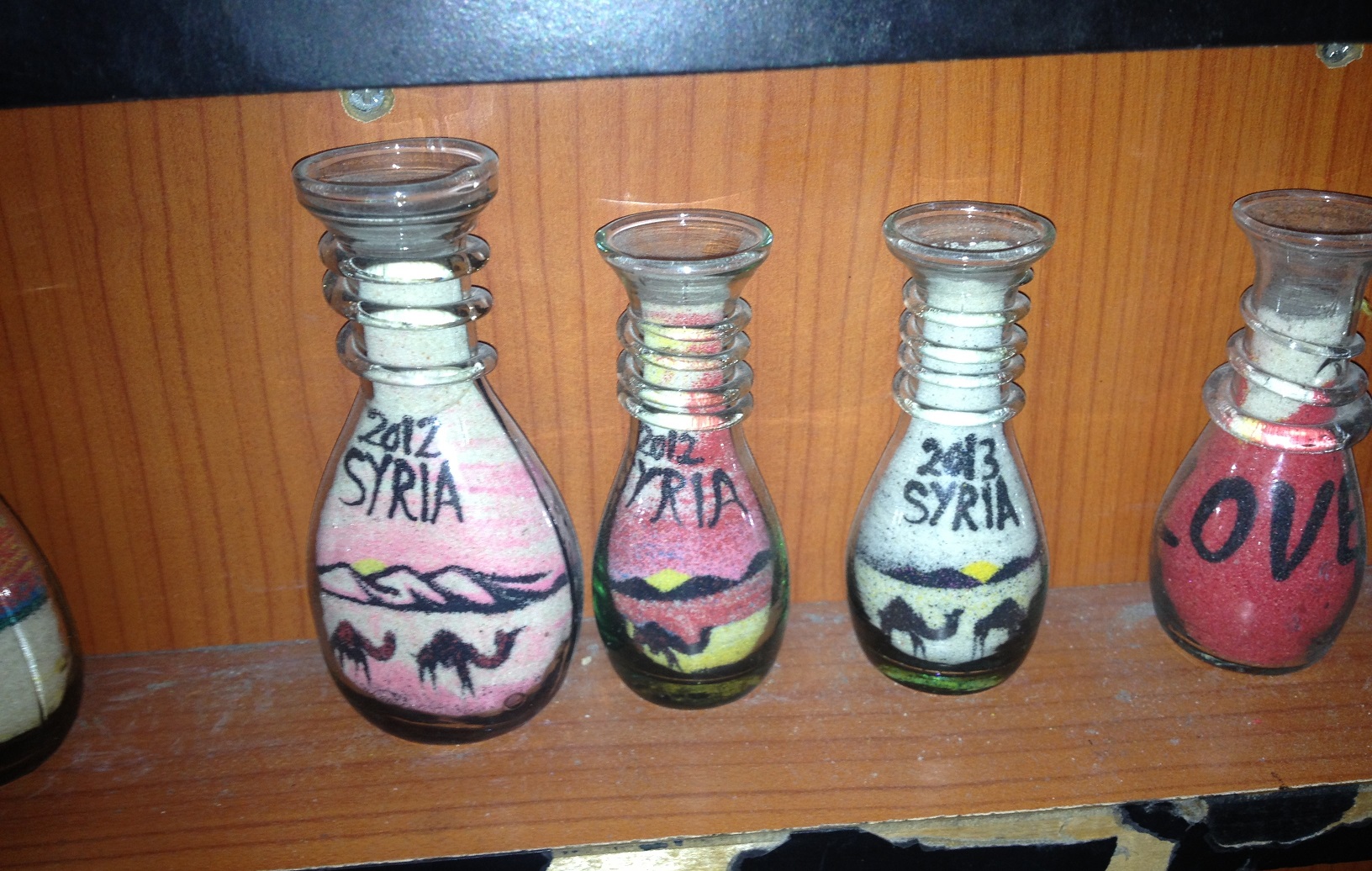
Photos: Copyright Sweden and the Middle East Blog
In a time when Syria is associated mostly with conflict, I’d like to take the opportunity to tell about something that I like with this country: my girlfriends. Now I’m not usually prone to generalizations, but I have found that my Syrian friends have quite a few characteristics in common, so why not share them? (And hey, who is a woman without her girlfriends anyways?)
Girls, I love you cause you are…
Ladies, this one’s for you! Keep staying cool no matter where your country is heading.


Photo: Copyright Sweden and the Middle East Blog
 Human Rights Watch has launched “Campaign for Domestic Worker’s Rights”. The campaign is illustrated with photos of Arab women dressed in the costumes that many of the workers have to wear when on duty – which often is 15 hours per day, 7 days a week. Hopefully this will make people think.
I have repeatedly become surprised over how people’s brains stop working when exposed to something abnormal being normal – Arabs, Europeans, Americans alike – which is what the trafficking situation of poor people from Asia and Africa to the Middle East is today. I won’t dig into the subject of why you can’t clean your own house or raise your own kids, but on how today’s knowledge about human rights for some people seem to have vanished.
When living in Kuwait I had a friend from Eastern Europe who had married an Arab man residing in the country. She was a great girlfriend; caring, funny and smart, and I missed her a lot when moving. Going back to visit a few years later, she and her husband had got their first child and employed a live-in-maid, and suddenly I saw a new side of her. The woman they had employed, let’s call her Maria, was not allowed to call my friend and her husband by their first names, instead ”sir” and “maam”.
“If you let them call you by your name they will disrespect you, you can’t give them too much freedom,” my friend explained.
All house chores had been given to Maria who worked from 6 am to 10 pm without a break. She was not allowed go out on her own or make her own decisions about what to do during the day, had to follow my friend wherever she went, walking a few steps behind with all the bags and the trolley that she pushed the toddler in, when my friend was out with her girlfriends on one of their many shopping tours to the mall.
My friend thought she was nice to Maria. She could eat how much she wanted and slept in a bed in the child’s playroom – “Not on the floor like with the Kuwaiti families”. My friend didn’t seem to reflect on how Maria might feel when my friend called her stupid or criticized her for not doing anything right (I noticed this among many, the constantly criticizing of the domestic staff, as if they get a kick out of putting them down).
Now I happened to like Maria as a person and we spent some time talking. It turned out she had a university degree in her Asian home country and previously had a qualified job that she had lost, why her last way out if keeping her own child in a private school was to go abroad as a domestic worker. The experience had been a shock and she found herself not able to return as she had signed a two year contract and had her passport taken away. I suggested I ask my other friends about jobs in her field of experience and we secretly exchanged numbers. My research didn’t lead to anything but we kept in touch after I left. She often called and texted, feeling so alone and exposed.
Then a few weeks later my friend’s husband emailed me. My friend had taken Maria’s mobile to check on her and had read my messages. She and her husband were furious I had kept in touch with Maria and urged her to get a better job. This is an excerpt from the e-mail:
“I would really like to thank you for treating your friends who were soo good, honest, loveable to you and accepted you in their home not as a guest but as a very close person. We are very surprised of the way you cheated us and tried to contact our nanny from our back and tried to help her to leave us and finding a job because you persuaded her that she’s over qualified to be a nanny… If you think that you are supporting women right by encourage her to do what she did and leave us then let me tell you that you destroyed our lovely family and destroyed her life as well.”
He ended the e-mail by telling story I had heard before, on how Maria had felt so empowered by me that she had brought home a man and had sex with him in a room next to where the child had been sleeping. The story is one version of many used to justify what happens if you give your maids “too many rights”; Asians are not only unintelligent, they are also sexually primitive if you fail to control them. Do you know your history? African–Americans were once considered the same way by whites.
My friend blocked me on all social websites we had been in touch through and we never spoke again. I don’t know what happened to Maria – the control must have increased and I assumed it was safer for her not to be in touch with me as I anyways was far away from Kuwait and had no means of helping her.
Human Rights Watch’s campaign is much needed in a time when again human rights doesn’t apply to people of color, and I wish it leads to some sort of change. If I could speak to my friend I would explain to her why I had urged Maria to leave and that I hadn’t mean to hurt my friend – but I wouldn’t say I’m sorry. And if I were in the same situation I would do what I did again, even if it meant losing a close friend. I know some people would say I’m fanatic. I say I’m normal.
Photocredit: Human Rights Watch
The other day I had spilled food on my hand when eating outside and needed to wash it. In a street corner a man sold candy and chewing gums from cardboard boxes. I had seen him before as I passed the corner every day, it was close to my work place in Damascus. In the morning I saw him coming and loading the boxes with the unsold items from the day before – overnight he covered the boxes and the wobbly tables the boxes were placed on with different pieces of fabric tucked together. The man was sitting on the side of the street, I approached him and asked for a “small bottle of water”.
“I don’t sell water.”
Of course, the little stall didn’t have a fridge, how could he sell any drinks? It had been a stupid question to ask.
“Aha, ok. Sorry.”
I turned to leave.
“But, wait…”
He remembered something, got up and went over to the tables, started rummaging around among the fabric. He picked up a box of clean paper cups and a big bottle of water, his own water, then poured me a cup. I fetched my wallet with my other not-so-greasy-hand and picked up some coins.
“Thank you, how much is it?”
“Nothing.”
Some weeks before I had been ripped off in a grocery store, paying twice as much as I should, and when I realized I couldn’t be particularly mad. Most people would rip anyone off if they were on the brink of poverty, especially a foreigner who had much more, in a time when the country’s currency was falling dramatically until the previously big-bills turned small-bills turned nothing. I wanted to pay and insisted, offering the coins. Suddenly the man looked sad. Just sad.
“I don’t want any money. Please take it, my daughter.”
That made me quiet. I mumbled a thank you. In that little moment, kindness won over war. It’s not a small power, not a sign of weakness. I believe it can sometimes be very strong.
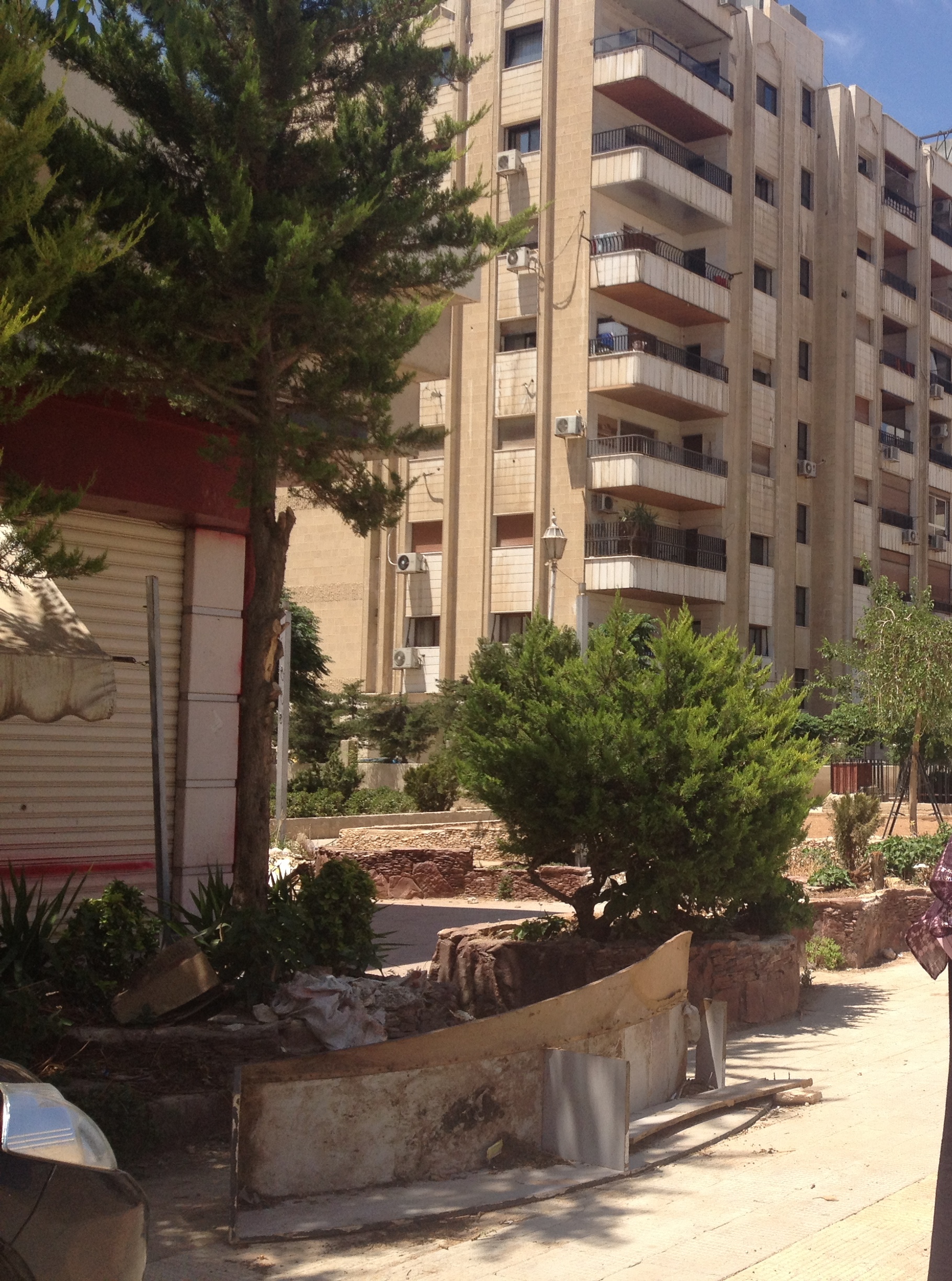

Photos: copyright Sweden and the Middle East blog
 “Jenny, please write about this in your blog! The government is doing terrible things to the people and our media is just playing mute and deaf“
A Turkish friend e-mailed me today. She’s a regular Turkish young woman, uninterested in politics, who never showed any interest in activism or talking politics with me before. Attached was a link, where it said Turkish police had gassed the protesters with teargas, gassed the subway in Istanbul and an emergency room where patients of the attack had been treated. The link is now removed, as are blogs I’m trying to access- it seems the media is really being silenced from somewhere higher up.
A number of protesters had gathered in Taksim, the beautiful heart of Istanbul where protesters usually gather, to act against that the Gezi Park was to be taken down in order to give place to something else. Having known political activists in Turkey I know how the police and military usually used hard core methods when cracking down on activists – but this brutality is something new to me. Probably also to my friend, a patriot at heart, who never complained about her country before.
I will not publish the most horrific photos here as I want to keep the blog free from such pictures (you can easily find such pictures online anyway), but I’m asking you to share my blog post and these news. Turkey is a popular tourist resort that is trying to enter EU. The never ending brutality towards minorities and the population that are protesting in a peaceful, democratic way can only come to an end if the international community starts to be aware and put pressure on the current government. If Turkish bloggers can’t share the news, let us who are outside do it.
 “You want to go see my friends? They’re African, they speak good English” my neighbor in Amman asked me one Thursday afternoon years back. In the sleepy little area we lived there were not a big variety among the neighbors, so I became curious and tagged along.
Long before that, no one knew when, the father of Sameera and her sisters left his country Nigeria, supposedly to go to Mekka, travelling by land for several months until he came to Jordan. For some reason, if money went out or whatever it could have been, Sameera’s father decided to stay there for a while. Back then Amman was just a village and foreigners a rarity, so rare that the authorities quite soon offered him a passport. There were a few other Africans in Amman though, and someone pointed out the houses to him: “Here lives an African family!” And so he met Sameera’s mother whose father originated from the Ivory Coast, and for a while became a lifetime; he never saw Nigeria again.
Sameera was cool and smart, too broad in her mind for the suburb where she had lived all her life. Her father, illiterate himself, decided that his six daughters were going to be educated, and sent them to college. To his son and other people he said: “No one is going to tell my daughters anything”. Probably he was the one to blame for their independency that stayed present even after he and their mother had passed away. They all worked and made their own money, only one of them getting married, to a Kenyan man that she said respected her freedom. The others saying they didn’t want the burden of being controlled. Sameera and her sisters fully identified as Africans, sticking to African satellite channels and music, even though they had never been. Later on, with the UN moving in big-scale to Amman the city became more international, with foreign women dressing in tank tops and Starbucks popping up in street corners. But the international vibes of a city often has a way of not reaching the original citizens, the ones limited by the conservative ways of condemning those different African girls that lived by themselves, worked for themselves, dressed in modern clothes.
I always had a good time at Sameera’s place and I wanted her to come visit me in Beirut when I went to stay there the upcoming year. She was up for it after some persuading. Collecting her best outfits, she called me a number of times before she left; “Can I have white jeans in Beirut? That’s cool there?”, and took a shared taxi for the eight hours ride.
She cried the first evening on my balcony and I got perplexed: what was wrong? But it was just the free spirit of Lebanon and the mixture of people that she saw. She was no longer the odd one; she was just one among many. “I’m sad because of all the beautiful things I see, I see nothing of this is in Amman”, she said.
That weekend was the best, we had so much fun. It was Beirut in the summer in the mid-2000s: clubs were open until the morning, people could still afford going out, Tiesto and Amr Diab was the DJs choice for the night. Our exotic appearance, the blonde girl and the black, was priceless. We didn’t pay entrance anywhere, the Buddha Bar DJ invited us to party with his crew, not understanding why such an urban girl like Sameera didn’t drink or wanting to date, and Sameera acted like she was born in the cosmopolitan city, showing off her amazing dancing skills that she rarely got to practice, pretending she was American when someone asked (“Hey I ain’t gonna see them again!”). When we grew tired of the company we told them we were going home, then hopped into a cab and went to the next club.
We’re not in touch anymore why I don’t share her real name or photo. But I hope she would agree on me sharing her story, because being a minority is never easy and she was a person that showed someone can grow different from her society and still remain her integrity, becoming the special person that she was. Or as Sameera said once, to a taxi driver in Amman that criticized her for being a Muslim and not covering herself:
“Ammo, I am a Muslim and when I read the Qur’an and decide that I will cover, at that time I will cover. Until then I will mind my own business, and you mind yours.”
Photo credit: http://www.primetravels.com
 Sweden and the Middle East Views