I Love Syria, That’s Why I’m Writing This Post

The old city in Damascus

I am a, for now, retired humanitarian aid worker, who have worked in many countries across the world, mostly in the Middle East. In my former profession I tried not to be too wrapped up in the countries that I lived in, since it’s important to remain calm and neutral as much as possible. Plenty of young Westerners have been travelling to countries in what we used to love to call the third world and start to identify with the countries, the politics and the people. As a humanitarian aid worker you’re not supposed to do that; overly identifying means you loose part of your focus.

But here’s a confession to make from my side: when I see the current news from Syria, and when I hear other aid workers talk about Syria in the most general ways, it breaks my heart.

It breaks my heart, because people who didn’t know Syria before the war don’t know anything about the country. Aid workers and people outside who have never been, seem to see it as just another country where conflict has been going on and will be going on forever. They see it as a country where every person is a potential islamic fundamentalist. They see it as a country where there are few functioning schools, few functional hospitals, where water and electricity is a luxury. A country like any other country they have worked in.

What breaks my heart is, people who only have seen Syria in a state of conflict, have never seen it as it really is. I have been living in many countries in the Middle East and Syria is my absolute favourite. Not by choice, it was just one of the places where I grew really attached to the place, where the good by far outweighed the bad. Syria is my pearl in the ocean. Let me tell you why.

Syria is the country that has a beautiful capital, a capital where night clubs takes place just like late-night cafés and restaurants; beach resorts; mosques and ancient buildings.

Syria is a country that lacks the superficiality that sometimes takes over in Lebanon, a country that has the night life that you won’t find in Jordan (with or without alcohol), a place where men and women; people from different religions; locals and foreigners, easily mix.

Syria is the country where people will keep their promise, they pick you up when they say they will pick you up, call you when they say they will call you.

Syria is a country where liberal people are next door neighbours with conservative.

Syria is a country where you sit in a café playing dawla with your girlfriend until midnight and no one bothers you.

Syria is the country where you go to have ice cream with your colleagues after work at Abu Shaker’s restaurant in Damascus on a weekday, or hit the swimming pool in your bikini in Damarose Hotel on a hot summer’s day, working on your tan and ordering plenty of arabic coffees to have at the pool, or go to Lounge 808 on a Friday night for a drink.

Syria is not a country of extremists, it’s a not a country of terrorists, it’s a country where people used to live and prosper in some of the most dynamic ways in the Middle East, before the civil war started.

Syria was once a place where friendship, love and beautiful things took place – now it’s a country that’s reduced to the international headlines of terror and misery, and humanitarian aid workers whose beer drinking and generalised ideas of a country full of war and terrorists, have taken over a place where beautiful things once was. That is what breaks my heart.

Photo copyrights: Sweden and the Middle East Views
A Response to Islamic State

There has been plenty of inside resistance to the Islamic State in the Middle East. The blog Mosul Eye is reporting anonymously from inside Mosul about the disaster of the ruling of the Islamic State. Artist Rostam Aghala is painting the horrors of living with the threats of Islamic State.

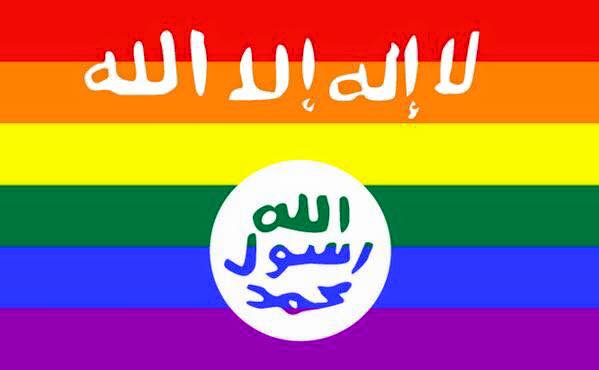
And here is the last one – Sultan Sooud Al-Qassemi, from Sharjah in United Arab Emirates, published this version of Islamic State’s infamous flag on his Facebook today on May 29. It has already created plenty of negative feedback according to himself on his Facebook page, it has been reported for nudity and taken down by Facebook (Sultan published it again).

Maybe he is right and the IS-thingy was just a joke all along? In reality, they were all just young, misunderstood gays.

11118817_10153085357656704_4276376596831400252_n

Photo credit: Sultan Sooud Al-Qassemi

Syrian Red Crescent Volunteers Attacked When Assisting War Victims

Hussain Saad

In the ever-ongoing hell of Syria’s civil, one of the few actors that are actually trying to assist the civil population without having a political agenda of their own, is the Syrian Arab Red Crescent. Throughout the civil war their volunteers have been assisting the victims; driving injured people to the hospital, picking up dead bodies and brining them to the grave yards, treating victims with first aid. The Red Crescent volunteers are unpaid and are carrying out their work for free.

Despite the huge effort from these volunteers – who often are having a job or their studies on the side – they are continuously targeted by one of the militant groups, sometimes even the government forces themselves.

The latest news was translated from Arabic and sent to me by a Syrian friend who has been active in the Red Crescent in Damascus:

15 /05/15 15:43

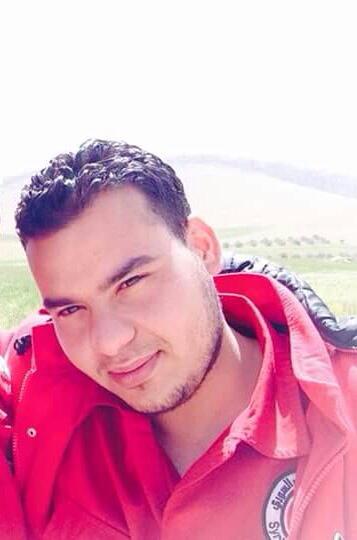
An ambulance car for the Syrian red Cresent Rural Damascus sub branch – al Domayer sub branch, got a shooting during a mission to drive a patient to a hospital, the team leader get bullet in his head and now he is in the intensive care room. The team leader is a SARC volunteer and his name is Hussain Saad and he is a mechanical engineer student.

I decided to share this news on my site so that Hussain, the mechanical engineer student who dedicated his free time during the civil war to assist suffering people, would not just be another number in the statistics – whether or not he will survive or pass away. Another Syrian whose case will go unnoticed.

The Death of a Woman – the Case of Farinaz Koshravani

Farinaz-Khosrawani-committed-suicide-May-2015-to-avoid-rape-by-Iranian-intelligence-officers-photo-anf.jpg.pagespeed.ce.SlU8eRANaE

Farinaz Koshravani

Did the news reach you about Farinaz Koshravani? She was a Kurdish-Irani woman who allegedly jumped or fell to death from the 4th floor at Tara hotel where she was working, in order to escape rape. Her fellow Iranian Reyhaneh Jabbari chose a different way when facing rape: she stabbed her attacker in self-defense, and for that she was herself killed, hanged in Gohardasht prison on October 25 last year.

Farinaz worked as a hotel maid in the Kurdish part of Iran, in the city of Mahabad. Violent demonstrations broke out after the news of her death and the hotel was attacked and burned. It’s still not confirmed whether she jumped herself or fell to her death, but one man has been detained, who has confessed he “was with” Farina before her death. Rumours claim he is a government official who had connections with the hotel and therefore was free to try and assault women in the hotel.

I asked a friend of mine who is from Iran, what she as an Iranian woman thought about the death of Farinaz. This is what she had to say:

Analyzing women issues is very complicated and difficult in Iran, mostly because we have not enough right to talk, share and to discuss about problems as much as men. Here again I hear about an accident which the victim is a woman. A woman who is not clear that has been suicide for protecting herself against being raped or she was murdered when she was hiding her relationship with a guy there. The only thing that is obvious here is this woman was murdered just because he scared of something and jumping from balcony to another one at the hotel was certainly an idea to runaway from the danger.”

Nowadays it is like a common story in accident page of Iran news! When a man spreads acid on a woman’s face or a husband who was in doubt about his wife relationship with another man kills her! You know the most painful part is, we never understand well who is the accused and why this accident should been happen? The worst issue after this is when you hear the killer pays the blood money to the judiciary and it is even half of the amount one pays for a man and gets free! The government and judiciary easily ignore many things about women and prefer them to just be quiet for everything. They always prefer to point to women instead of men for such accusations.

There are a lot of these examples in judiciary folders that hasn’t been solved yet or just led to very not fair results. And all those women who don’t know they should be sorry for protecting themselves or should accept the attack!

I’m just happy that woman activities against unfair woman laws are increasing and people bit by bit are understanding that they should not trust the government and wait for them to bring back the rights for them. It is something they have to learn the concepts by themselves and teach to their children from now on, for being a part of our culture in the near future.

Photo copyright: ekurd.net

Painting: Girls under Islamic State

The Kurdish artist Rostam Aghala, whose art I have shared before, has pictured women’s suffering in the hands of the terrorists in Islamic State. He wanted to share it with me for me to share it on my site, for the world to see. Rostam uses the Arabic acronym “Daesh” to name Islamic State.

“Girls under Esideat (Daesh)” by Rostam Aghala

Photo copyright: Rostam Aghala

A Massacre Among Massacres

blood_PNG6093

Massacres have become so common these days that we seem to forget them as quickly as we hear about them. A few minutes of horror, then we shake the information off and go on with our day. IS has contributed to this phenomenon, killing people video-game style where nicely chosen colours frame the scene of the killing. Many internet users click on the Youtube video click without thinking twice, without thinking on how for each click, IS or the ones performing the massacre grows in fame and celebrity. Just because it doesn’t happen next to us, it doesn’t mean it doesn’t affect us – we are growing numb for the lives lost in this uttermost horrifying way. We loose the respect for the right to live.

To remind myself about how massacres challenges the very core of our humanity, I went back to read my own story from the Banyas massacre in Syria 2013. It was a massacre among many massacres, exactly two years ago today, May 2nd 2013. Please let me share this story again so as to remind us all, myself included, about how massacres really affects the surviving community, the world’s population, all of us who calls ourselves humans. The original blog post is found here, the text is copied below.

——————————————————————–

Who told me this story? It doesn’t matter. When did I here this? In June this year, one month after the Banyas massacre had taken place on May 3 2013, conducted by governmental troops on civilians. In Damascus noone mentioned the massacre by name, instead we called it “unrest” or “outbreak of violence”. The result of the systematic killing of everyone in the village is easily found online, but in the heart of the government controlled capital that is nothing you can talk about.

Why did the person tell me this story, despite the danger of talking about the ongoing crimes against humanity in Syria? I guess some things are just too unbearable to keep to yourself. I couldn’t share this story while I was still in Syria, but I can now. And why am I sharing it? I want the world to know. I hope all of you readers do, too.

“Do you know what happened in Banyas? They did something horrible there. They did something that no God allows, no religion allows. What they did is forbidden in all religions!What does the persons want, who are controlling our country? What do they want from God?

There was a couple here some weeks ago. They left me their number, look, here’s the note… When I heard about what happened in Banyas I tried to call them, I was worried. But the line was shut down, I didn’t even get a signal. I heard that they had shut down the lines to all the telephones in Banyas. I called and called.

First after a couple of days the man answered. He said:

They came in the night, they killed my wife and my two children‘.

His wife was pregnant when she was here, I saw it myself, she was seven or eight months pregnant. Do you know what they did to her? They cut her in the chest, like this. Then they cut open her stomach, her whole stomach, and took out the baby. Her husband cried when he said:

They killed her, they killed my unborn baby, they killed our two little children. I’m the only one left. They are all gone.

——————————————————————–

Photo credit: pngimg.com

“Dream of Dawn” – Music Video from Gaza

To all music lovers: the Gaza group Typo Band’s song “Dream of Dawn”, in Arabic with subtitles in English. Watch the beautiful footage in the video, hear the song and in case you don’t speak Arabic, read the poetic lyrics as you listen.

Change the common concept of love and freedom

Don’t leave it the way it is

Write on people’s hearts: ‘I exist’

Tear the fear out of their souls with your kind look

Write on people’s hearts: ‘I exist’

Kurdish Artist Rostam Aghala’s Response to IS in Arts

There’s plenty of resistance to the Islamic State in the Middle East, resistance that deserves far more attention than it gets internationally. One artist in Iraqi Kurdistan, Rostam Aghala, has delivered his response to the terrorists in form of paintings. He let me share his works on my website, and I’m happy to be able and show the world his art.

“Islam and Daesh” (Daesh = Arabic acronym for the Arabic version of Islamic State)

10854981_10206052829661316_1097859412622273230_o

10983125_884534161589149_3960891239605825019_n

10425890_878741198835112_5157365990787372651_n

Photo credit: copyright of all paintings, Rostam Aghala

Saudi Arabian Rap Video for Workers’ Rights

Saudi Arabia is not known for respecting human rights, and the current campaign for releasing the liberal Saudi blogger Raif Bedawi has shed light on the old phenomena of human rights abuses in the Gulf. But, like everywhere, there are exceptions to the rule.

The media group Tefaz 11 has produced a rap video shedding light on the situationen for foreign workers in the country, using the traditional tactics of humour and music to get their message through. The group is produced for Saudis, consisting of Saudis, showing that there is a diversity within Saudi Arabia and that everyone in the country does not support the discrimination that foreign workers are going though – or the human rights situationen as a whole.

See the video above, and below is a BBC clip portraying the people behind the video.

http://https://www.youtube.com/watch?v=cjn8uOOZ4hg

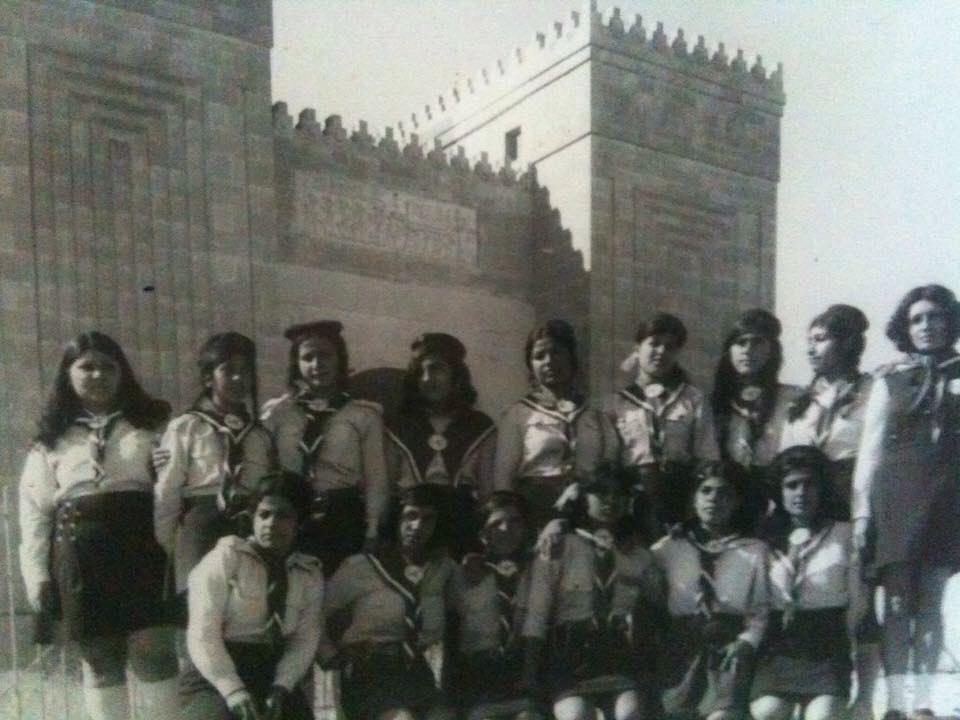
“My Mother Outside the Mosul Museum, 43 Years Ago. Now Everything is Destroyed”

After IS destroying ancient sculptures in the Mosul Museum, cleverly videotaping everything and uploading the demolition online for the world to share and condemn, without reflecting over the fact that we are all a part of IS propaganda machine, without actually putting the means in to stop them, a different kind of response came from Sweden.

The Swedish journalist Somar Al Naher published a photo of her mother who is from Iraq, when she visited Mosul Museum together with a group of girls 43 years ago, with a comment from Somar. Somar gave me the permission to publish this photo and her comment on Sweden and the Middle East Views. Here is what she had to say (translation from Swedish, Sweden and the Middle East Views):

Somar Al Naher

I have to tell this story and why this is an endless sorrow. This photo was taken exactly 43 years ago outside the Mosul Museum that is now destroyed. In the picture you can see my mom, she is in the middle of the back row, number five from the left. In front of her sits her younger sister. What we see in the picture are girls on a Scout camp. Each summer a number of girls were chosen from schools in Karbala and Najaf, to go on a camp in a new city in Iraq. Several girls come from deeply religious families, some of them had parents who were illiterate. But the trust and the confidence made the families allow their daughters to go on camps in places that were far away from home.

This picture symbolises everything that is about to be destroyed in Iraq: the people, the shared history, the proud heritage but also the development and the future. The girls of this generation would have had the possibility to change the world.

Photo copyright: Somar Al Naher