Kurdish Artist Rostam Aghala’s Response to IS in Arts

There’s plenty of resistance to the Islamic State in the Middle East, resistance that deserves far more attention than it gets internationally. One artist in Iraqi Kurdistan, Rostam Aghala, has delivered his response to the terrorists in form of paintings. He let me share his works on my website, and I’m happy to be able and show the world his art.

“Islam and Daesh” (Daesh = Arabic acronym for the Arabic version of Islamic State)

10854981_10206052829661316_1097859412622273230_o

10983125_884534161589149_3960891239605825019_n

10425890_878741198835112_5157365990787372651_n

Photo credit: copyright of all paintings, Rostam Aghala

My Own Private Light in the Global Darkness

The last weeks were bad weeks for all of us who believe in peace and coexistence. Hell, it’s been a bad year so far. There was the terrorist attack in Tunisia and new reports of young people from Europe being groomed to join IS. A new IS member highlighted in the Swedish news supposedly comes from the projects in Malmö in Sweden, where I once worked as a substitute teacher. Maybe he is one of my former students?

Even though my teaching job was several years ago, I remember my students well and still run in to them downtown sometimes. Unfortunately very few of them have been able to break the cycle of poverty and alienation. I know some of the boys I used to teach are now in jail, and the girls, now young women, I often see pushing strollers outside the discount store, married early and on welfare. And now we are starting to loose some of our young ones to the terror machine of IS. If the new Swedish recruit is one of my former students, this would be almost unbearable to know.

But then last week something happened in my own life, something surprising, that turned things around. Since it’s been a bad year for most of us believers this year, I decided to share the story with you.

On the evening train a young woman sat herself opposite of me. A classy girl, one of those I always envy: nice jacket, glossy hair, carrying a trendy, cream-colored bag full of books and papers. She kept peeking at me from her side of the small table. Suddenly she spoke to me, asked something about a school.

“What?” I unplugged my headphones.

“Were you a teacher in… (the school were I used to teach)?”

“Yeah, I was”, I answered, surprised. “Why?”

“You were my teacher.”

“Your teacher?”

When she said her name, I couldn’t believe it. Was this really she, the young and angry girl that had once been one of my students? I remembered her well: a girl that had possessed the mix of sharp intelligence and inability to make use of her talent. She had confidence, I remember how she in an essay called “My Dream Job” wrote that she wanted to be the Prime Minister of Sweden, whilst other girls wrote that they wanted to marry a football player. But most of her energy she put into fighting with other students and bullying teachers, instead of her schoolwork.

We leaned over the small table between us and hugged. I asked where she was going on the train.

“I’ve been to uni, I commute.”

“You’re at university?”

“Yeah, I study engineering, first year.”

Within seconds, words spilled out. She was studying a bachelor’s engineering program in another city. It was long hours and hard work but she really liked it. After junior high school where I had taught her, she had wanted to get away from the projects and applied to a new high school in the other end of the city. She had coerced her mom to sign the school application.

“My mom didn’t realize why it was better there. You know, she didn’t go to school herself.”

The daughter of uneducated refugees from Kurdistan, she had started a school where everyone else had well-off parents. She had to study more than full time in order to keep up with the other students. Her grammar, vocabulary, everything had been at a much lower level than her peers’. It had been three years of tears and hard studying, and from her family she couldn’t receive any help, but she didn’t cave in. When graduating high school she had the grades to enter university. She stilled lived with her family in the projects, they hadn’t been able to move out, but she wasn’t in touch with anyone of her old classmates. When I asked about the kids that had been in her class – I was curious to know about them – she didn’t know.

“But what about Mohammed?” (one of her best friends, not his real name)

She shrugged.

“I stopped hanging out with all of them. They drained me on my energy. Most of them didn’t finish high school and… I wanted to move on with my life.”

We spoke of politics and she delivered her own opinion about IS and the women’s rights situation in Kurdistan. She asked about me and I said where I have been working – she was thrilled to hear I have been working in Kurdistan. She told of her own plans for the future:

“I might go for a master directly after my program. As a women they’ll always regard me as less than men in this business, you know what engineering is like, so I need to have twice the competence of the men who apply for the same jobs.”

When the train stopped and we went off, she hugged me and wished me good luck for the future. Soon she had disappeared in the early darkness of the March evening, I watched her bouncy ponytail as she disappeared. She, the girl with so little chances who had made it so far, had wished me good luck for the future. It used to be the other way around.

Of course I didn’t tell her, but that evening, she was my light in the global darkness. No matter how far IS will advance, or where European terrorists will strike next time, my former student will still be my light, a hope to hang on to. One million dollars couldn’t beat that feeling.

Saudi Arabian Rap Video for Workers’ Rights

Saudi Arabia is not known for respecting human rights, and the current campaign for releasing the liberal Saudi blogger Raif Bedawi has shed light on the old phenomena of human rights abuses in the Gulf. But, like everywhere, there are exceptions to the rule.

The media group Tefaz 11 has produced a rap video shedding light on the situationen for foreign workers in the country, using the traditional tactics of humour and music to get their message through. The group is produced for Saudis, consisting of Saudis, showing that there is a diversity within Saudi Arabia and that everyone in the country does not support the discrimination that foreign workers are going though – or the human rights situationen as a whole.

See the video above, and below is a BBC clip portraying the people behind the video.

http://https://www.youtube.com/watch?v=cjn8uOOZ4hg

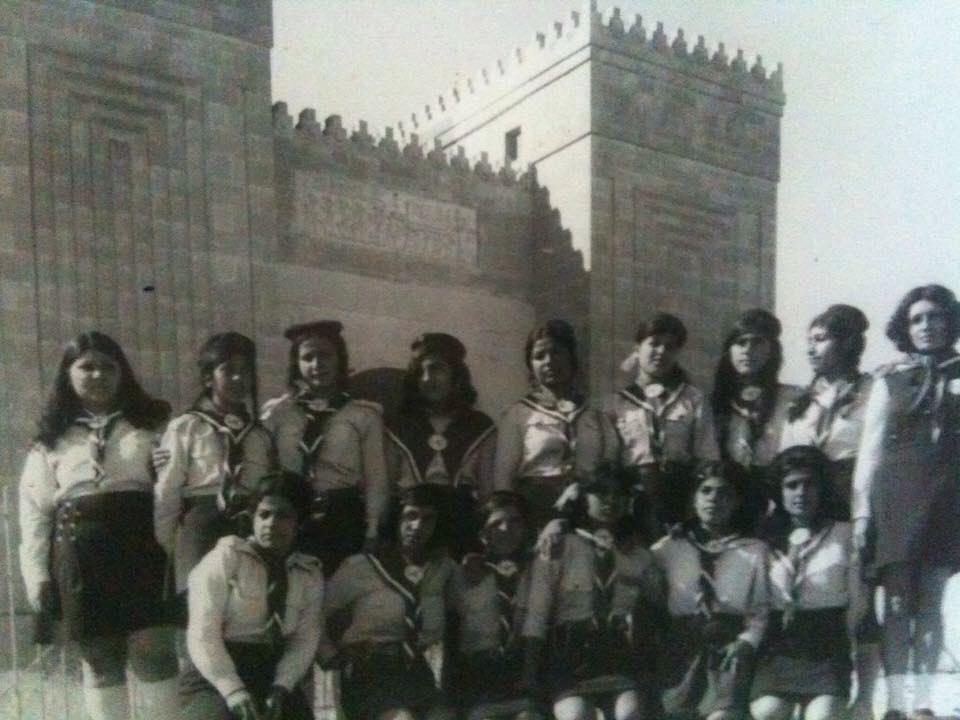
“My Mother Outside the Mosul Museum, 43 Years Ago. Now Everything is Destroyed”

After IS destroying ancient sculptures in the Mosul Museum, cleverly videotaping everything and uploading the demolition online for the world to share and condemn, without reflecting over the fact that we are all a part of IS propaganda machine, without actually putting the means in to stop them, a different kind of response came from Sweden.

The Swedish journalist Somar Al Naher published a photo of her mother who is from Iraq, when she visited Mosul Museum together with a group of girls 43 years ago, with a comment from Somar. Somar gave me the permission to publish this photo and her comment on Sweden and the Middle East Views. Here is what she had to say (translation from Swedish, Sweden and the Middle East Views):

Somar Al Naher

I have to tell this story and why this is an endless sorrow. This photo was taken exactly 43 years ago outside the Mosul Museum that is now destroyed. In the picture you can see my mom, she is in the middle of the back row, number five from the left. In front of her sits her younger sister. What we see in the picture are girls on a Scout camp. Each summer a number of girls were chosen from schools in Karbala and Najaf, to go on a camp in a new city in Iraq. Several girls come from deeply religious families, some of them had parents who were illiterate. But the trust and the confidence made the families allow their daughters to go on camps in places that were far away from home.

This picture symbolises everything that is about to be destroyed in Iraq: the people, the shared history, the proud heritage but also the development and the future. The girls of this generation would have had the possibility to change the world.

Photo copyright: Somar Al Naher

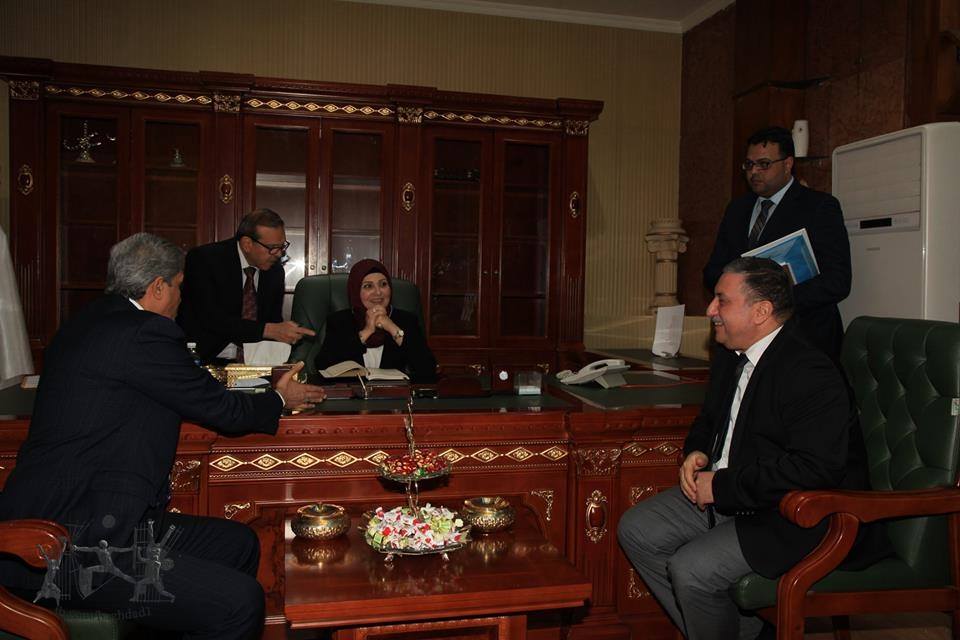
Inauguration of Iraq’s First Female Mayor in Baghdad

11000349_10153189222442668_1956345657821254005_n

Iraq’s first female mayor Ms Thikra Awash was assigned her duties today on February 26, according to the Facebook page بغداد (“Baghdad”). Her position is so far only temporary, according to the news update, since she took over quite swiftly after the former mayor Naim Aboub who was made to leave due to dissatisfaction with his performance. The inauguration is still groundbreaking: it’s Iraq’s first female mayor, to be appointed in the capital, in a time when the IS terrorists are forcing their terrifying misogynist agenda on the regions that they have conquered.

In the ceremony the previous mayor participated, and Ms Awash was welcomed to her new office by the director of the Prime Minster’s office, Mr Mehdi Alallaq, who wished everyone in Baghdad a good cooperation in order to overcome all obstacles and reach the desired goal; which is to him, a service valued by Baghdad and its people.

Ms Awash said in her speech during the ceremony that she will be loyal and honest in handling the public funds, that she opposes any sort of partisanship and that she will not be biased to any clan, party or sectarian group. She said that her work in the initial phase would have two parallel focuses: to provide better services to the people of Baghdad and work on fast addressing the problems of the city, and also, as she stated: “To reinforce the status of the capital, to once again make it a modern city, while maintaining it’s authenticity and history”.

11025226_10153189222862668_3935465104331889415_n

Photo credits: https://www.facebook.com/Baghdad1

First Iraqi Female Mayor Elected

Unknown

Thikra Awash

With all awful news coming to us from everywhere these days, it’s wonderful to get positive news for once: Iraq appointed their first female mayor for Baghdad, Thikra Alwash (in some news spelled Zekra Alwach), and she is set to take up duties in her office as by today, Sunday February 22. In a country where women are fighting a slow battle against inequalities in many fields, a battle that is constantly facing set-backs due to the domestic conflicts, such an appointment is an important gesture to all of the country’s women. Although women traditionally have held many high political positions in Iraq – both during Saddam Hussein’s regime and after the US invasion – Ms Awash is supposedly the first one to hold the position of being a mayor.

According to Daily Star Lebanon, Ms Awash is a civil engineer by background and was previously the Director General of the Ministry of Higher Education – this is also stated in her Linkedin profile. In Ms Awash’s new role as a mayor she will be dealing directly with the Prime Minister Haider al-Abadi and will therefore be able to push her agenda, the agenda of the city of Baghdad, on a high level.

Some voices today criticised Ms Awash’s lack of political experience, and the fact that her predecessor Naim Aboub was removed by the prime minister in the blink of an eye. But still so, the choice of a female mayor in a time when dangerous, backwards powers are threatening the country of Iraq, is a brave and forward one. Let’s all keep our fingers crossed for Ms Awash and what the future holds for her, as well as her fellow Iraqi sisters.

Photo credit: Twitter @SAijaz_

“I do, with much content, support Jordan’s role in fighting what’s called ISIS” – Jordanians on the Bombings of IS

alalam_635586620027933542_25f_4x3

Moath Al-Kassasbeh

The world remains passive and unable to respond, it seems, while IS are slaughtering their way across the Middle East. But after the horrifying killing of the Jordanian pilot Moath Al-Kassabeh a new actor picked up weapons to fight the multi headed dragon: the Jordanian king.

Maybe it’s just the royal PR, but news went out that king Abdullah himself went up in the air to bomb IS, and that the Jordanian airforce intensified bombings against IS as a response to the murder. More than that, they quickly executed a few convicts and alleged terrorists, among them Sajida Al-Rishawi, who had been on death row for a failed suicide attempt since 2005, and whose appeal was still in process. The video footage of Al-Kassabeh reached internet on February 3rd, and Al-Rishawi and Al-Karbouly were hanged in the early hours of February 4th. The justice in these hastened decisions can definitely be questioned. In the war against IS it seems however that all normal rules are out of order. And Jordan seems to be the only actor at the moment this is willing – and able to? – take up the fight against IS. For a comment on this, I asked two of my close friends who are Jordanians, Rasha and Rami who are married, about their opinions. They have been working and studying in different regions all over the world and are currently living outside of Jordan.

“I am with the government in bombing ISIS because they are a real threat to Jordan and the region, but I am really worried about the consequences of this war”, Rasha said. “About Moath, when I knew that he was captured by ISIS, I expected he will be killed. However, I don’t expect him to be burned alive… When ISIS released the video about killing him, my heart broke. I was a little relieved when the government executed Sajida and the other guy who were sentenced to death long time ago and started a revenge for him. I was happy because Jordanian united against ISIS and we didn’t have a chaos in Jordan.”

Her husband Rami was even more decisive:

I do, with much content, support Jordan’s role in fighting what’s called ISIS. This gang has been committing brutal crimes against humanity and somebody has to stop them! Their barbarian acts of executing journalists, humanitarian field workers and, lately, the Jordanian pilot have revealed their insanity and lack of any ethical and humanitarian principle… They are a real threat to the region and their distorted ideology is a major threat to humanity.

Maybe this united force will be a turning point in the war against IS? I don’t know myself. But we are definitely onto a new path in this international crisis.

Photocredit: en.alalam.ir

Beautiful Photos in a Dark Time

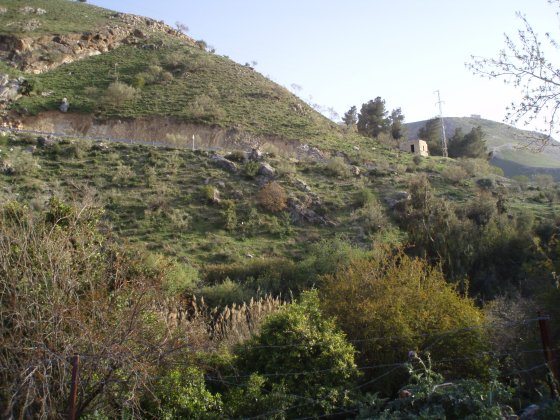
Dark times have been prevailing lately. I have commented on it in previous posts and decided it was time for another type of comment. Let me remind us all of the beauty that exists in the world,  that the world is not only darkness but also light. Here are photos of some beautiful places in the region that I like the most, the Middle East.

kstan berg

Iraqi Kurdistan in spring

iraqi kurdistan winter

Iraqi Kurdistan in winter

OLYMPUS DIGITAL CAMERA

Jordan valley in spring, Jordan

kuwait vattnet

Kuwait city at night time

Photo credit and photo copy rights: Abdulrahman Ali and Sweden and the Middle East Views

Gulf Women in Photos

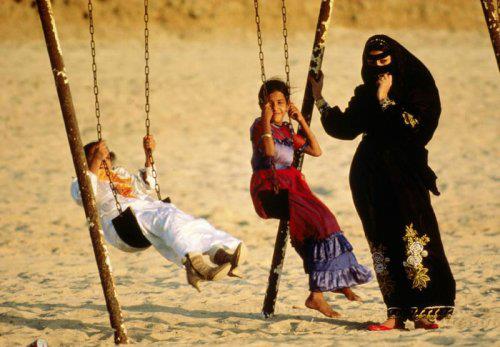
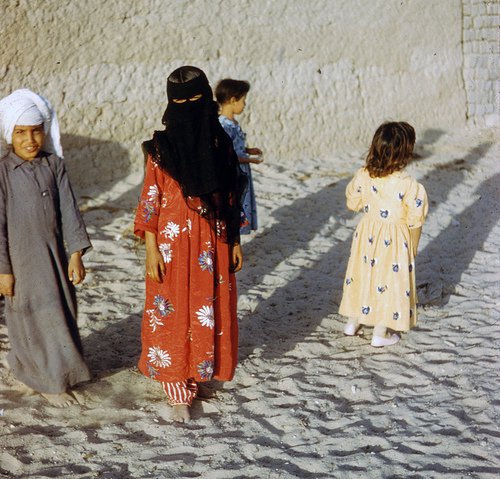
Women from the Gulf are not very common in media and an ordinary image of a Gulf woman is her dressed in nikab and abaya, not doing anything in particular.

My Kuwaiti friend who is so dedicated in showing the world different sides of the Gulf shared these photos with me. The explanations for the photos is from him and I have sometimes found more information about a certain person myself. He himself doesn’t have copyright has but downloaded them from different websites and shared them via his own social media. Therefore the copyright is unknown.

Enjoy the view of different beautiful women in different aspects of life.

Ibtisam Lufti, Saudi Arabian singer. Ibtisam belonged to the first generation of Saudi singers and achieved great success and popularity despite her handicap of being blind. Her main career took place in the 1970s and -80s and when announcing that she was leaving the scene it caused a public outrcry. Ibtisam is portrayed in the book “Women of Saudi Arabia” by Ali Fagandash. Year of the photo unknown.

Oman late 70s

Oman, late 1970s.

Aisha Al Marta, Kuwaiti singer, performing for women at a Kuwaiti wedding. Aisha is the third women from the left in the backrow. She was a Kuwaiti singer, born in 1934. Also Aisha was blind, she lost her sight at age 7. She joined a music group at age 14, secretely so as not to have any problems with her family. Later on she worked at Radio Kuwait and became an extremely popular folklore singer, performing traditional songs from the Gulf, famous for her patriotic songs. When she died in 1978 appearantly a national day of mourning was called for, and still “Aisha Al Marta” cultural events in her honor are being held in Kuwait. A Youtube video with Aisha you can see here. Year of the photo unknown.

Saudi Arabia Al Hijaz

Woman from Al Hijaz region, Saudi Arabia. Year unknown.

Women from Jaizan province, Saudi Arabia. Notice the difference in clothing between the women in this photo and the woman in the previous one.

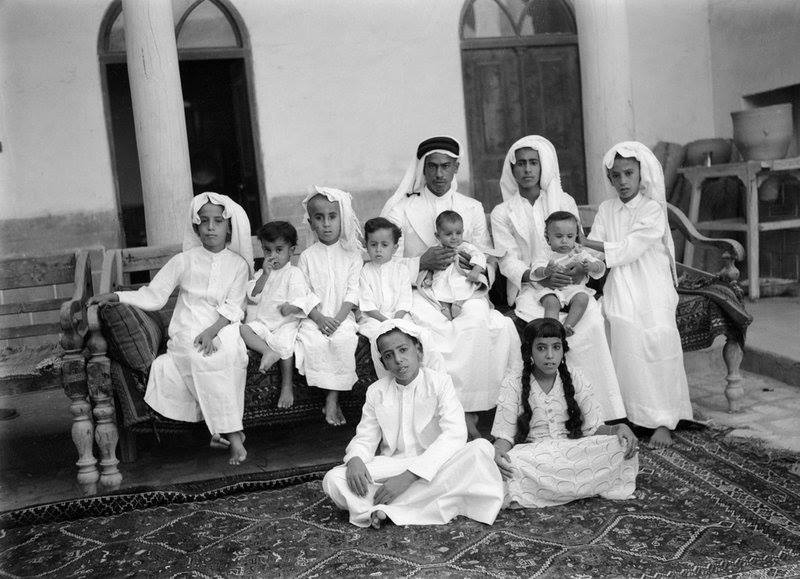
The Country of Kuwait Before the Americans Moved In

There was a Kuwait even before the American troops went in 1991 to kick out the Iraqi occupiers. Kuwait is a source to a rich culture and heritage: it contained different tribes with different traditions, music and tales, beduoins living off the sea where they were fishing for food and pearls that they traded in one of their many travels around the Gulf region. But much of it has gotten lost to the outside world. What many foreigners see in Kuwait is the many fastfood restaurants and the malls that popped up en masse after the Americans came in and stayed on.

A Kuwaiti friend of mine is dedicated to show the Kuwaiti culture and it’s from him that I have received these photos. He doesn’t have the copyright he has himself received them through social websites, so I decided to share them on. The descriptions of the photos are from my friend.

A Kuwaiti trader with dependents to another 1930s

Kuwaiti traider with dependents, 1930s

Bedouin weaving Kuwait

Bedouin weaving, year unknown

kuwait year unknown

Year unknown

Kuwait 2 1961

Kuwait 1961

Kuwait 1961

Kuwait 1961

unknown 5

Year unkown

unknown 7

Year unknown

Photo copyrights: unknown