How I Accidently Got Involved with the Syrian Opposition

During the chilly spring of 2013 I was a humanitarian aid worker waiting for my next mission. Didn’t yet know where I was going but I was busy preparing to lease my flat for the upcoming departure. As I spent my days carrying books to the basement and cleaning out wardrobes – I did this regularly, then carrying everything back up a few months or a year later – I was suddenly accompanied by a newly made friend of mine. A young Syrian woman who decided to drop out of the human rights program she had been brought to Sweden to attend, and apply for asylum. 

“I’m leaving this place tonight,” she said on the phone in a hushed voice. We hung out quite a lot, and had known each other since the year before.

“Where are you going to stay?”

“I don’t know.”

“Come here.”

My friend was a beautiful young woman, intelligent and charismatic. But that evening when she showed up with a hastily packed suitcase, other adjectives would have to be used to describe her appearance. 

I did what I usually do when someone moves in with me with short notice; made tea, brought out blankets and a towel. My living room couch was used to hosting people, it actually never complained once, but it had never served someone with so many raw emotions, energy and anxiety at the same time. 

“You’re safe here”, I tried to comfort my friend that very first night, not knowing if I meant safe at my place or in Sweden. 

Fear was nothing new to her. She had after all one of the most dangerous jobs a person can possibly have – the one of being a journalist in Syria. But neither she nor I had thought that the threat of the regime could exist in the form of individuals in Sweden. 

I too was uncomfortable being around this individual, and we agreed not to let anyone know that she was staying with me. Now 11 years have passed, and it’s safe to tell the story.

As we spent most of our time together in my small flat during that chilly month in spring, we started to get to know each other better, and quickly resumed some kind of schedule.

“What are we watching tonight?” she would ask, as she was preparing plates of fruits, biscuits, cheese – much needed plates since we always stayed up late. Sometimes the snacks were accompanied by a bottle of wine if we could afford it; her monthly grant as an asylum seeker had yet to be started.

As we worked our way through seasons of Girls, she started to share more about herself. Her stories were incredible, but she had no idea:

She had been on a journalistic assignment covering the war, when she and the cameraman had to flee by car from people sent out to arrest them. In a hospital they had been able to take cover. She remembered her mouth being so dry that she couldn’t speak. 

When her blog where she wrote about the war crimes committed by the regime became famous, she was arrested with her baby, and it was someone close to her who had snitched, letting the regime know where she was staying. 

During her arrest protests had been organized to demand her release. She showed the online posters with her name and photo – this later became useful evidence in her asylum case.

Listening to her stories of amazing courage became a crash course in the Syrian uprising and taught me how to recognize common patterns – phrasing, reasoning – of Syrian activists trying to bring down the regime. These skills would turn out to be useful later on. I could be accused of many things but not that one of being a bad listener. Or writer.

I had been to Syria before the war and I could relate to her description of her beloved country. Have you ever smelled the jasmine flowers of Damascus in summer? Have you watched the water pass by in the water wheels of Hama? Those are beautiful sights. I would say it’s impossible to visit Damascus and not fall in love with the city and the people. The beauty infiltrated, though, by the underlying threats of violence – a violence not only directed towards political opponents. 

One story I was told by a pro-regime friend said how the ruling family had a part in organizing kidnappings of young, Syrian girls for wealthy men; their mutilated bodies dumped afterwards in lakes, attached to weights. 

“I want to go home”, my friend often said. 

I thought that she would if only she was patient. Much like the people that I got to know in those early years of the revolution, I believed that the Syrian opposition had the strength to overturn a sadistic regime. 

Sure, the opposition was fragmented, without a clear hierarchy, and there was worrying news about extremist groups funded from the outside. But the Arab spring was hopeful. Areas in Northern Syria were taken over by the opposition; the Kurds had support from the other Kurdish regions. The activists I knew were intellectual, reflecting, with a deep longing for freedom and the right to live a life without fear. They must be able to do the change, right?

It wasn’t always easy to host my friend, but I dealt with enough traumatized people to have some tools and boundaries. To help her cope we went out, went to my friends’ parties, cooked dinners. 

Did I mention that she was beautiful? Her looks were actually amazing. Going with her somewhere, people stopped and stared; men kept calling and asking her out. One man was stupid enough to message me on Facebook, asking to wire me money so I could buy her flowers. I agreed, cashed out, we spent the money on ourselves. 

We also loved watching silly movies. One favorite was Crash – when the main character in a rehab center wrote a letter of apology, admitting he was alcoholist and didn’t want to be anymore, we changed the lines to the certain individual she had fled from:

“I’m sorry I pretended to be your friend so I could spy on you for the mukhabarat!” she exclaimed.

“I don’t wanna be an undercover agent for the Assad regime no more!” I latched on, and we laughed hysterically.

So why did I do what I did a few months later? Why did I write the articles that I did? Syria is not my country. I lost friends, pro-regime Syrians, because of it. They saw me as a traitor, someone interfering in an issue that wasn’t mine. 

It was not planned in advance. My friend was, of course, an influence. But also because of her many compatriots that I connected with, my love for them and the country. Syria did not deserve the terror that was brought onto them because they demanded what some take for granted: a system not deflated by corruption; wages enough to live and not only survive on; the right to live a life free of fear. 

And we believed in change, I believed in change. If enough stories came out about the war and the crimes against humanity being committed there would be little chance for the Assad family to stay in power. They would sooner or later leave the country on a private jet heading to Riyadh and never come back, finally giving up a power that was never given to them by the public.  

The day came when I got the call about my assignment. In the evening, my friend asked where I was going. 

“Can you have a seat?” I told her. 

Confused, she sat down on one of the kitchen chairs, it was one of the few items in my now empty flat that hadn’t been moved to the basement.

“Why? Where are you going?” 

I hesitated slightly. Then replied.  

“Damascus.”

All About Damascus, a Sign of Normal Life

War may torment larger parts of Syria and the Middle East, but few signs of the beautiful country that once was and in some places still is, exists and pops up like butterflies here and there. One of them is the Facebook page All About Damascus, a page that started before the war, in 2010, and that is still going strong.

Today, on July 13, the page uploaded a few photos from the every day life in the colourful city of Damascus, the life that is still going on despite the war.

In the politicised debate over Syria, some might say this page is a part of the regime’s propaganda to show that they are able to reign over some parts of the country, that they are able to keep some of the city calm. But I would prefer to say it might as well be a sign of normal life. A sign to remind of what life that can remain during the dirtiest of wars.

11138662_966076513445329_7080118056154571159_n

11709247_966076116778702_985712891824170832_n

11742848_966076183445362_3578537036096338827_n

11750637_966076066778707_4011958866093648226_n

Photo copyrights: All About Damascus Facebook page 

I Love Syria, That’s Why I’m Writing This Post

The old city in Damascus

I am a, for now, retired humanitarian aid worker, who have worked in many countries across the world, mostly in the Middle East. In my former profession I tried not to be too wrapped up in the countries that I lived in, since it’s important to remain calm and neutral as much as possible. Plenty of young Westerners have been travelling to countries in what we used to love to call the third world and start to identify with the countries, the politics and the people. As a humanitarian aid worker you’re not supposed to do that; overly identifying means you loose part of your focus.

But here’s a confession to make from my side: when I see the current news from Syria, and when I hear other aid workers talk about Syria in the most general ways, it breaks my heart.

It breaks my heart, because people who didn’t know Syria before the war don’t know anything about the country. Aid workers and people outside who have never been, seem to see it as just another country where conflict has been going on and will be going on forever. They see it as a country where every person is a potential islamic fundamentalist. They see it as a country where there are few functioning schools, few functional hospitals, where water and electricity is a luxury. A country like any other country they have worked in.

What breaks my heart is, people who only have seen Syria in a state of conflict, have never seen it as it really is. I have been living in many countries in the Middle East and Syria is my absolute favourite. Not by choice, it was just one of the places where I grew really attached to the place, where the good by far outweighed the bad. Syria is my pearl in the ocean. Let me tell you why.

Syria is the country that has a beautiful capital, a capital where night clubs takes place just like late-night cafés and restaurants; beach resorts; mosques and ancient buildings.

Syria is a country that lacks the superficiality that sometimes takes over in Lebanon, a country that has the night life that you won’t find in Jordan (with or without alcohol), a place where men and women; people from different religions; locals and foreigners, easily mix.

Syria is the country where people will keep their promise, they pick you up when they say they will pick you up, call you when they say they will call you.

Syria is a country where liberal people are next door neighbours with conservative.

Syria is a country where you sit in a café playing dawla with your girlfriend until midnight and no one bothers you.

Syria is the country where you go to have ice cream with your colleagues after work at Abu Shaker’s restaurant in Damascus on a weekday, or hit the swimming pool in your bikini in Damarose Hotel on a hot summer’s day, working on your tan and ordering plenty of arabic coffees to have at the pool, or go to Lounge 808 on a Friday night for a drink.

Syria is not a country of extremists, it’s a not a country of terrorists, it’s a country where people used to live and prosper in some of the most dynamic ways in the Middle East, before the civil war started.

Syria was once a place where friendship, love and beautiful things took place – now it’s a country that’s reduced to the international headlines of terror and misery, and humanitarian aid workers whose beer drinking and generalised ideas of a country full of war and terrorists, have taken over a place where beautiful things once was. That is what breaks my heart.

Photo copyrights: Sweden and the Middle East Views

I Love My City Damascus

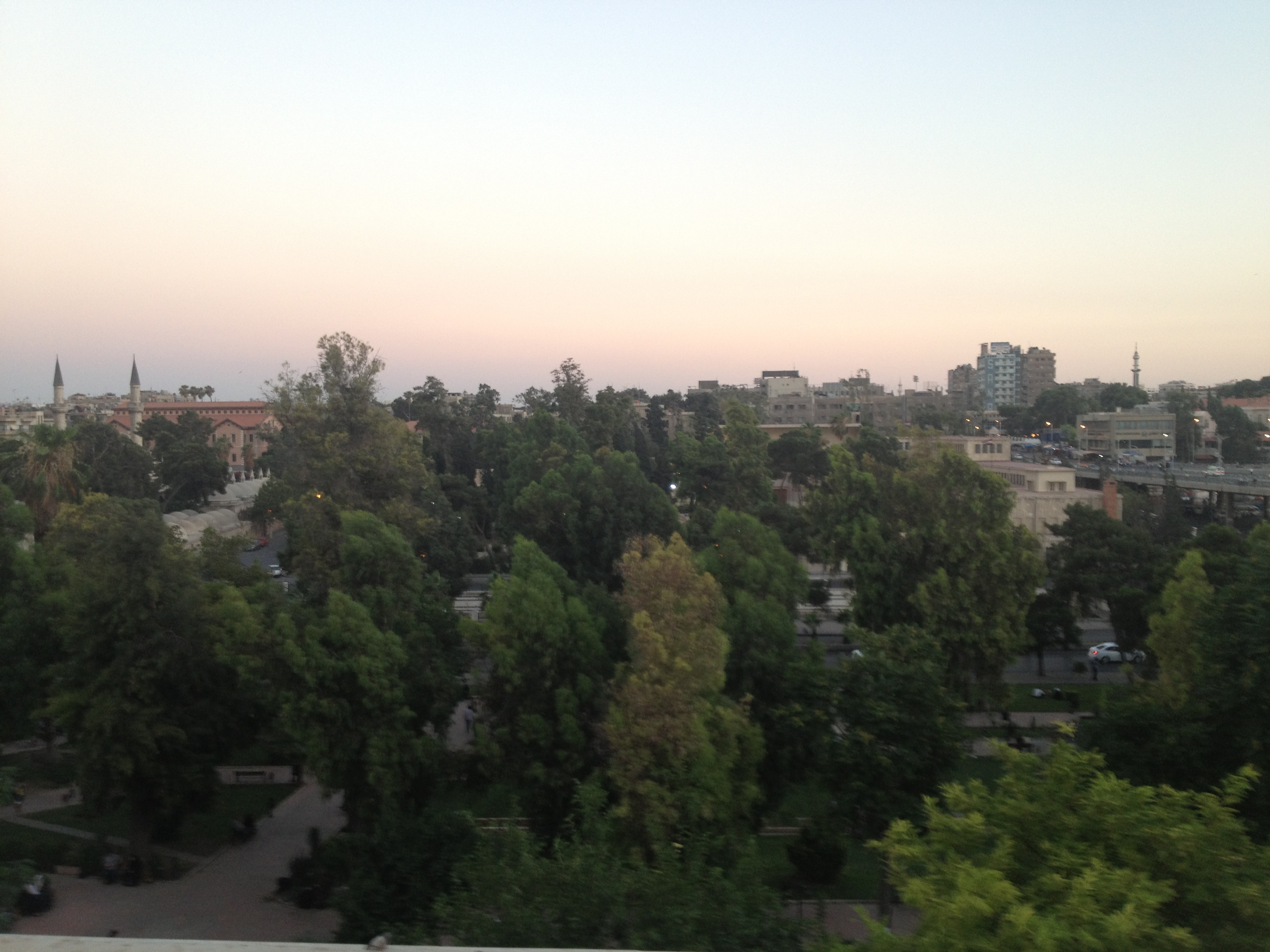
View from 4 Seasons Hotel in Damascus

News from Damascus are always depressing nowadays. But it used to be a vibrant city, full of life. When I lived there last year the fear of the war was present in the city, but here are the words of a young woman from Damascus and how her life used to be before the war.

“I grew up in Damascus and when we went to visit the village my parents came from, I just wanted to go back home. My parents’ village is beautiful, green and with fresh air, but it’s not like the city. In Damascus I had everything; freedom and friends.

Summers were the best. My cousin was older and worked in Saudi Arabia and used to come home for vacation in the summers. She got divorced and when she came home she wanted to have a good time, to live a free life, a life she couldn’t live over there. When she was in Damascus I packed a bag with all my stuff and moved in with her. She rented a flat downtown and I stayed with her there all summer. My family was angry with me for moving out from them, they thought my cousin had bad influence on me, but there was nothing they could do. I had become so independent from them since I started working and making my own money.

Me and my cousin never cooked, we just ordered take out to the house or went to restaurants. We went to the swimming pools somewhere in the city and ordered sheesha. In the evenings we went clubbing, there were many nightclubs to go to, and there were always a lot of guys after us. We had a good time with them, we let them pay for everything, then when we got bored with them we just hopped in a taxi and left” (she shows how they teasingly waved goodbye from the car window while laughing) “We never talked politics back then. She supported the president, she thought it was because of Bashar al Assad that she could live a free life in Syria comparing to the life she had as a divorced woman in Saudi Arabia. I was against Assad, just like my father was, but me and my cousin never spoke about it. We just had a great time together. I loved my city.”

Photo: Copyright Sweden and the Middle East Views Blog

God Save Our House

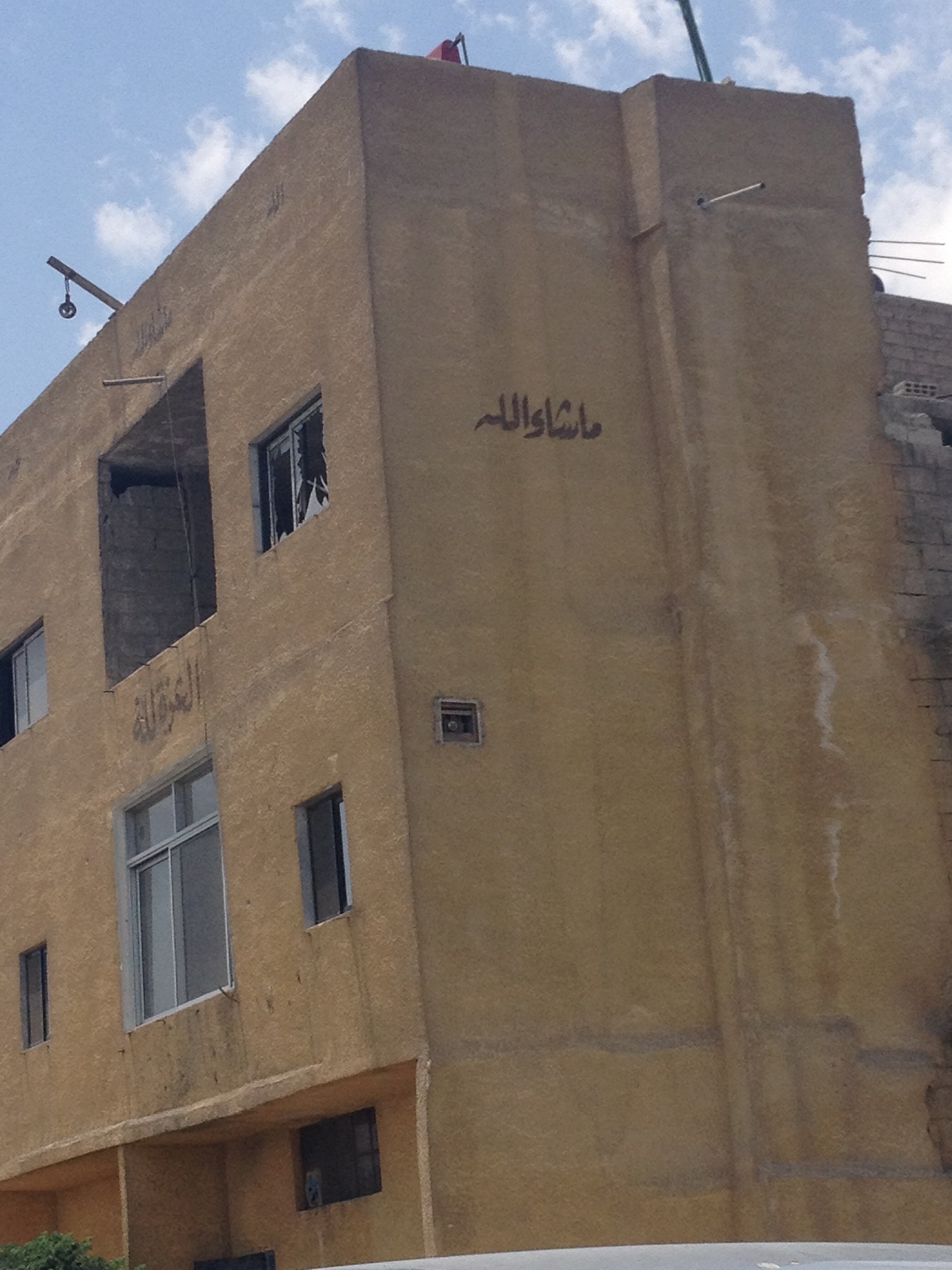
Writing on the wall of a house in one of the wartorn suburbs of Damascus, Syria, in July 2013:

“Mashallah” – God save our house from the evil eye. Whatever there is left to save.

Photo: Copyright Sweden and the Middle East Views Blog

Umayyad Mosque, Damascus

mosque 1

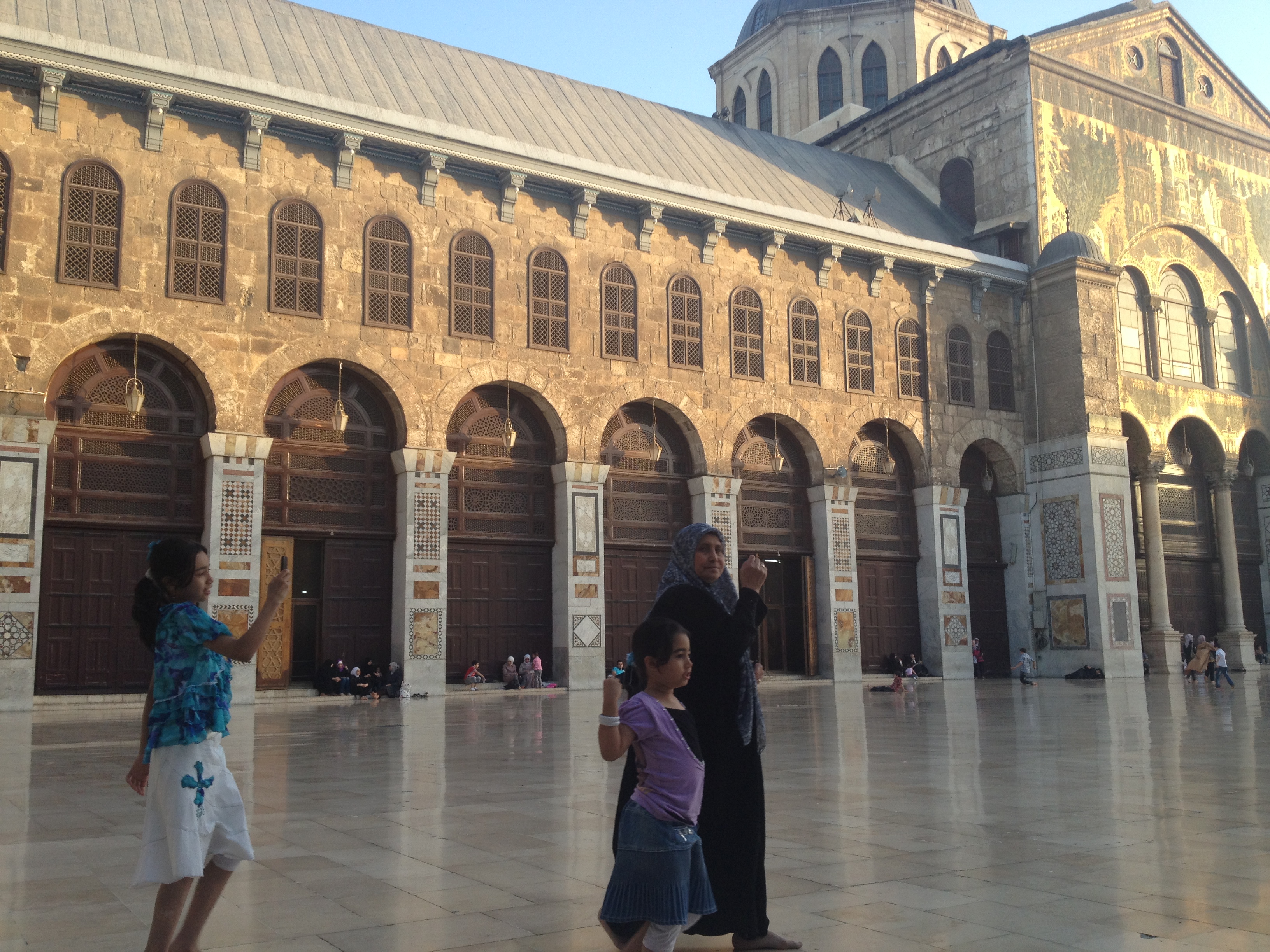
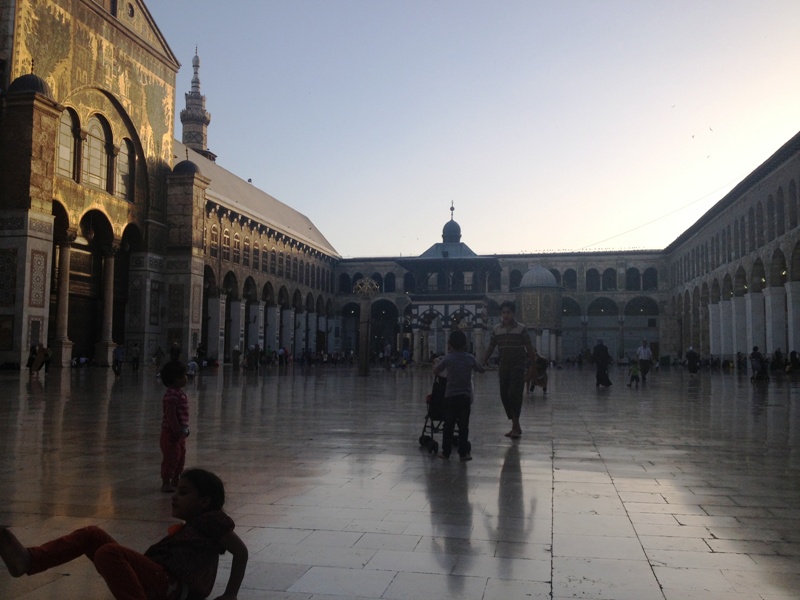
Umayyad Mosque in the heart of Damacus old city, an ancient building completed in year 715. Photos are taken during a Friday evening in June 2013.

mosque 2

Also an excellent place to spend a Friday night at, for prayers and socializing. Or a playground, with it’s shiny floor perfect for sliding on…

mosque 3

Let’s hope it will remain throughout the war.

Photos: Copyright Sweden and the Middle East Views Blog

Aleppo Screams S.O.S.

Aleppo Screams SoS pic

So now the world is discussing whether the international community should intervene in Syria after the latest chemical attacks that the regime brought on its people. I can’t launch a clear opinion in this issue, because I’m not sure an international military intervention would bring less suffering to the Syrian people – but assistance of some kind seems to be needed since the revolt has escalated into civil war, with human rights abuses reported from both sides. But what the world show know is, many of the Syrian people have been asking for help for a long time, before the conflict steered towards total chaos.

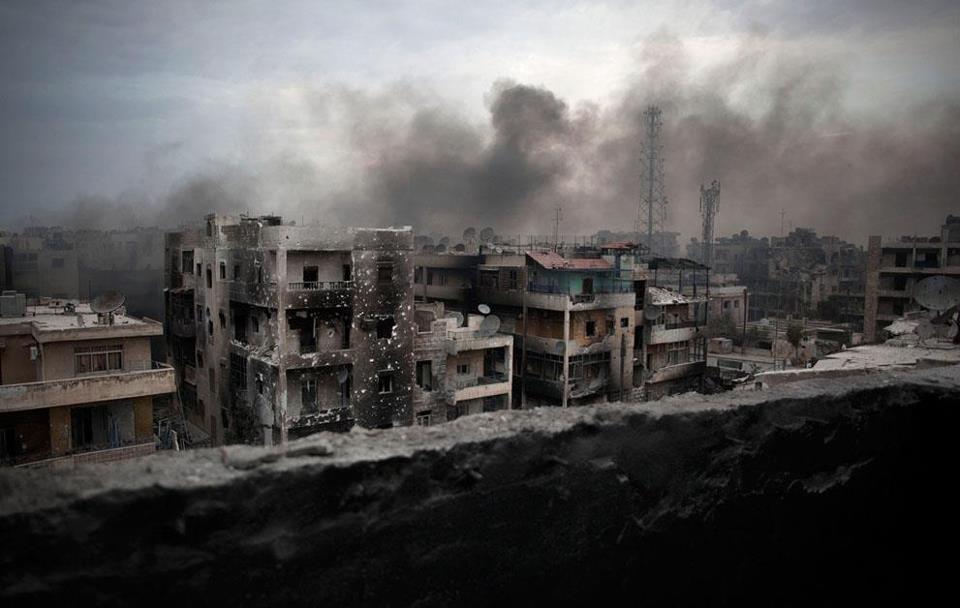
The ancient city of Aleppo, once a beautiful green city in the northern part of the country, is now one of the most destroyed cities in the world. Eager to crack down on the uprising, the Syrian government has bombed the city to pieces, wiping out the infrastructure. Electricity and water is cut off, hospitals are functioning without the most basic needs, earlier this year 90% of all children of Aleppo were reported to be out of school – and the number can hardly have decreased. Below is  picture of Saif Aldowleh Avenue in Aleppo before the war started in 2011, shared with me by someone that wants to show the world what happened to his city.

And here is the same avenue, from a slightly different angle, today:

Do you think this might be expected when it’s a war somewhere? Then remember that the inner city of Damascus is still untouched, with schools and supermarkets open and a vivid nightlife still available for young people to party and attend karaoke nights, like nothing is happening in other parts of the country.

Desperate to make the world realize what is going on, a Facebookpage was started by some of the inhabitants of Aleppo in June 2012; Aleppo Screams SoS. Click on the link and have a look to see how the citizens of Aleppo were asking for help long before the most recent events, publishing photos on the ongoing destruction, photos of killed children, asking people to share. I hope the world will listen soon.

Photos: anonymous source, copyright Sweden and the Middle East Blog; Photo credit: https://www.facebook.com/AleppoScreamsSos

“If someone asks you about what is happening in Syria tell him the humanity is died”

Today media has been flooded with the news that Syria has used chemical weapons in another one of their massacres of the citizens in Damascus suburbs, Eastern Ghouta. Some say victims counts in hundreds, others claim it’s over one thousand. Children suffocated to death after the and hospitals did not have enough resources to treat the overwhelming amount of victims rushed to the emergency rooms, where many more lives were lost, because what hospital can be prepared for a massacre?

I’m not posting the photos here but you can imagine what victims that has suffocated to death look like: frozen faces where panic and fear is still visible, mouth and eyes wide open.

It’s not the first time Syria has used chemical weapons on it’s citizens though. In March and April this year the Syrian government was accused of using chemical weapons in order to strike out the population. And in the 1980s the regime used the same kind of weapons to – effectively – crack down on the erstwhole uprising.

Today many of my friends Facebookpages were filled with sad and angry updates, and not of the regular kind. On one friends status, someone commented: “If someone asks you about what is happening in Syria tell him the humanity is died”

I Survived the Banyas Massacre (warning: gruesome story)

Who told me this story? It doesn’t matter. When did I here this? In June this year, one month after the Banyas massacre had taken place on May 3 2013, conducted by governmental troops on civilians. In Damascus noone mentioned the massacre by name, instead we called it “unrest” or “outbreak of violence”. The result of the systematic killing of everyone in the village is easily found online, but in the heart of the government controlled capital that is nothing you can talk about.

Why did the person tell me this story, despite the danger of talking about the ongoing crimes against humanity in Syria? I guess some things are just too unbearable to keep to yourself. I couldn’t share this story while I was still in Syria, but I can now. And why am I sharing it? I want the world to know. I hope all of you readers do, too.

“Do you know what happened in Banyas? They did something horrible there. They did something that no God allows, no religion allows. What they did is forbidden in all religions!What does the persons want, who are controlling our country? What do they want from God?

There was a couple here some weeks ago. They left me their number, look, here’s the note… When I heard about what happened in Banyas I tried to call them, I was worried. But the line was shut down, I didn’t even get a signal. I heard that they had shut down the lines to all the telephones in Banyas. I called and called.

First after a couple of days the man answered. He said:

They came in the night, they killed my wife and my two children‘.

His wife was pregnant when she was here, I saw it myself, she was seven or eight months pregnant. Do you know what they did to her? They cut her in the chest, like this. Then they cut open her stomach, her whole stomach, and took out the baby. Her husband cried when he said:

They killed her, they killed my unborn baby, they killed our two little children. I’m the only one left. They are all gone.

Another Side of Damascus

Everything is not all horror in Damascus today. There are beautiful people there, and beautiful places.

Photos: Copyright Sweden and the Middle East Blog