A Massacre Among Massacres

blood_PNG6093

Massacres have become so common these days that we seem to forget them as quickly as we hear about them. A few minutes of horror, then we shake the information off and go on with our day. IS has contributed to this phenomenon, killing people video-game style where nicely chosen colours frame the scene of the killing. Many internet users click on the Youtube video click without thinking twice, without thinking on how for each click, IS or the ones performing the massacre grows in fame and celebrity. Just because it doesn’t happen next to us, it doesn’t mean it doesn’t affect us – we are growing numb for the lives lost in this uttermost horrifying way. We loose the respect for the right to live.

To remind myself about how massacres challenges the very core of our humanity, I went back to read my own story from the Banyas massacre in Syria 2013. It was a massacre among many massacres, exactly two years ago today, May 2nd 2013. Please let me share this story again so as to remind us all, myself included, about how massacres really affects the surviving community, the world’s population, all of us who calls ourselves humans. The original blog post is found here, the text is copied below.

——————————————————————–

Who told me this story? It doesn’t matter. When did I here this? In June this year, one month after the Banyas massacre had taken place on May 3 2013, conducted by governmental troops on civilians. In Damascus noone mentioned the massacre by name, instead we called it “unrest” or “outbreak of violence”. The result of the systematic killing of everyone in the village is easily found online, but in the heart of the government controlled capital that is nothing you can talk about.

Why did the person tell me this story, despite the danger of talking about the ongoing crimes against humanity in Syria? I guess some things are just too unbearable to keep to yourself. I couldn’t share this story while I was still in Syria, but I can now. And why am I sharing it? I want the world to know. I hope all of you readers do, too.

“Do you know what happened in Banyas? They did something horrible there. They did something that no God allows, no religion allows. What they did is forbidden in all religions!What does the persons want, who are controlling our country? What do they want from God?

There was a couple here some weeks ago. They left me their number, look, here’s the note… When I heard about what happened in Banyas I tried to call them, I was worried. But the line was shut down, I didn’t even get a signal. I heard that they had shut down the lines to all the telephones in Banyas. I called and called.

First after a couple of days the man answered. He said:

They came in the night, they killed my wife and my two children‘.

His wife was pregnant when she was here, I saw it myself, she was seven or eight months pregnant. Do you know what they did to her? They cut her in the chest, like this. Then they cut open her stomach, her whole stomach, and took out the baby. Her husband cried when he said:

They killed her, they killed my unborn baby, they killed our two little children. I’m the only one left. They are all gone.

——————————————————————–

Photo credit: pngimg.com
Saudi Arabian Rap Video for Workers’ Rights

Saudi Arabia is not known for respecting human rights, and the current campaign for releasing the liberal Saudi blogger Raif Bedawi has shed light on the old phenomena of human rights abuses in the Gulf. But, like everywhere, there are exceptions to the rule.

The media group Tefaz 11 has produced a rap video shedding light on the situationen for foreign workers in the country, using the traditional tactics of humour and music to get their message through. The group is produced for Saudis, consisting of Saudis, showing that there is a diversity within Saudi Arabia and that everyone in the country does not support the discrimination that foreign workers are going though – or the human rights situationen as a whole.

See the video above, and below is a BBC clip portraying the people behind the video.

http://https://www.youtube.com/watch?v=cjn8uOOZ4hg

“My Mother Outside the Mosul Museum, 43 Years Ago. Now Everything is Destroyed”

After IS destroying ancient sculptures in the Mosul Museum, cleverly videotaping everything and uploading the demolition online for the world to share and condemn, without reflecting over the fact that we are all a part of IS propaganda machine, without actually putting the means in to stop them, a different kind of response came from Sweden.

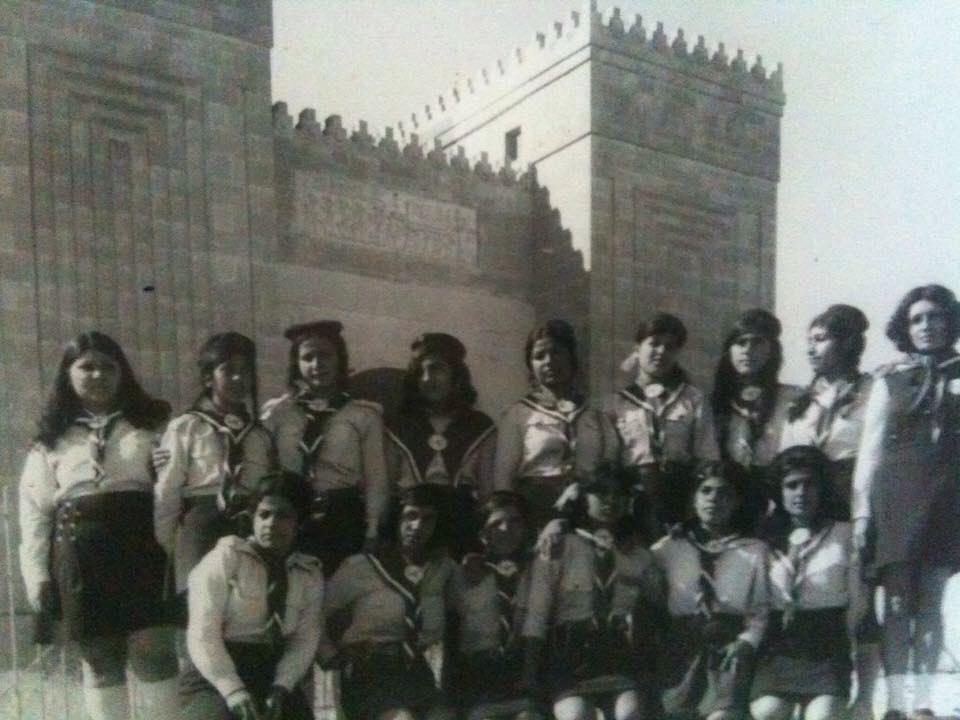
The Swedish journalist Somar Al Naher published a photo of her mother who is from Iraq, when she visited Mosul Museum together with a group of girls 43 years ago, with a comment from Somar. Somar gave me the permission to publish this photo and her comment on Sweden and the Middle East Views. Here is what she had to say (translation from Swedish, Sweden and the Middle East Views):

Somar Al Naher

I have to tell this story and why this is an endless sorrow. This photo was taken exactly 43 years ago outside the Mosul Museum that is now destroyed. In the picture you can see my mom, she is in the middle of the back row, number five from the left. In front of her sits her younger sister. What we see in the picture are girls on a Scout camp. Each summer a number of girls were chosen from schools in Karbala and Najaf, to go on a camp in a new city in Iraq. Several girls come from deeply religious families, some of them had parents who were illiterate. But the trust and the confidence made the families allow their daughters to go on camps in places that were far away from home.

This picture symbolises everything that is about to be destroyed in Iraq: the people, the shared history, the proud heritage but also the development and the future. The girls of this generation would have had the possibility to change the world.

Photo copyright: Somar Al Naher

Inauguration of Iraq’s First Female Mayor in Baghdad

11000349_10153189222442668_1956345657821254005_n

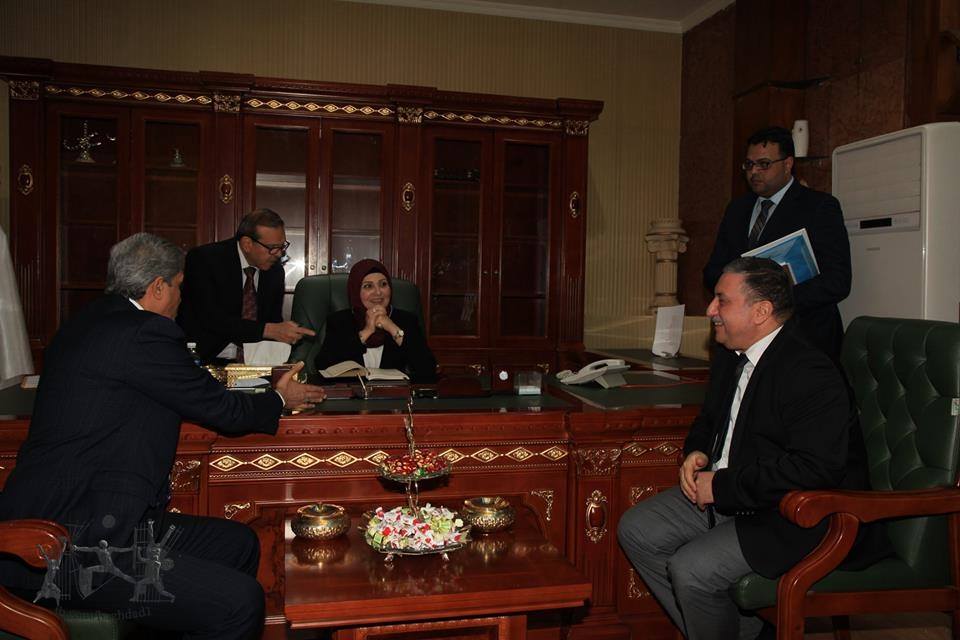
Iraq’s first female mayor Ms Thikra Awash was assigned her duties today on February 26, according to the Facebook page بغداد (“Baghdad”). Her position is so far only temporary, according to the news update, since she took over quite swiftly after the former mayor Naim Aboub who was made to leave due to dissatisfaction with his performance. The inauguration is still groundbreaking: it’s Iraq’s first female mayor, to be appointed in the capital, in a time when the IS terrorists are forcing their terrifying misogynist agenda on the regions that they have conquered.

In the ceremony the previous mayor participated, and Ms Awash was welcomed to her new office by the director of the Prime Minster’s office, Mr Mehdi Alallaq, who wished everyone in Baghdad a good cooperation in order to overcome all obstacles and reach the desired goal; which is to him, a service valued by Baghdad and its people.

Ms Awash said in her speech during the ceremony that she will be loyal and honest in handling the public funds, that she opposes any sort of partisanship and that she will not be biased to any clan, party or sectarian group. She said that her work in the initial phase would have two parallel focuses: to provide better services to the people of Baghdad and work on fast addressing the problems of the city, and also, as she stated: “To reinforce the status of the capital, to once again make it a modern city, while maintaining it’s authenticity and history”.

11025226_10153189222862668_3935465104331889415_n

Photo credits: https://www.facebook.com/Baghdad1

First Iraqi Female Mayor Elected

Unknown

Thikra Awash

With all awful news coming to us from everywhere these days, it’s wonderful to get positive news for once: Iraq appointed their first female mayor for Baghdad, Thikra Alwash (in some news spelled Zekra Alwach), and she is set to take up duties in her office as by today, Sunday February 22. In a country where women are fighting a slow battle against inequalities in many fields, a battle that is constantly facing set-backs due to the domestic conflicts, such an appointment is an important gesture to all of the country’s women. Although women traditionally have held many high political positions in Iraq – both during Saddam Hussein’s regime and after the US invasion – Ms Awash is supposedly the first one to hold the position of being a mayor.

According to Daily Star Lebanon, Ms Awash is a civil engineer by background and was previously the Director General of the Ministry of Higher Education – this is also stated in her Linkedin profile. In Ms Awash’s new role as a mayor she will be dealing directly with the Prime Minister Haider al-Abadi and will therefore be able to push her agenda, the agenda of the city of Baghdad, on a high level.

Some voices today criticised Ms Awash’s lack of political experience, and the fact that her predecessor Naim Aboub was removed by the prime minister in the blink of an eye. But still so, the choice of a female mayor in a time when dangerous, backwards powers are threatening the country of Iraq, is a brave and forward one. Let’s all keep our fingers crossed for Ms Awash and what the future holds for her, as well as her fellow Iraqi sisters.

Photo credit: Twitter @SAijaz_

“You as a Woman are Guilty Until You Prove the Opposite” – The Execution of Reyhaneh Jabbari

taz.de

Reyhaneh Jabbari

As Reyhaneh Jabbari was hanged yesterday, the 26-year old Iranian woman convicted of stabbing a man who tried to rape her, international media filled up with stories about the unfair trial and the torture Reyhaneh supposedly was exposed to before being sentenced.

Reyhaneh claimed that she met Morteza Abdolali Sarbandi in a coffee shop and after he asked her to come to his office to discuss a business deal, he tried to rape her, why she in selfdefence stabbed him with her pocket knife before fleeing. Her lawyer reportedly published on his blog about the unfair trial against Reyhaneh as a plea for help, there were media campaigns against Reyhaneh’s execution, but the media attention didn’t help. After 7 years in prison, for which under some time she was prevented from contact with her family and from having a lawyer, she was hanged in Gohardasht prison in Teheran on the morning of Saturday October 25.

I asked an Iranian man that I know who’s living outside of Iran how he felt about the hanging, and he had many things to say. These are his words:

“Reyaneh has basically been considered guilty to one thing, and that is that she has defended herself as a woman. In many ways you as a woman are considered to be guilty until you in some way prove the opposite. ‘Evidence’ is here quite an irrelevant word.”

He talks about how the police in Iran are not conducting proper forensic investigations, and that facts is not important in the judicial system.

“If the judge thinks she is guilty for whatever reason,  she is guilty no matter what the circumstances are. It’s also ridiculously humiliating that Reyhaneh’s family have to ask the man’s family for mercy so that they shall spare her life. In this way the system is positioning one family against another. It’s not about proportion, facts or the right to defend yourself, but simply about a system that wants to prove that you as a woman shall not defend yourself and that you don’t have the right to a fair trial. But these kind of cases are not uncommon in Iran, there are worse… In the bigger picture this is not surprising. In Isfahan women have had acid thrown on their faces. This is just one case of many.”

Photo credit: taz.de

Women Owned Restaurant in Saudi Arabia Breaking New Ground

Hi Jenny – this Saudi woman could be interesting for you to write about her” my half-Kuwaiti half-Saudi friend started her email to me the other day.

In the coastal city of Dammam, Saudi Arabia, an occurence has taken place that hasn’t yet reached English international news. The Saudi woman Nora Almoqateeb was able to open a new restaurant-concept in her own name, kitchen-run by all female, despite public pressure not to. When Nora came up with the concept for the restaurant Nooryat, the first official employee receiving the application refused to give her the license to open restaurant. As Nora describes in the video (unfortunately available in Arabic only):

“He threw the file in the drawer and said ‘Are you crazy? You want to mess up the country and the women? It’s forbidden!'”

But she didn’t give up instead went to research in the local laws. She didn’t find any single Saudi law preventing her and in the end she managed to get the license, then employed Saudi women to work with her in the kitchen. She says:

“I felt I was gunpowder wanting to explode. It exploded! I was determined to get the license.”

When Nora opened the restaurant Nooryat she was afraid to go there alone. The restaurant was watched all the time by people who want to try and find small mistakes so that the restaurant could be closed down. Nora’s female worker are all Saudi, and despite being proud of their job some of them are ashamed to admit that they are working as cooks, and are afraid to give their full name. But despite the resistance Nora didn’t cave in and the staff says that they admire Nora and consider her a great female idol for all Saudi women. Nora has been so determined to carry out her business that she sometimes sleeps in the restaurant when she has a big order to deliver. In fact the word Nooryat is associated to the Arabic word for light, such as the light that lights up a house.

Along the way she had big support from her own father, and the owner of the building where to restaurant resides says:

“The main problem is that men don’t except the idea that a woman leaves her home, work in a commercial building, and cook for people”.

Now the restaurant has been nominated to the local Israr Award for 2014 – “Israr” meaning “Determination”. Let’s keep our fingers crossed she will win.

God Save Our House

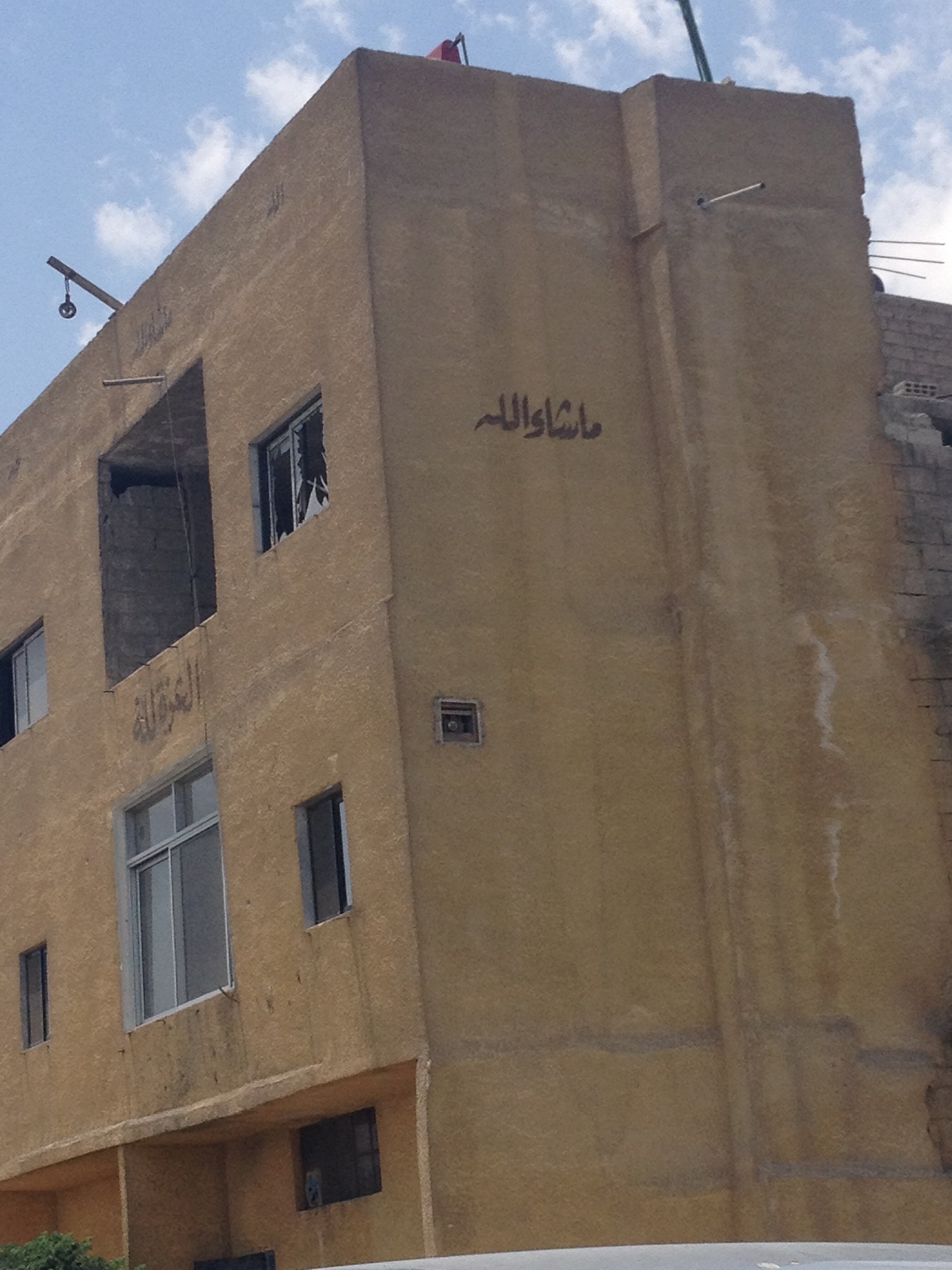
Writing on the wall of a house in one of the wartorn suburbs of Damascus, Syria, in July 2013:

“Mashallah” – God save our house from the evil eye. Whatever there is left to save.

Photo: Copyright Sweden and the Middle East Views Blog

What Mandela Meant to My 5-year-old Me

Can I tell you what Nelson Mandela meant to my 5-year-old me, back in the early 80s?

Once my sisters and I were shopping with our dad in the grocery store. He didn’t want to buy the apples from South Africa, asking us to choose from the other shelf instead, and we demanded to know why. And so he started to explain.

There was a country far, far away, where some people were treated differently than the others. Therefore us in other countries should not buy their things, so that they would understand what they did was wrong. This was a tricky thing to explain for three small girls with one million questions, but dad didn’t give up.

“It would be like… if Maria (their friend’s daughter) wouldn’t be allowed to sit on the same bus as you”, he explained, as he trailed us through the store with a shopping cart filled with unflavored cereal and other boring groceries that characterized Sweden in the 1980s. “Or if someone was sick, and the hospital wouldn’t let them in.”

The story haunted me. A few years later the front pages posted the news on Mandela’s was release. One of my friends’ father explained what the headlines were about, as we passed by the placards.

These stories must have affected my in a way I didn’t realize. And yes, feelings of anger and sadness followed as a result of knowledge. But I am glad adults were willing to take their time explaining things, instead of sugarcoating it. Small things like these shaped me into the person I am today. It made yesterday, to me, a special day.

The Destiny of Being Lebanese – on Today’s Bombings

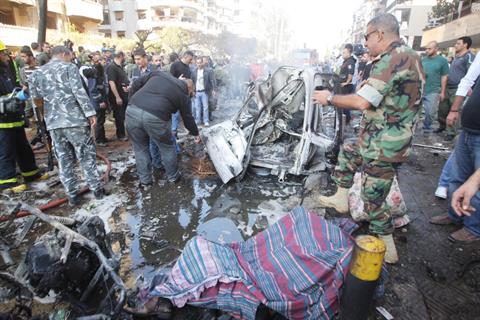
beirut bombingsWhenever I think about Lebanon I think about night life and the beach, sunny memories from long summers. But there are other things too that comes to my mind – the underlying fear of something to happen, because that something regularly does happen, and the intolerance that so easily pops up, young people that many years after the civil war still despise anyone from another group. The wounds from the civil war just doesn’t get a chance to heal when the violence button seems stuck on repeat. Today’s bombings of Iran’s embassy in Beirut is a depressing but recurrent event.

The destiny of being Lebanese if I can have my say is having a country to be proud of – beautiful and dynamic, a place people from more boring countries loves to visit. Who wouldn’t want their home country being the given summer destination instead of wanting to go anywhere else every year?

But the cost of being Lebanese is also often bitter – I dare to say this after all the “where are you from” questions with dreamy eyes I have received from various people at any occassion. For a country with all it’s potential, a vibrant job market and internationally prestigious universities, the young people still just wanna leave. And who can blame them, when your Sunday brunch in the center of Beirut suddenly can be shattered by explosions tearing people’s bodies into pieces?

The bombings and occassional violence in Lebanon has different reasons, from internal Islamic groups targeting the crazy night clubs to people who wanted to get rid of that inconvenient politician. But the very worst reason for being bombed in your own country must be when it has absolutely nothing to do with you. When your country happens to be a playground for dirty international affairs just because it has always been and because your own government can’t or won’t control the violence within their own borders.

We condemn this cowardly terrorist act which is aimed at inciting tensions in Lebanon and using the country as an arena to send political messages”, Prime Minister Najib Mikati said today.

I hope next time the government will back up their wise words with some actions. Giving the Lebanese people the right to being able to stay in their own country that should be no one elses but theirs.

Photo credit: http://www.dailystar.com.lb