Yesterday it was the Assyrian New Year, the year of 6766. Happy Assyrian New Year, everyone!

The Iraqi and the Assyrian flag

Girls in traditional Assyrian dresses
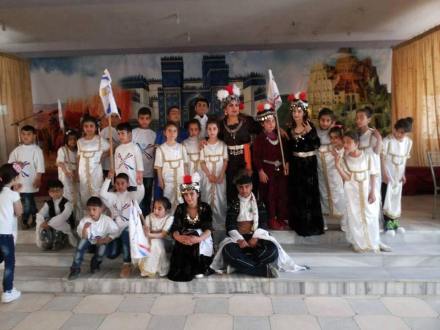


Photo credits: Tourism in Iraq and Assyrian National National Library

Yesterday it was the Assyrian New Year, the year of 6766. Happy Assyrian New Year, everyone!
The Iraqi and the Assyrian flag
Girls in traditional Assyrian dresses
Photo credits: Tourism in Iraq and Assyrian National National Library
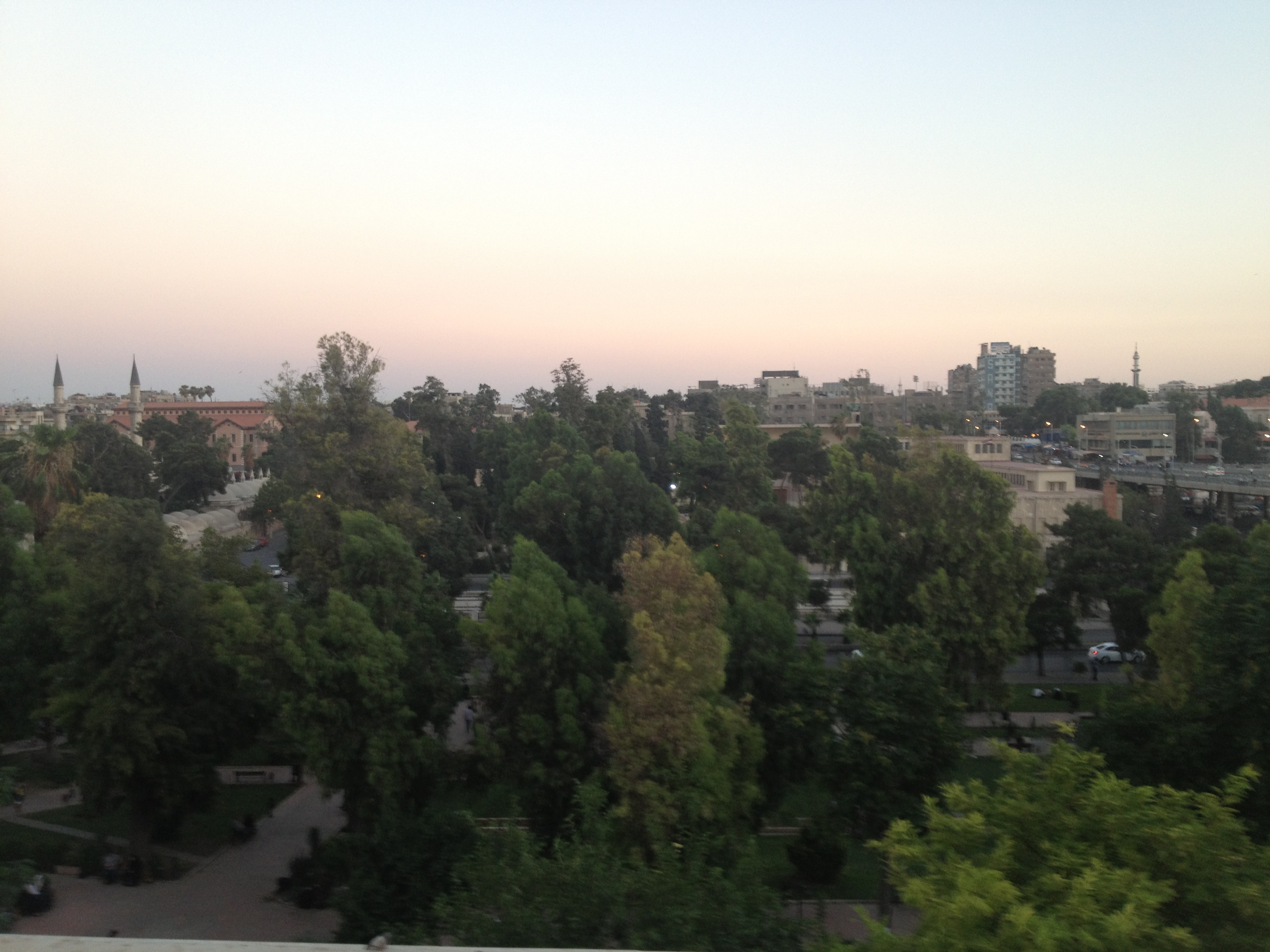 View from 4 Seasons Hotel in Damascus
News from Damascus are always depressing nowadays. But it used to be a vibrant city, full of life. When I lived there last year the fear of the war was present in the city, but here are the words of a young woman from Damascus and how her life used to be before the war.
“I grew up in Damascus and when we went to visit the village my parents came from, I just wanted to go back home. My parents’ village is beautiful, green and with fresh air, but it’s not like the city. In Damascus I had everything; freedom and friends.
Summers were the best. My cousin was older and worked in Saudi Arabia and used to come home for vacation in the summers. She got divorced and when she came home she wanted to have a good time, to live a free life, a life she couldn’t live over there. When she was in Damascus I packed a bag with all my stuff and moved in with her. She rented a flat downtown and I stayed with her there all summer. My family was angry with me for moving out from them, they thought my cousin had bad influence on me, but there was nothing they could do. I had become so independent from them since I started working and making my own money.
Me and my cousin never cooked, we just ordered take out to the house or went to restaurants. We went to the swimming pools somewhere in the city and ordered sheesha. In the evenings we went clubbing, there were many nightclubs to go to, and there were always a lot of guys after us. We had a good time with them, we let them pay for everything, then when we got bored with them we just hopped in a taxi and left” (she shows how they teasingly waved goodbye from the car window while laughing) “We never talked politics back then. She supported the president, she thought it was because of Bashar al Assad that she could live a free life in Syria comparing to the life she had as a divorced woman in Saudi Arabia. I was against Assad, just like my father was, but me and my cousin never spoke about it. We just had a great time together. I loved my city.”
Photo: Copyright Sweden and the Middle East Views Blog
 “You want to go see my friends? They’re African, they speak good English” my neighbor in Amman asked me one Thursday afternoon years back. In the sleepy little area we lived there were not a big variety among the neighbors, so I became curious and tagged along.
Long before that, no one knew when, the father of Sameera and her sisters left his country Nigeria, supposedly to go to Mekka, travelling by land for several months until he came to Jordan. For some reason, if money went out or whatever it could have been, Sameera’s father decided to stay there for a while. Back then Amman was just a village and foreigners a rarity, so rare that the authorities quite soon offered him a passport. There were a few other Africans in Amman though, and someone pointed out the houses to him: “Here lives an African family!” And so he met Sameera’s mother whose father originated from the Ivory Coast, and for a while became a lifetime; he never saw Nigeria again.
Sameera was cool and smart, too broad in her mind for the suburb where she had lived all her life. Her father, illiterate himself, decided that his six daughters were going to be educated, and sent them to college. To his son and other people he said: “No one is going to tell my daughters anything”. Probably he was the one to blame for their independency that stayed present even after he and their mother had passed away. They all worked and made their own money, only one of them getting married, to a Kenyan man that she said respected her freedom. The others saying they didn’t want the burden of being controlled. Sameera and her sisters fully identified as Africans, sticking to African satellite channels and music, even though they had never been. Later on, with the UN moving in big-scale to Amman the city became more international, with foreign women dressing in tank tops and Starbucks popping up in street corners. But the international vibes of a city often has a way of not reaching the original citizens, the ones limited by the conservative ways of condemning those different African girls that lived by themselves, worked for themselves, dressed in modern clothes.
I always had a good time at Sameera’s place and I wanted her to come visit me in Beirut when I went to stay there the upcoming year. She was up for it after some persuading. Collecting her best outfits, she called me a number of times before she left; “Can I have white jeans in Beirut? That’s cool there?”, and took a shared taxi for the eight hours ride.
She cried the first evening on my balcony and I got perplexed: what was wrong? But it was just the free spirit of Lebanon and the mixture of people that she saw. She was no longer the odd one; she was just one among many. “I’m sad because of all the beautiful things I see, I see nothing of this is in Amman”, she said.
That weekend was the best, we had so much fun. It was Beirut in the summer in the mid-2000s: clubs were open until the morning, people could still afford going out, Tiesto and Amr Diab was the DJs choice for the night. Our exotic appearance, the blonde girl and the black, was priceless. We didn’t pay entrance anywhere, the Buddha Bar DJ invited us to party with his crew, not understanding why such an urban girl like Sameera didn’t drink or wanting to date, and Sameera acted like she was born in the cosmopolitan city, showing off her amazing dancing skills that she rarely got to practice, pretending she was American when someone asked (“Hey I ain’t gonna see them again!”). When we grew tired of the company we told them we were going home, then hopped into a cab and went to the next club.
We’re not in touch anymore why I don’t share her real name or photo. But I hope she would agree on me sharing her story, because being a minority is never easy and she was a person that showed someone can grow different from her society and still remain her integrity, becoming the special person that she was. Or as Sameera said once, to a taxi driver in Amman that criticized her for being a Muslim and not covering herself:
“Ammo, I am a Muslim and when I read the Qur’an and decide that I will cover, at that time I will cover. Until then I will mind my own business, and you mind yours.”
Photo credit: http://www.primetravels.com
 Sweden and the Middle East Views