Painting: Girls under Islamic State

The Kurdish artist Rostam Aghala, whose art I have shared before, has pictured women’s suffering in the hands of the terrorists in Islamic State. He wanted to share it with me for me to share it on my site, for the world to see. Rostam uses the Arabic acronym “Daesh” to name Islamic State.

“Girls under Esideat (Daesh)” by Rostam Aghala

Photo copyright: Rostam Aghala

A Massacre Among Massacres

blood_PNG6093

Massacres have become so common these days that we seem to forget them as quickly as we hear about them. A few minutes of horror, then we shake the information off and go on with our day. IS has contributed to this phenomenon, killing people video-game style where nicely chosen colours frame the scene of the killing. Many internet users click on the Youtube video click without thinking twice, without thinking on how for each click, IS or the ones performing the massacre grows in fame and celebrity. Just because it doesn’t happen next to us, it doesn’t mean it doesn’t affect us – we are growing numb for the lives lost in this uttermost horrifying way. We loose the respect for the right to live.

To remind myself about how massacres challenges the very core of our humanity, I went back to read my own story from the Banyas massacre in Syria 2013. It was a massacre among many massacres, exactly two years ago today, May 2nd 2013. Please let me share this story again so as to remind us all, myself included, about how massacres really affects the surviving community, the world’s population, all of us who calls ourselves humans. The original blog post is found here, the text is copied below.

——————————————————————–

Who told me this story? It doesn’t matter. When did I here this? In June this year, one month after the Banyas massacre had taken place on May 3 2013, conducted by governmental troops on civilians. In Damascus noone mentioned the massacre by name, instead we called it “unrest” or “outbreak of violence”. The result of the systematic killing of everyone in the village is easily found online, but in the heart of the government controlled capital that is nothing you can talk about.

Why did the person tell me this story, despite the danger of talking about the ongoing crimes against humanity in Syria? I guess some things are just too unbearable to keep to yourself. I couldn’t share this story while I was still in Syria, but I can now. And why am I sharing it? I want the world to know. I hope all of you readers do, too.

“Do you know what happened in Banyas? They did something horrible there. They did something that no God allows, no religion allows. What they did is forbidden in all religions!What does the persons want, who are controlling our country? What do they want from God?

There was a couple here some weeks ago. They left me their number, look, here’s the note… When I heard about what happened in Banyas I tried to call them, I was worried. But the line was shut down, I didn’t even get a signal. I heard that they had shut down the lines to all the telephones in Banyas. I called and called.

First after a couple of days the man answered. He said:

They came in the night, they killed my wife and my two children‘.

His wife was pregnant when she was here, I saw it myself, she was seven or eight months pregnant. Do you know what they did to her? They cut her in the chest, like this. Then they cut open her stomach, her whole stomach, and took out the baby. Her husband cried when he said:

They killed her, they killed my unborn baby, they killed our two little children. I’m the only one left. They are all gone.

——————————————————————–

Photo credit: pngimg.com

“Dream of Dawn” – Music Video from Gaza

To all music lovers: the Gaza group Typo Band’s song “Dream of Dawn”, in Arabic with subtitles in English. Watch the beautiful footage in the video, hear the song and in case you don’t speak Arabic, read the poetic lyrics as you listen.

Change the common concept of love and freedom

Don’t leave it the way it is

Write on people’s hearts: ‘I exist’

Tear the fear out of their souls with your kind look

Write on people’s hearts: ‘I exist’

Kurdish Artist Rostam Aghala’s Response to IS in Arts

There’s plenty of resistance to the Islamic State in the Middle East, resistance that deserves far more attention than it gets internationally. One artist in Iraqi Kurdistan, Rostam Aghala, has delivered his response to the terrorists in form of paintings. He let me share his works on my website, and I’m happy to be able and show the world his art.

“Islam and Daesh” (Daesh = Arabic acronym for the Arabic version of Islamic State)

10854981_10206052829661316_1097859412622273230_o

10983125_884534161589149_3960891239605825019_n

10425890_878741198835112_5157365990787372651_n

Photo credit: copyright of all paintings, Rostam Aghala

“My Mother Outside the Mosul Museum, 43 Years Ago. Now Everything is Destroyed”

After IS destroying ancient sculptures in the Mosul Museum, cleverly videotaping everything and uploading the demolition online for the world to share and condemn, without reflecting over the fact that we are all a part of IS propaganda machine, without actually putting the means in to stop them, a different kind of response came from Sweden.

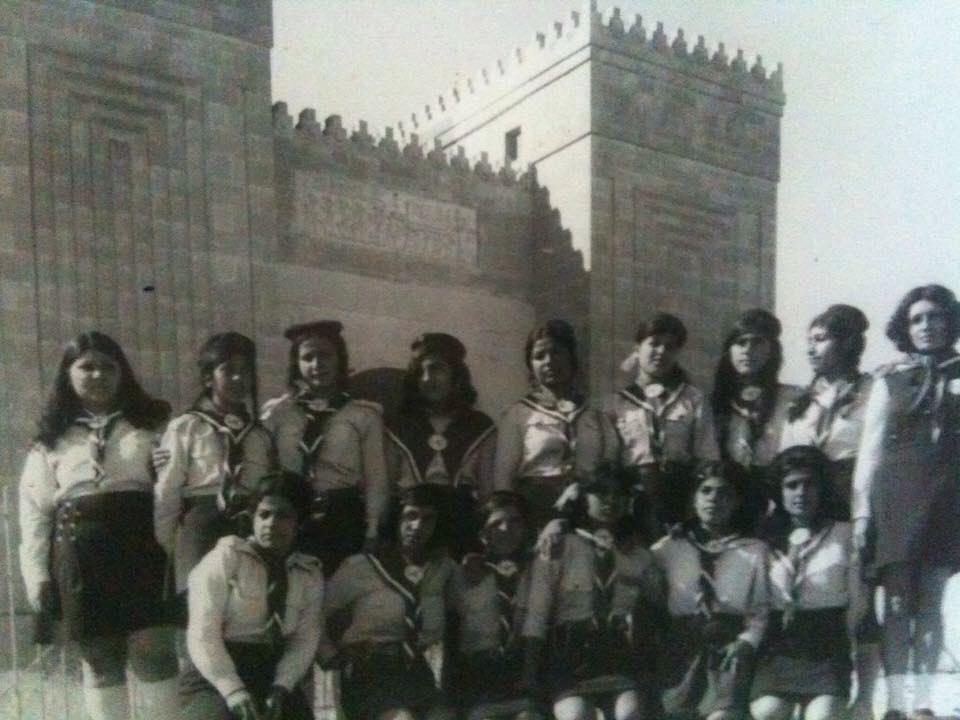
The Swedish journalist Somar Al Naher published a photo of her mother who is from Iraq, when she visited Mosul Museum together with a group of girls 43 years ago, with a comment from Somar. Somar gave me the permission to publish this photo and her comment on Sweden and the Middle East Views. Here is what she had to say (translation from Swedish, Sweden and the Middle East Views):

Somar Al Naher

I have to tell this story and why this is an endless sorrow. This photo was taken exactly 43 years ago outside the Mosul Museum that is now destroyed. In the picture you can see my mom, she is in the middle of the back row, number five from the left. In front of her sits her younger sister. What we see in the picture are girls on a Scout camp. Each summer a number of girls were chosen from schools in Karbala and Najaf, to go on a camp in a new city in Iraq. Several girls come from deeply religious families, some of them had parents who were illiterate. But the trust and the confidence made the families allow their daughters to go on camps in places that were far away from home.

This picture symbolises everything that is about to be destroyed in Iraq: the people, the shared history, the proud heritage but also the development and the future. The girls of this generation would have had the possibility to change the world.

Photo copyright: Somar Al Naher

First Iraqi Female Mayor Elected

Unknown

Thikra Awash

With all awful news coming to us from everywhere these days, it’s wonderful to get positive news for once: Iraq appointed their first female mayor for Baghdad, Thikra Alwash (in some news spelled Zekra Alwach), and she is set to take up duties in her office as by today, Sunday February 22. In a country where women are fighting a slow battle against inequalities in many fields, a battle that is constantly facing set-backs due to the domestic conflicts, such an appointment is an important gesture to all of the country’s women. Although women traditionally have held many high political positions in Iraq – both during Saddam Hussein’s regime and after the US invasion – Ms Awash is supposedly the first one to hold the position of being a mayor.

According to Daily Star Lebanon, Ms Awash is a civil engineer by background and was previously the Director General of the Ministry of Higher Education – this is also stated in her Linkedin profile. In Ms Awash’s new role as a mayor she will be dealing directly with the Prime Minister Haider al-Abadi and will therefore be able to push her agenda, the agenda of the city of Baghdad, on a high level.

Some voices today criticised Ms Awash’s lack of political experience, and the fact that her predecessor Naim Aboub was removed by the prime minister in the blink of an eye. But still so, the choice of a female mayor in a time when dangerous, backwards powers are threatening the country of Iraq, is a brave and forward one. Let’s all keep our fingers crossed for Ms Awash and what the future holds for her, as well as her fellow Iraqi sisters.

Photo credit: Twitter @SAijaz_

“I do, with much content, support Jordan’s role in fighting what’s called ISIS” – Jordanians on the Bombings of IS

alalam_635586620027933542_25f_4x3

Moath Al-Kassasbeh

The world remains passive and unable to respond, it seems, while IS are slaughtering their way across the Middle East. But after the horrifying killing of the Jordanian pilot Moath Al-Kassabeh a new actor picked up weapons to fight the multi headed dragon: the Jordanian king.

Maybe it’s just the royal PR, but news went out that king Abdullah himself went up in the air to bomb IS, and that the Jordanian airforce intensified bombings against IS as a response to the murder. More than that, they quickly executed a few convicts and alleged terrorists, among them Sajida Al-Rishawi, who had been on death row for a failed suicide attempt since 2005, and whose appeal was still in process. The video footage of Al-Kassabeh reached internet on February 3rd, and Al-Rishawi and Al-Karbouly were hanged in the early hours of February 4th. The justice in these hastened decisions can definitely be questioned. In the war against IS it seems however that all normal rules are out of order. And Jordan seems to be the only actor at the moment this is willing – and able to? – take up the fight against IS. For a comment on this, I asked two of my close friends who are Jordanians, Rasha and Rami who are married, about their opinions. They have been working and studying in different regions all over the world and are currently living outside of Jordan.

“I am with the government in bombing ISIS because they are a real threat to Jordan and the region, but I am really worried about the consequences of this war”, Rasha said. “About Moath, when I knew that he was captured by ISIS, I expected he will be killed. However, I don’t expect him to be burned alive… When ISIS released the video about killing him, my heart broke. I was a little relieved when the government executed Sajida and the other guy who were sentenced to death long time ago and started a revenge for him. I was happy because Jordanian united against ISIS and we didn’t have a chaos in Jordan.”

Her husband Rami was even more decisive:

I do, with much content, support Jordan’s role in fighting what’s called ISIS. This gang has been committing brutal crimes against humanity and somebody has to stop them! Their barbarian acts of executing journalists, humanitarian field workers and, lately, the Jordanian pilot have revealed their insanity and lack of any ethical and humanitarian principle… They are a real threat to the region and their distorted ideology is a major threat to humanity.

Maybe this united force will be a turning point in the war against IS? I don’t know myself. But we are definitely onto a new path in this international crisis.

Photocredit: en.alalam.ir

Beautiful Photos in a Dark Time

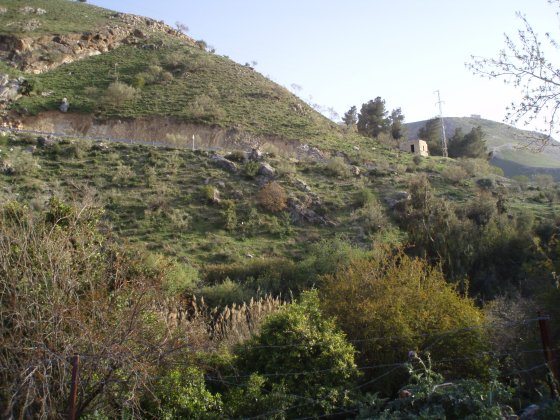
Dark times have been prevailing lately. I have commented on it in previous posts and decided it was time for another type of comment. Let me remind us all of the beauty that exists in the world,  that the world is not only darkness but also light. Here are photos of some beautiful places in the region that I like the most, the Middle East.

kstan berg

Iraqi Kurdistan in spring

iraqi kurdistan winter

Iraqi Kurdistan in winter

OLYMPUS DIGITAL CAMERA

Jordan valley in spring, Jordan

kuwait vattnet

Kuwait city at night time

Photo credit and photo copy rights: Abdulrahman Ali and Sweden and the Middle East Views

Gulf Women in Photos

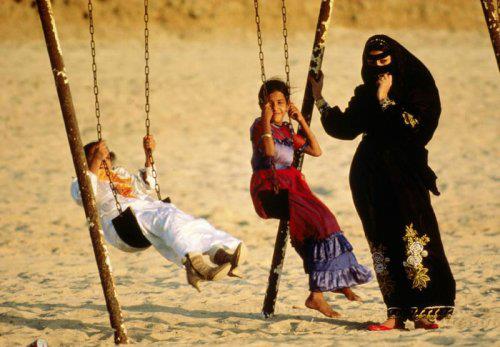
Women from the Gulf are not very common in media and an ordinary image of a Gulf woman is her dressed in nikab and abaya, not doing anything in particular.

My Kuwaiti friend who is so dedicated in showing the world different sides of the Gulf shared these photos with me. The explanations for the photos is from him and I have sometimes found more information about a certain person myself. He himself doesn’t have copyright has but downloaded them from different websites and shared them via his own social media. Therefore the copyright is unknown.

Enjoy the view of different beautiful women in different aspects of life.

Ibtisam Lufti, Saudi Arabian singer. Ibtisam belonged to the first generation of Saudi singers and achieved great success and popularity despite her handicap of being blind. Her main career took place in the 1970s and -80s and when announcing that she was leaving the scene it caused a public outrcry. Ibtisam is portrayed in the book “Women of Saudi Arabia” by Ali Fagandash. Year of the photo unknown.

Oman late 70s

Oman, late 1970s.

Aisha Al Marta, Kuwaiti singer, performing for women at a Kuwaiti wedding. Aisha is the third women from the left in the backrow. She was a Kuwaiti singer, born in 1934. Also Aisha was blind, she lost her sight at age 7. She joined a music group at age 14, secretely so as not to have any problems with her family. Later on she worked at Radio Kuwait and became an extremely popular folklore singer, performing traditional songs from the Gulf, famous for her patriotic songs. When she died in 1978 appearantly a national day of mourning was called for, and still “Aisha Al Marta” cultural events in her honor are being held in Kuwait. A Youtube video with Aisha you can see here. Year of the photo unknown.

Saudi Arabia Al Hijaz

Woman from Al Hijaz region, Saudi Arabia. Year unknown.

Women from Jaizan province, Saudi Arabia. Notice the difference in clothing between the women in this photo and the woman in the previous one.

The Country of Kuwait Before the Americans Moved In

There was a Kuwait even before the American troops went in 1991 to kick out the Iraqi occupiers. Kuwait is a source to a rich culture and heritage: it contained different tribes with different traditions, music and tales, beduoins living off the sea where they were fishing for food and pearls that they traded in one of their many travels around the Gulf region. But much of it has gotten lost to the outside world. What many foreigners see in Kuwait is the many fastfood restaurants and the malls that popped up en masse after the Americans came in and stayed on.

A Kuwaiti friend of mine is dedicated to show the Kuwaiti culture and it’s from him that I have received these photos. He doesn’t have the copyright he has himself received them through social websites, so I decided to share them on. The descriptions of the photos are from my friend.

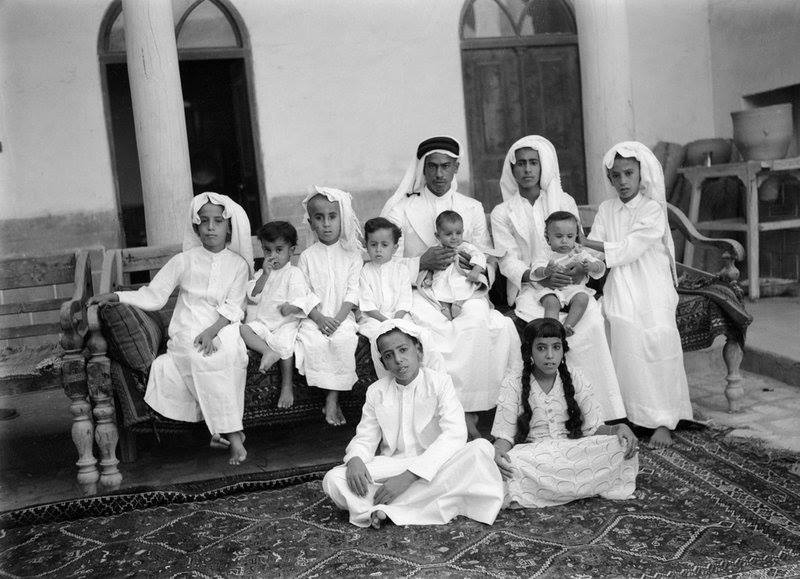
A Kuwaiti trader with dependents to another 1930s

Kuwaiti traider with dependents, 1930s

Bedouin weaving Kuwait

Bedouin weaving, year unknown

kuwait year unknown

Year unknown

Kuwait 2 1961

Kuwait 1961

Kuwait 1961

Kuwait 1961

unknown 5

Year unkown

unknown 7

Year unknown

Photo copyrights: unknown